What makes one asphalt driveway or parking lot last for decades while another develops cracks, potholes, and uneven surfaces after only a few years? The answer often lies beneath the asphalt itself. Although the finished pavement is the most visible part of the project, the real strength comes from the foundation below. A properly constructed pavement sub base Ohio provides the structural support that allows asphalt to withstand Ohio’s freeze-thaw cycles, heavy traffic, seasonal rainfall, and changing temperatures.
Many property owners assume asphalt performance depends only on the thickness of the pavement. In reality, the layers underneath are just as important. The sub-base distributes vehicle loads, improves drainage, reduces soil movement, and creates a stable platform for the asphalt surface. Pave OH emphasizes that successful paving depends on firm foundations, proper grading, quality materials, and excellent drainage to produce long-lasting pavement throughout Columbus and Central Ohio.
Whether you’re installing a residential driveway or a commercial parking lot, understanding the role of the sub-base helps explain why proper preparation is essential for long-term pavement performance.
What Is a Pavement Sub-base?
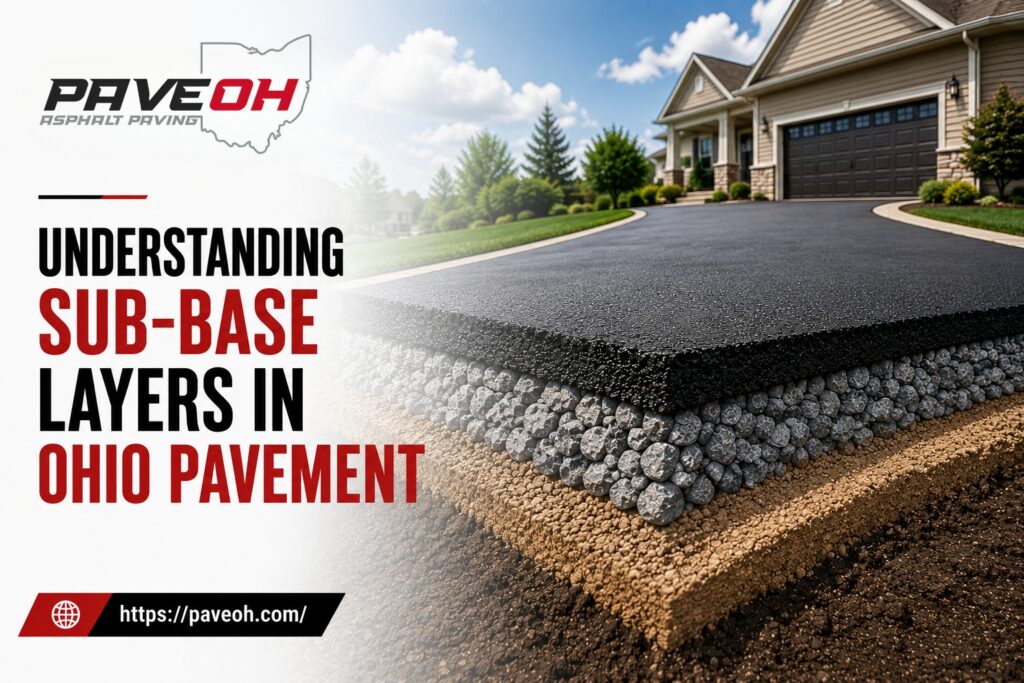
A pavement consists of several structural layers working together.
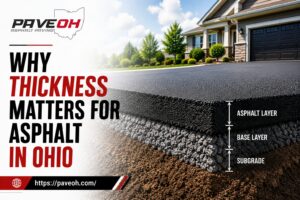
The typical pavement structure includes:
- Natural soil (subgrade)
- Compacted sub-base
- Base layer
- Asphalt surface
The sub-base sits between the natural ground and the pavement base. It is usually constructed using compacted crushed stone or other engineered aggregate materials designed to provide strength, stability, and drainage. Engineering references describe the sub-base as an unbound foundation layer that supports traffic loads and transfers them to the underlying soil while improving pavement performance.
Without a properly prepared sub-base, even high-quality asphalt may begin showing signs of distress much sooner than expected.
Why the Sub-base Is So Important
The asphalt surface may receive all the attention, but it cannot perform properly without adequate support beneath it.
A quality sub-base helps:
- Support heavy vehicle loads
- Prevent pavement settlement
- Improve drainage
- Reduce cracking
- Minimize rutting
- Increase pavement lifespan
- Protect against freeze-thaw damage
- Create a smooth finished surface
Pave OH explains that every paving project focuses on durable installations with firm foundations, proper grading, and effective drainage because these elements directly affect long-term pavement performance.
Pavement Structure Overview
| Pavement Layer | Primary Function |
|---|---|
| Asphalt Surface | Driving surface and weather protection |
| Base Layer | Distributes traffic loads |
| Sub-base Layer | Structural support and drainage |
| Subgrade | Natural soil foundation |
Each layer depends on the one beneath it.
If the sub-base weakens, every layer above becomes more vulnerable to damage.
How the Sub-base Supports Asphalt
1. Distributes Vehicle Weight
One of the sub-base’s primary jobs is spreading vehicle loads across a larger area.
Instead of allowing the full weight of vehicles to press directly on the soil, the sub-base distributes those forces evenly.
This helps prevent:
- Surface cracking
- Settlement
- Rutting
- Base movement
Commercial parking lots especially benefit because delivery trucks and heavier vehicles create much greater pavement stress than residential traffic.
2. Creates a Stable Foundation
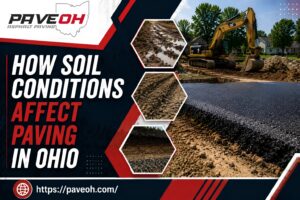
Fresh asphalt cannot compensate for unstable ground.
If the soil beneath shifts, settles, or becomes saturated with water, the pavement above eventually follows.
The compacted aggregate within the sub-base creates a stable working platform that minimizes movement and supports the entire pavement system.
Pave OH notes that proper base depth, grading, and compaction are key components of durable pavement construction across Central Ohio.
3. Improves Drainage
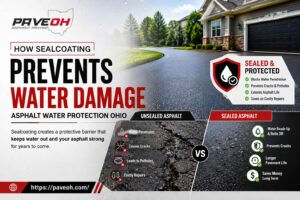
Water is one of asphalt’s biggest enemies.
Without proper drainage, moisture enters the pavement structure and weakens the supporting layers.
A well-designed sub-base allows water to move away from the pavement instead of remaining trapped beneath it.
Proper drainage helps prevent:
- Soft spots
- Base erosion
- Frost damage
- Surface cracking
- Potholes
Ohio’s frequent rain and seasonal snow make drainage especially important.
4. Protects Against Freeze-Thaw Cycles
Ohio weather constantly changes throughout the year.
Water trapped beneath pavement expands when frozen and contracts after thawing.
This repeated movement creates stress throughout the pavement structure.
A properly compacted sub-base reduces water retention while helping the pavement remain stable during seasonal temperature changes.
This is one reason Pave OH designs every project to perform under Ohio’s freeze-thaw cycles and changing weather conditions.
Materials Used in Sub-base Construction
The exact material depends on soil conditions and project requirements.
Common materials include:
- Crushed limestone
- Crushed gravel
- Recycled aggregate
- Processed stone
- Engineered aggregate blends
These materials are selected because they compact well while maintaining structural stability and drainage.
Engineering guidance describes sub-base materials as compacted unbound aggregates that transfer loads efficiently while supporting the pavement above.
Why Proper Compaction Matters
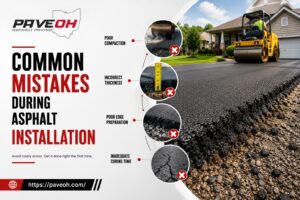
Installing quality aggregate alone is not enough.
The material must also be compacted correctly.
Proper compaction:
- Removes air pockets
- Increases strength
- Prevents settlement
- Improves load distribution
- Enhances drainage performance
Poor compaction leaves weak areas beneath the pavement.
As traffic repeatedly passes over those areas, the asphalt begins flexing excessively, eventually producing cracks or depressions.
Pave OH highlights proper compaction as a critical part of its paving process for long-lasting pavement.
Common Problems Caused by a Weak Sub-base
Many visible pavement failures actually begin below the surface.
A weak sub-base often causes:
Surface Cracking
Insufficient support allows asphalt to flex under traffic.
Over time, repeated movement creates cracks throughout the surface.
Potholes
When water reaches a weakened foundation, traffic gradually breaks apart the unsupported asphalt.
Eventually, potholes develop.
Rutting
Heavy traffic can permanently compress weak support layers.
Visible wheel-path depressions often indicate inadequate foundation strength.
Uneven Settlement
Some sections of pavement may sink while others remain level.
This creates low spots that collect water and accelerate deterioration.
Premature Pavement Failure
Instead of lasting decades, pavement with poor support may require significant repairs much sooner.
Signs the Sub-base May Be Failing
Property owners should watch for:
- Large interconnected cracks
- Repeated potholes
- Standing water
- Surface depressions
- Uneven pavement
- Edge failures
- Areas that feel soft under traffic
These symptoms often indicate problems beneath the asphalt rather than simply surface wear.
Why Site Preparation Matters
Every paving project begins long before asphalt is delivered.
Professional contractors evaluate:
- Soil conditions
- Drainage
- Existing pavement
- Traffic loads
- Elevation
- Moisture conditions
- Base requirements
Pave OH states that every installation emphasizes proper grading, drainage, premium materials, and engineered foundations to deliver pavement that lasts.
Without careful preparation, even premium asphalt cannot perform as intended.
Residential vs Commercial Sub-base Requirements
Different projects require different foundation designs.
| Project Type | Typical Sub-base Needs |
|---|---|
| Residential Driveway | Supports passenger vehicles |
| Apartment Complex | Moderate daily traffic |
| Retail Parking Lot | Heavy customer traffic |
| Industrial Facility | Frequent heavy trucks |
| Private Roads | Continuous vehicle loading |
Commercial properties generally require stronger foundations because they experience significantly greater traffic loads.
Why Professional Installation Matters
Constructing a durable pavement foundation requires specialized equipment, experience, and careful planning.
Professional contractors understand:
- Soil behavior
- Aggregate selection
- Compaction requirements
- Drainage design
- Grade control
- Ohio weather conditions
Skipping any of these steps can reduce pavement life significantly.
Pave OH has more than 25 years of experience serving Columbus and Central Ohio, providing residential and commercial paving solutions built with quality materials, proper drainage, and strong foundations.
Why Choose Pave OH?
At Pave OH, we understand that every successful paving project starts below the surface. Our team carefully evaluates soil conditions, drainage requirements, traffic demands, and foundation preparation before asphalt installation begins.
Our services include:
- Residential asphalt paving
- Commercial parking lots
- Driveway installation
- Asphalt resurfacing
- Blacktop replacement
- Gravel paving
- Sports courts
- Private roads
- Pavement repairs
- Site preparation
Using premium materials, modern equipment, and proven construction methods, we build pavement systems designed to withstand Ohio’s changing weather and heavy traffic while delivering long-lasting performance.
Final Thoughts
A quality asphalt surface is only as strong as the foundation beneath it. The pavement sub base Ohio plays a vital role in supporting traffic, improving drainage, reducing movement, and protecting pavement from premature deterioration caused by Ohio’s freeze-thaw climate.
Whether you’re installing a residential driveway or a large commercial parking lot, investing in proper sub-base preparation creates stronger, smoother, and longer-lasting pavement.
At Pave OH, we combine over 25 years of local paving experience with quality materials, expert grading, proper compaction, and durable foundation construction to deliver pavement that performs reliably for years to come. From new installations to resurfacing and repairs, our experienced team is committed to building every project on a foundation designed for long-term success.