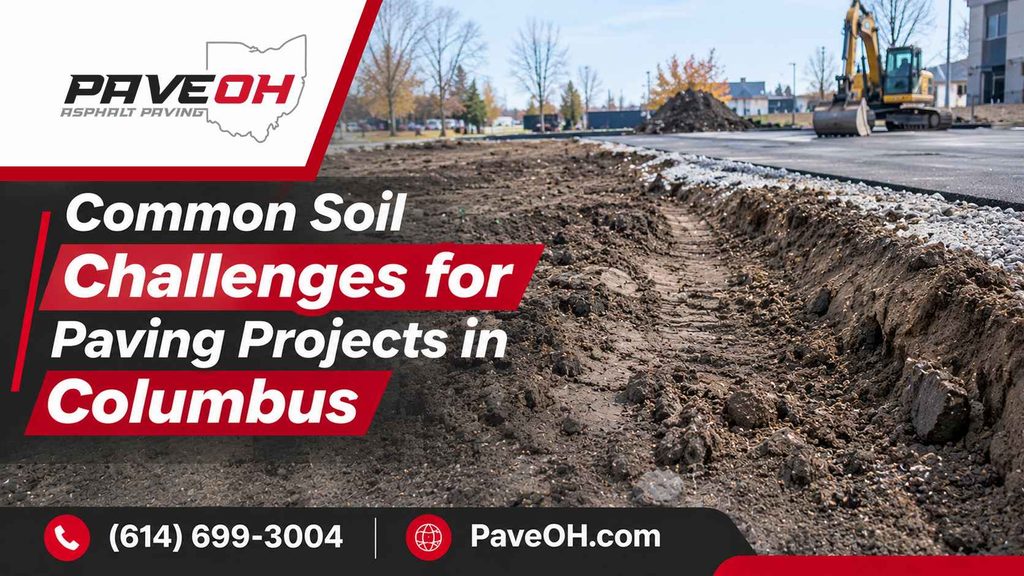
Have you ever wondered why some asphalt driveways stay smooth for years while others start cracking, sinking, or developing potholes much sooner? The problem may not be the asphalt itself. In many cases, it starts with the soil underneath.
Soil is the foundation of every paving project. It supports the stone base and asphalt surface above it. If the ground is too soft, wet, or poorly compacted, the pavement may not stay stable for long.
This is an important concern for property owners planning paving projects in Columbus, Ohio. Central Ohio has clay-heavy soils in many areas, along with seasonal rain and winter freeze-thaw cycles. These conditions can affect how well the ground supports asphalt.
Understanding common soil challenges can help homeowners and business owners make better paving decisions. With proper site evaluation, grading, drainage, and base preparation, many soil-related problems can be addressed before paving begins.
Why Soil Conditions Matter for Asphalt Paving
A strong asphalt surface needs more than quality paving materials. It also needs a stable foundation.
Most asphalt paving projects have three main layers:
- Subgrade: The natural or prepared soil beneath the pavement.
- Stone base: A compacted layer that supports the asphalt and helps distribute vehicle weight.
- Asphalt surface: The top layer that provides a smooth, durable driving surface.
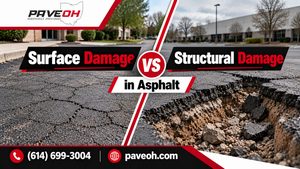
Each layer has an important job. If the soil underneath is weak, the stone base may lose support. This can cause the asphalt above it to settle, crack, or develop low spots.
That is why professional paving work should begin with an evaluation of the ground, not just the visible surface. Pave OH considers soil conditions, drainage, grading, and base stability when planning paving projects in Central Ohio. Pave OH+1
7 Common Soil Challenges for Paving Projects in Columbus
Different properties can have different ground conditions. However, several soil-related problems can affect asphalt driveways, parking lots, and private roads.
1. Clay Soil That Holds Too Much Water
Clay soil is one of the major concerns for paving projects in Central Ohio. Its small particles allow it to hold moisture for long periods.
After heavy rain, clay soil may become soft and difficult to compact. If this happens beneath a driveway or parking lot, the ground may not provide enough support for the pavement.
How it affects paving:
- Weakens the support beneath the stone base.
- Increases the risk of pavement settlement.
- Makes drainage more difficult.
- Can contribute to cracking and surface damage.
Possible solution: Proper grading, drainage improvements, and suitable base preparation can help manage moisture. If the soil is too weak, removing or stabilizing the affected area may be necessary.
2. Poor Drainage and Excess Moisture
Water is one of the biggest threats to a pavement foundation. When rainwater collects around or beneath asphalt, it can soften the soil and weaken the supporting layers.
This problem often occurs when a property has poor grading, low spots, or blocked drainage paths.
Common warning signs include:
- Water standing near the driveway.
- Muddy or soft ground along pavement edges.
- Repeated potholes in the same area.
- Low spots that collect water after rain.
Possible solution: Correcting the slope and creating a suitable drainage path helps move water away from the pavement. A properly prepared stone base also supports better pavement performance.
3. Loose or Poorly Compacted Soil
Soil must be properly prepared and compacted before the stone base and asphalt are installed.
If loose soil remains underneath the pavement, it may compress under the weight of vehicles. This can cause the surface to sink or become uneven over time.
The problem may be more noticeable in areas that carry frequent traffic, such as parking spaces, driveway entrances, and turning areas.
Possible solution: The contractor should prepare the subgrade and compact it properly before installing the base material. Weak areas may need excavation and replacement with suitable material.
4. Silty Soil That Becomes Weak When Wet
Silty soil has fine particles and can lose strength when it becomes saturated with water. It may also be more sensitive to moisture changes than well-drained granular soil.
When wet silty soil sits beneath asphalt, it may struggle to support repeated vehicle loads.
How it affects paving:
- Reduces support beneath the pavement.
- Can contribute to settlement and uneven surfaces.
- May increase the risk of frost-related movement.
- Can make construction difficult during wet conditions.
Possible solution: Proper drainage and subgrade preparation are important. Depending on the site, a contractor may recommend removing weak soil, adding suitable base material, or using an appropriate stabilization method.
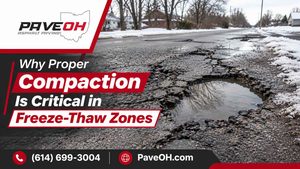
5. Freeze-Thaw Movement During Ohio Winters
Columbus experiences cold winters, and repeated freezing and thawing can put stress on pavement foundations.
When water enters the soil and freezes, it can expand. As temperatures rise, the ice melts and the ground becomes wet again. Repeated movement can affect the soil and pavement layers.
This is especially concerning when water remains trapped beneath the asphalt.
Possible results include:
- Cracks in the asphalt surface.
- Uneven or sunken sections.
- Potholes.
- Damage around pavement edges.
Possible solution: Good drainage, stable subgrade preparation, and a properly compacted stone base help reduce the impact of moisture and seasonal ground movement.
6. Unstable Fill Soil and Organic Material
Not all ground is made of firm, natural soil. Some properties contain areas that were previously filled during construction or landscaping.
Fill soil may include loose earth, mixed materials, or poorly compacted layers. Organic materials, such as topsoil and decomposing roots, are also unsuitable as a stable pavement foundation.
If these materials remain beneath asphalt, they may settle or break down over time.
Possible solution: The affected material may need to be excavated and replaced with suitable, compactable material. The final preparation depends on the depth and condition of the unstable area.
7. Uneven Ground and Poor Site Grading
A paving surface needs a suitable slope to direct rainwater away. If the ground is uneven or has incorrect grading, water may collect in certain areas.
Poor grading can also create differences in support beneath the pavement.
For example, a driveway that slopes toward a garage may allow water to collect near the entrance. Over time, moisture can affect the base and contribute to pavement damage.
Possible solution: Proper grading helps create a more stable foundation and allows water to flow toward suitable drainage areas.
Common Soil Problems and Their Effects on Asphalt
The following table explains how different ground conditions can affect paving projects and what preparation may help.
| Soil challenge | Possible pavement problem | Recommended approach |
|---|---|---|
| Wet clay soil | Soft foundation and settlement | Improve drainage and prepare the subgrade |
| Poorly compacted soil | Sinking and uneven surfaces | Proper soil compaction |
| Silty soil | Reduced support when wet | Moisture control and suitable base preparation |
| Unstable fill soil | Uneven settlement | Remove or replace unsuitable material |
| Poor drainage | Water damage and potholes | Correct grading and drainage |
| Frost-susceptible wet soil | Seasonal movement and cracking | Manage moisture and strengthen the foundation |
| Uneven ground | Water pooling and weak spots | Proper site grading |
Note: The right solution depends on the actual soil conditions, project design, and expected traffic.
How to Identify Soil Problems Before Paving
Some soil problems are easy to notice, while others remain hidden beneath the surface. A proper site inspection can help identify potential issues before construction begins.
Here are a few things property owners and paving contractors should check:
Look for Standing Water
Check the property after rainfall. If water remains in the same area for a long time, the site may have a drainage problem.
Check for Soft or Muddy Areas
Walk around the planned paving area. Ground that feels unusually soft or muddy may need additional preparation.
Inspect Existing Pavement
Look for repeated potholes, sinking areas, wide cracks, and uneven sections. These signs may indicate problems with the supporting layers beneath the asphalt.
Review the Property’s Previous Work
If the area was recently filled, excavated, or used for landscaping, the soil may need extra attention before paving.
Consider Soil Testing When Needed
Some ground problems cannot be confirmed through a visual inspection alone. For larger or more complex projects, soil testing can help identify soil strength, moisture sensitivity, and other important conditions.
How Proper Site Preparation Helps Prevent Soil-Related Paving Problems
Good site preparation is one of the most important steps in building durable asphalt pavement. It helps create a stable foundation before the asphalt is installed.
Here are the key steps involved:
- Site inspection: Evaluate the soil, existing surface, slope, and drainage conditions.
- Excavation: Remove old pavement and unsuitable soil where necessary.
- Subgrade preparation: Shape and compact the ground to create a stable foundation.
- Base installation: Add suitable crushed stone or other specified base material.
- Grading and drainage: Create the correct slope to move water away from the paved area.
- Asphalt installation: Apply and compact the asphalt at a thickness suited to the project’s intended use.
These steps help the pavement handle regular vehicle traffic and changing weather conditions. Pave OH’s paving process also includes excavation, grading, base preparation, and asphalt compaction. Pave OH+1
Soil Challenges in Residential and Commercial Paving Projects
Soil conditions matter in every paving project, but the expected use of the paved area can change how much support is needed.
Residential Driveways
Home driveways usually handle cars, SUVs, and occasional delivery vehicles. However, weak soil can still cause sinking, cracks, and potholes.
Before installing a new driveway, contractors should check the existing ground, drainage, and base condition. This is especially important for properties with clay-heavy or poorly drained soil.
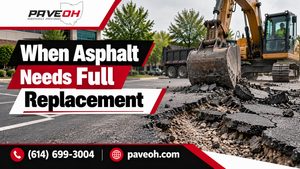
If the existing foundation has failed, simply adding a new asphalt layer may not solve the problem. In some cases, Driveway Replacement in Columbus Ohio may be a better option.
Commercial Parking Lots
Commercial parking lots often handle more traffic and heavier vehicles than residential driveways. Delivery trucks, service vehicles, and frequent turning movements can put extra pressure on the pavement foundation.
For these projects, stable soil, proper compaction, suitable base thickness, and effective drainage are especially important.
Professional Commercial Asphalt Paving in Columbus Ohio should consider the site’s soil conditions and expected traffic before construction begins.
Common Mistakes to Avoid Before Starting a Paving Project
Even good asphalt materials may not perform well when the ground is not prepared correctly.
Avoid these common mistakes:
- Ignoring soft soil: Weak ground should be addressed before paving.
- Paving over standing water: Excess moisture can affect the foundation.
- Skipping proper compaction: Loose soil may settle under vehicle weight.
- Ignoring drainage: Water should not remain trapped around or beneath the pavement.
- Using the same preparation for every property: Soil conditions can vary from one site to another.
- Covering damaged pavement without checking the base: A new surface may not fix an existing foundation problem.
Taking care of these issues before paving can help reduce future maintenance and improve pavement performance.
How Pave OH Helps Address Soil Challenges in Columbus
A successful paving project starts with understanding the ground beneath the surface. At Pave OH, we know that soil conditions, drainage, and base preparation play an important role in asphalt performance across Central Ohio.
Since 2000, our team has worked on residential and commercial paving projects throughout the region. We focus on the conditions that affect the finished pavement, including grading, soil stability, drainage, and proper base preparation. Pave OH
Our approach includes:
- On-site evaluation: We inspect the property and review its existing conditions.
- Proper site preparation: We address unsuitable ground and prepare the foundation where needed.
- Grading and drainage: We help direct water away from the paved area.
- Stable base preparation: We focus on proper base installation and compaction.
- Clear recommendations: We explain whether repair, resurfacing, or replacement is the right choice.
Whether you need a new driveway, parking lot, or pavement repair, our goal is to provide a solution that fits your property and its needs.
If you are planning Residential Asphalt Paving in Columbus Ohio or need help with an existing pavement problem, Pave OH is ready to help.
Frequently Asked Questions
1. What type of soil is best for asphalt paving?
Stable, well-drained soil that can be properly compacted provides a good foundation for asphalt paving. The exact requirements depend on the project, soil conditions, and expected traffic.
2. Is clay soil bad for asphalt driveways?
Clay soil is not always unsuitable for paving. However, it can hold moisture and become soft after rainfall. Proper drainage, subgrade preparation, and a stable stone base help manage these challenges.
3. Can you pave over soft or wet soil?
Paving directly over soft or excessively wet soil is generally not recommended. The soil should be evaluated and prepared first. This may involve drying, compaction, excavation, replacement, or stabilization, depending on the conditions.
4. How does poor drainage affect asphalt pavement?
Poor drainage allows water to collect around or beneath the pavement. This moisture can weaken the supporting layers and increase the risk of settlement, cracking, and potholes.
5. Why does asphalt sink after installation?
Asphalt may sink when the soil or base beneath it is weak, poorly compacted, or affected by excess moisture. A proper inspection can help identify the cause and determine the right repair.
6. Is soil testing necessary before every paving project?
Not always. A site inspection may be enough for straightforward projects. However, soil testing can be helpful when the ground is unstable, the project is large, or the soil conditions are uncertain.
7. Can soil problems be fixed without replacing the entire driveway?
Sometimes. If the problem is limited to a small area, localized excavation and base repair may be enough. However, widespread foundation failure may require a complete driveway replacement.
Final Thoughts
Soil conditions play a major role in the success of any asphalt paving project. Clay soil, poor drainage, loose fill, and weak compaction can all affect pavement stability. These challenges become even more important in Columbus, where seasonal rain and winter freeze-thaw cycles place extra stress on paved surfaces.
The best way to prevent many of these problems is to prepare the ground properly before installing asphalt. A careful site inspection, suitable grading, effective drainage, and a stable base can make a significant difference in long-term performance.
At Pave OH, we focus on more than creating a smooth asphalt surface. We pay attention to the foundation, preparation, and details that help your pavement perform well. We also believe in honest recommendations, clear communication, and work that meets your property’s needs.
Planning an asphalt paving project in Columbus or Central Ohio? Contact Pave OH for an on-site evaluation and a free estimate.