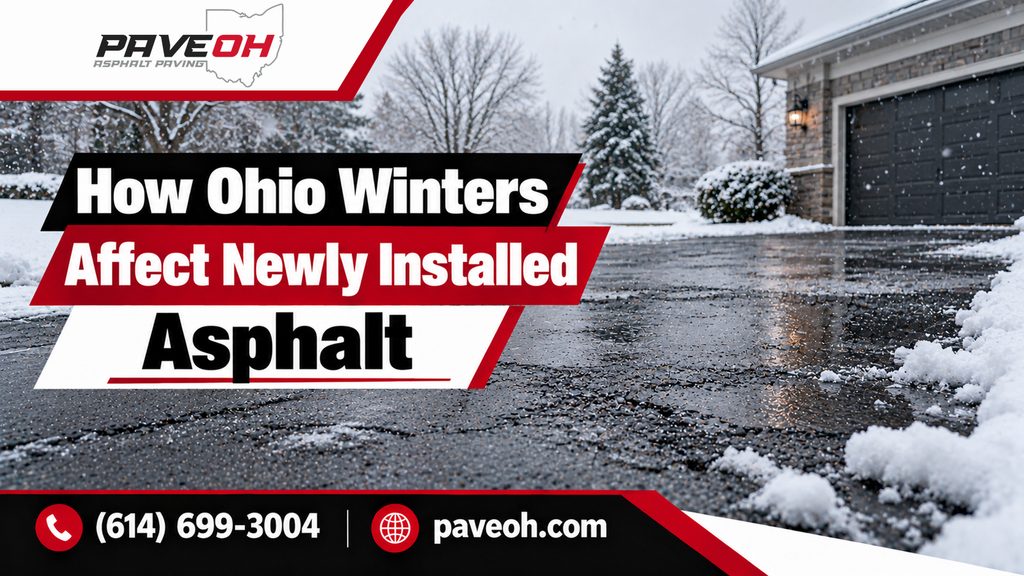
How does winter affect newly installed asphalt in Ohio? Ohio winters can expose new asphalt to freezing temperatures, snow, rain, moisture, and repeated freeze-thaw cycles. Although properly installed and compacted asphalt can withstand normal seasonal weather, problems with drainage, pavement preparation, compaction, or early traffic can make a new driveway more vulnerable to cracking, surface deterioration, and settlement.
The first winter is an important period for observing how a newly paved surface performs. Asphalt begins cooling and hardening after installation, but its long-term durability also depends on the quality of the materials, the stability of the base, the way water drains away, and the traffic the pavement receives. Cold weather does not automatically damage new asphalt; rather, winter can expose weaknesses that developed during construction or result from unsuitable site conditions.
Pave OH provides residential and commercial paving services throughout Columbus and Central Ohio. Understanding the winter impact new asphalt Ohio property owners may experience helps homeowners and property managers protect their investment, recognize developing problems, and plan appropriate maintenance before minor concerns become more serious.
1. Why Ohio Winters Can Challenge Newly Installed Asphalt
Asphalt pavement must withstand changes in temperature, moisture, and traffic throughout the year. In Ohio, winter brings several of these stresses together.
Temperatures can move above and below freezing, allowing water to freeze and thaw repeatedly. Rain and melting snow can introduce moisture to pavement cracks, joints, edges, and low areas. Cold temperatures also cause asphalt materials to contract, which can contribute to cracking when the pavement cannot accommodate the resulting stress.
The condition of the new pavement matters considerably. A driveway installed over a stable, well-prepared base with suitable drainage is generally better positioned to handle these seasonal changes than one constructed over weak soil or poorly compacted supporting materials.
New asphalt is not automatically fragile simply because winter arrives shortly after installation. When a paving project is properly designed, installed, and compacted under suitable conditions, the pavement can perform through the winter. However, underlying construction problems may become more apparent as the surface experiences temperature changes and moisture exposure.
This is why winter protection should begin before installation, continue through the initial period of use, and include sensible inspections after the weather changes.
2. Freeze-Thaw Cycles Can Affect New Asphalt
Freeze-thaw cycles are among the most important winter-related factors affecting pavement in Ohio.
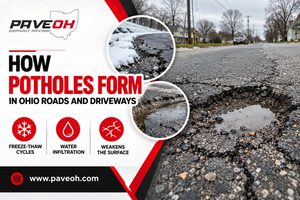
A freeze-thaw cycle occurs when temperatures move above and below freezing, allowing water to thaw and then freeze again. If moisture enters cracks or vulnerable pavement layers, repeated freezing and thawing can contribute to deterioration.
The effect depends on the condition of the pavement and the materials underneath it. Properly constructed asphalt with effective drainage may handle seasonal temperature changes well. Pavement with open cracks, inadequate bonding, trapped moisture, or weak support may be more susceptible to damage.
How the process affects pavement
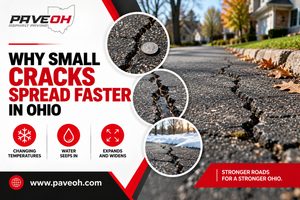
First, rain or melting snow introduces water to the pavement surface. Water may enter small openings or reach vulnerable areas through joints and edges.
When temperatures fall, trapped water may freeze and expand. Repeated cycles can contribute to the widening of existing openings or deterioration of weak pavement materials.
As temperatures rise, the ice melts. Water may then move farther into the pavement structure, particularly when drainage is inadequate.
Over time, continued moisture exposure and traffic can contribute to cracking, surface separation, and potholes in vulnerable areas.
The Ohio Department of Transportation’s pavement guidance recognizes thermal cracking, surface disintegration, and debonding among the types of pavement distress that inspectors monitor. These problems can have different causes, so visible damage should be evaluated rather than automatically attributed to winter alone.
3. Cold Temperatures Can Contribute to Asphalt Cracking
Asphalt contains a binder that helps hold aggregate particles together. Like other materials, this binder responds to temperature changes.
As temperatures drop, asphalt materials contract. If the pavement experiences excessive thermal stress, cracking can develop. The risk depends on factors such as the asphalt mixture, binder properties, construction quality, age, and existing pavement conditions.
New asphalt that has been installed and compacted appropriately should not be expected to crack simply because ordinary winter temperatures arrive. However, poor construction joints, inadequate compaction, unsuitable materials, or weaknesses in the supporting layers can make a surface more vulnerable.
What new cracks may look like
During or after winter, property owners may notice narrow cracks crossing the driveway, cracks following construction joints, or openings near the pavement edges.
Not every crack means the entire driveway has failed. Some cracking may be localized, while other patterns may indicate more extensive structural or thermal distress.
The important considerations are the location, width, number, and progression of the cracks. If openings continue widening, appear alongside sinking areas, or lead to loose asphalt, arrange an assessment to identify the underlying cause.
Avoid covering a new crack without first determining whether it is a minor surface defect or part of a larger problem.
4. Water and Melting Snow Can Threaten the Pavement Foundation
Water management is essential for asphalt durability. Even when the surface appears new, its long-term performance depends on protecting the supporting layers beneath it.
Rain, snowmelt, and water runoff can collect around low spots, driveway entrances, edges, and areas with inadequate grading. If moisture reaches the base or subgrade, it can weaken the support available to the asphalt.
The Ohio Department of Transportation identifies inadequate drainage as a major contributor to pavement distress. Excess moisture can reduce the strength of supporting materials and contribute to deformation, stripping, raveling, and debonding.
Why the base matters
The asphalt surface distributes vehicle loads across the supporting layers. If the base becomes unstable or the underlying soil moves, the pavement may begin to settle or crack.
This means a new driveway may develop problems even if the asphalt mixture itself was suitable. Water can affect the foundation, and the resulting movement can become visible at the surface.
After rain or snowmelt, check whether water flows away from the driveway as intended. Repeated pooling should be investigated rather than treated as an unavoidable consequence of winter.
Correcting drainage problems early can help reduce moisture exposure and improve the conditions under which the pavement must perform.
5. Poor Compaction Can Become More Noticeable After Winter
Compaction is one of the critical steps in asphalt installation. The hot asphalt mixture must be placed and compacted while it remains workable enough to achieve the required density.
Cold conditions can shorten the time available for placement and compaction because asphalt cools more quickly. If a paving crew cannot achieve adequate compaction, the finished pavement may have excessive air voids or other weaknesses.
These construction-related issues can affect long-term durability and may contribute to moisture infiltration, surface disintegration, or premature deterioration.
Why proper installation timing matters
The suitability of paving weather depends on more than the calendar. Air temperature, pavement temperature, mix temperature, layer thickness, wind, site conditions, and the time needed to complete compaction all influence the installation process.
A contractor must ensure that the asphalt can be placed and compacted properly under the conditions present on the day of the project.
This is one reason cold-weather paving requires careful planning. The goal is not simply to finish the driveway before winter, but to complete the work under conditions that support a durable result.
If newly installed pavement develops extensive raveling, loose aggregate, or widespread surface deterioration soon after construction, its installation conditions and material quality may deserve closer review.
6. Does New Asphalt Need Time Before You Use It in Winter?
Yes. Newly installed asphalt needs sufficient time to cool and stabilize before it is opened to traffic. The exact waiting period depends on weather, pavement thickness, the type of project, and the loads the surface will carry.
However, asphalt does not cure in exactly the same way as concrete. It cools and becomes firmer after placement, while the binder continues to age and change over time.
Property owners should follow the paving contractor’s instructions about when to use the driveway and when to allow heavier vehicles onto the surface.
Avoid premature heavy traffic
Passenger vehicles, delivery trucks, trailers, and construction equipment do not place identical demands on pavement. Heavy loads and tight turning movements may create greater stress, particularly if the asphalt is still warm or the underlying support is inadequate.
If your driveway was recently paved, avoid assuming that it is ready for every type of vehicle just because the surface looks firm.
Follow project-specific guidance
There is no single waiting period that is correct for every new driveway. Weather, installation details, surface temperature, and anticipated traffic affect the recommendation.
Pave OH’s guidance on the timeline of an asphalt paving project explains that weather and site conditions influence paving schedules and when traffic can return.
Following the contractor’s instructions is especially important when a newly installed surface will experience its first period of cold weather.
7. Snow Removal Can Affect Newly Installed Asphalt
Snow removal is necessary for many Ohio properties, but the methods used can affect the condition of the pavement.
Snow shovels, snow blowers, plows, and other equipment should be operated with the surface in mind. Poor technique may scrape the pavement, damage vulnerable edges, or disturb sections that already have construction defects.
Use appropriate equipment and techniques
When clearing a new driveway, avoid driving sharp metal edges forcefully into the surface. Operate equipment carefully around driveway boundaries, garage entrances, and transitions to sidewalks.
If a snowplow is used, its blade should be adjusted and operated appropriately for the pavement and the equipment. A properly installed asphalt driveway should not require the operator to scrape aggressively against the surface to remove snow.
Pay attention to the edges
The edges of asphalt can be vulnerable when they lack lateral support or have been constructed next to soft soil. Repeated contact with snow-removal equipment may worsen an already weak boundary.
Inspect edges after snow removal and note any areas where material appears loose or broken. Small, localized damage may have a different cause and remedy from widespread deterioration.
8. How Road Salt and Ice Melt Products Affect New Asphalt
Salt and other deicing products are commonly used to improve winter traction. Their effect on asphalt depends on the product, its use, environmental conditions, and the condition of the pavement.
Asphalt is generally less susceptible to the direct scaling mechanisms associated with concrete, but that does not mean every deicing product or application is harmless in every situation. Deicing practices can influence how long moisture remains on the surface and how frequently water moves through vulnerable openings.
For a newly installed driveway, a sensible approach is to follow product directions, avoid excessive application, and prioritize safe snow and ice management.
Practical winter precautions
Remove snow using suitable equipment and methods before relying entirely on chemical deicers. Use deicing materials according to their labels and the weather conditions, and avoid allowing runoff to collect repeatedly at the same pavement edge.
Most importantly, do not treat salt as a solution for drainage or structural problems. If water continues pooling or cracks are allowing moisture into the pavement, the underlying issue should be evaluated.
9. Why the First Winter Is an Important Inspection Period
The first winter provides an opportunity to observe how a new driveway responds to the property’s actual conditions.
A well-installed surface may come through the season without significant problems. However, seasonal temperature changes, runoff, snow removal, and vehicle traffic can reveal areas that deserve attention.
Look for the following signs after major weather changes:
- New cracks or existing openings that appear to widen.
- Water that repeatedly pools in the same location.
- Depressions or areas where the surface appears to be settling.
- Loose aggregate or sections of asphalt breaking apart.
- Damage near driveway edges or construction joints.
- Surface separation or patches that seem to be lifting.
These observations do not automatically prove that installation was defective. Pavement distress can have several causes, and some defects may relate to drainage, soil movement, traffic, or other site conditions.
Documenting changes and arranging a timely inspection can help identify the cause before more extensive deterioration develops.
10. How to Prepare Newly Installed Asphalt Before Winter
The best time to reduce winter-related problems is before freezing conditions become persistent. Preparation should focus on the entire pavement system rather than just the visible surface.
Check drainage and grading
Make sure rainwater and melting snow have a suitable route away from the driveway. Look for low spots, blocked drainage paths, and areas where surrounding soil directs water onto the asphalt.
If the driveway was recently installed and water is consistently pooling, contact the contractor to discuss the issue.
Follow the contractor’s maintenance instructions
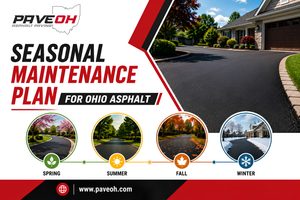
New asphalt should be maintained according to the surface condition and the contractor’s recommendations. Avoid applying treatments merely because winter is approaching.
Sealcoating, for example, is not a substitute for proper compaction, adequate drainage, or structural repairs. The surface must be suitable for the treatment, and the product must be applied under appropriate conditions.
Keep the pavement clean
Remove leaves, mud, and debris that block drainage routes or conceal developing problems. Keeping the driveway reasonably clean also makes it easier to inspect for new cracks and changes in surface condition.
Monitor vehicle use
If heavy vehicles will use the driveway, confirm that the pavement design and supporting foundation are appropriate for the expected loads.
Try to avoid unnecessary tight turns and repeated heavy loading on vulnerable areas, particularly if the driveway has not yet been cleared for that use.
Schedule an inspection when needed
You do not necessarily need a special inspection simply because winter is coming. However, if you notice unexpected drainage problems, extensive cracking, settlement, or loose pavement soon after installation, have the condition evaluated.
An assessment can help distinguish normal surface changes from a defect or structural concern that requires attention.
11. Choosing the Right Service if Winter Damage Appears
A newly installed driveway that develops a defect does not automatically need to be replaced. The appropriate treatment depends on the size and pattern of the damage, the condition of the asphalt, and the stability of the underlying layers.
Driveway repair in Columbus Ohio may be appropriate when a problem is localized and the surrounding pavement and base remain stable. The repair should address the cause of the defect instead of simply concealing its visible symptoms.
For narrow cracks in otherwise suitable pavement, crack sealing in Columbus Ohio may help reduce moisture entry when the crack type and condition are appropriate for the treatment. Crack sealing will not correct settlement, weak foundations, or widespread structural failure.
When a driveway has extensive deterioration, recurring defects, or significant foundation problems, driveway replacement in Columbus Ohio may need to be considered. An evaluation should identify whether the base, grading, and drainage also require corrective work.
The correct approach should depend on a site-specific assessment. Applying the same treatment to every winter-related defect can lead to ineffective repairs if the cause has not been identified.
12. Is Resurfacing Suitable for Winter-Damaged Asphalt?
Resurfacing can be an option when the existing pavement has surface deterioration but remains structurally sound enough to support a new asphalt layer.
It may improve a worn or uneven surface, but it does not automatically correct an unstable base, extensive settlement, or drainage problems. Those conditions must be addressed before determining whether a new surface layer is appropriate.
Asphalt resurfacing in Columbus Ohio may be worth evaluating when the underlying pavement is stable and the damage is primarily confined to the existing surface. The condition of the driveway should be assessed before resurfacing is selected.
In cases involving significant foundation failure, more extensive work may be necessary. Installing new asphalt over unresolved structural problems can allow the same damage to return.
13. Residential and Commercial Asphalt Need Suitable Winter Planning
Winter affects different paved properties in different ways. The amount of traffic, the size of the paved area, drainage conditions, and the type of vehicle using the surface all influence the maintenance requirements.
Residential driveways generally accommodate household vehicles, occasional deliveries, and other property-related traffic. Nevertheless, large work vehicles or repeated heavy loads can place additional demands on the surface.
Residential asphalt paving in Columbus Ohio should be planned around the property’s expected use, soil conditions, drainage, and appropriate pavement construction. These considerations help create a surface that is better prepared for seasonal weather.
Commercial properties may have delivery trucks, frequent vehicle movements, parking demands, and larger paved areas. These factors can make construction planning and ongoing inspections particularly important.
Commercial asphalt paving in Columbus Ohio should reflect anticipated traffic loads and site requirements. Adequate base preparation, compaction, drainage, and suitable materials all contribute to pavement performance during demanding weather conditions.
In both cases, winter preparedness begins with sound construction and continues through suitable maintenance.
14. Common Mistakes to Avoid During the First Winter
Several avoidable mistakes can make it harder to protect a newly installed driveway.
Assuming new asphalt cannot develop problems
New pavement is not immune to drainage issues, installation defects, or structural weaknesses. Monitor the surface and investigate unusual changes rather than assuming that every new driveway will perform perfectly.
Using the driveway before receiving clearance
The correct time to resume traffic depends on project conditions. Follow the contractor’s instructions, particularly if heavy vehicles will use the pavement.
Ignoring standing water
Repeated pooling can indicate an issue with grading or drainage. Water-related problems should be addressed at the source rather than left to persist through winter.
Applying sealcoat immediately
Sealcoating is a maintenance treatment that must be applied when the asphalt and weather conditions are appropriate. New asphalt generally requires time before sealcoating is suitable, and the exact timing depends on the product and recommendations for the pavement.
Treating every crack with the same method
A small surface crack may require a different response from a crack associated with settlement or widespread structural distress. Identify the likely cause before choosing a treatment.
Blaming winter for every defect
Winter can contribute to deterioration, but it may also expose weaknesses caused by the original installation, inadequate drainage, unstable soil, or traffic demands. Identifying the cause helps guide a more effective response.
Frequently Asked Questions
Can newly installed asphalt survive its first Ohio winter?
Yes. Properly designed, installed, and compacted asphalt can withstand normal seasonal weather. Performance depends on factors such as construction quality, drainage, the supporting foundation, and the traffic the surface receives.
Can snow and freezing temperatures crack new asphalt?
Cold temperatures cause asphalt materials to contract, and repeated temperature changes can contribute to thermal stress. Cracks may develop when the pavement cannot accommodate that stress, particularly if other weaknesses exist. Cold weather alone does not mean that a correctly installed surface will automatically crack.
Does new asphalt need to cure before winter?
Asphalt cools and hardens after placement, but it does not cure exactly like concrete. Follow the contractor’s guidance on initial traffic, heavier loads, and any recommended maintenance treatments. Good installation and suitable compaction are important for long-term performance.
How long should I wait before driving on new asphalt?
The appropriate waiting period depends on temperature, pavement thickness, weather, and project conditions. Ask the paving contractor for specific guidance instead of relying on one general timeframe for all driveways.
Should I sealcoat new asphalt before its first winter?
Not automatically. New asphalt generally needs time before sealcoating is suitable. The proper timing depends on the pavement condition, product requirements, and contractor recommendations. Sealcoating does not replace crack repair or correct structural problems.
Why is water pooling on my new driveway?
Pooling may indicate an issue with grading, settlement, or drainage. Because water can affect supporting materials, recurring puddles should be investigated, particularly when they develop soon after installation.
Can I use salt to melt ice on a new asphalt driveway?
Follow the instructions for the specific deicing product and use only as needed for safe winter access. Asphalt is not affected by deicing products in the same way as concrete, but excessive use, runoff, and existing pavement vulnerabilities still deserve consideration.
What should I do if my new driveway develops cracks after winter?
Observe the cracks’ location, width, and pattern, and arrange an assessment if they widen, multiply, or appear alongside settlement, loose material, or water pooling. Some defects are localized; others may indicate a deeper problem. The cause should be identified before selecting a repair method.
Is resurfacing enough to fix winter damage?
It depends on the condition of the existing pavement. Resurfacing may be suitable for certain surface-level problems when the foundation remains stable. Extensive structural damage, poor drainage, or settlement may require more comprehensive work.
Conclusion: Prepare New Asphalt for Ohio’s Winter Conditions
Ohio winters can challenge newly installed asphalt through freezing temperatures, moisture, snowmelt, and repeated freeze-thaw cycles. These conditions may expose weaknesses in pavement preparation, compaction, drainage, or the supporting foundation. However, a properly installed surface with suitable drainage and appropriate maintenance can perform through normal seasonal weather.
Property owners should follow the contractor’s instructions for initial traffic, monitor drainage, use appropriate snow-removal methods, and pay attention to new cracks or depressions. If unexpected damage appears, investigate the cause before applying a surface treatment or arranging major repairs.
Pave OH provides residential and commercial paving services throughout Columbus and Central Ohio. If your new driveway shows signs of winter-related deterioration or you are planning asphalt paving before cold weather arrives, contact Pave OH at (614) 699-3004 to discuss your property and request an estimate.