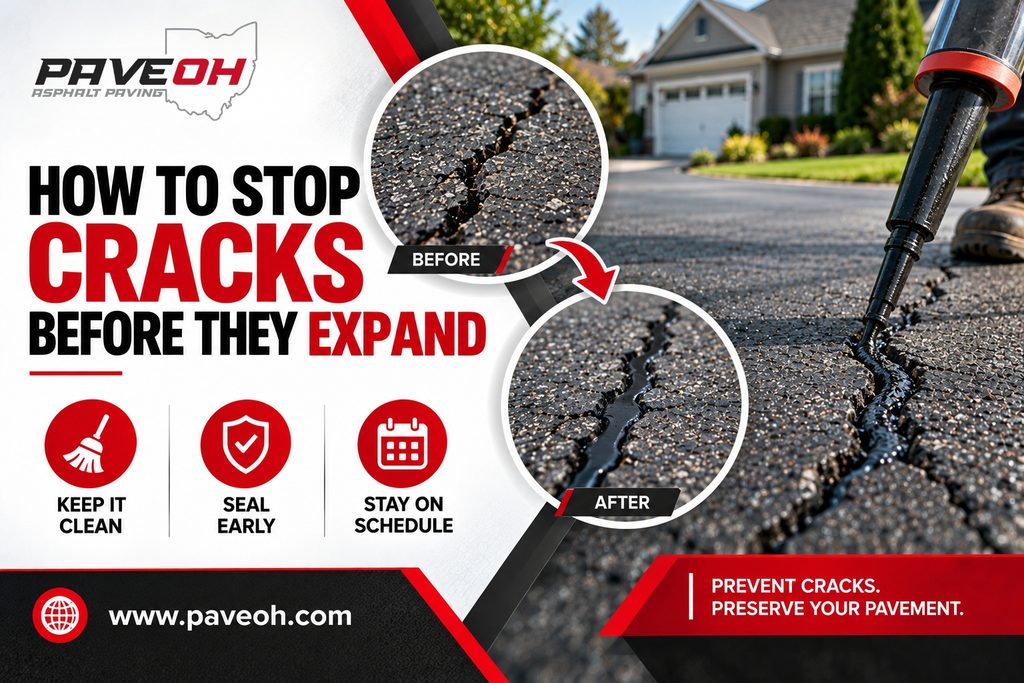
How Can You Stop Asphalt Cracks Before They Expand? How can a small asphalt crack become a much larger pavement problem? In Ohio, moisture, freeze-thaw cycles, traffic, and pavement aging can all contribute to crack growth. Effective crack prevention asphalt Ohio maintenance focuses on finding cracks early, limiting water infiltration, maintaining drainage, and repairing damage before it spreads.
Pave OH notes that water infiltration, freeze-thaw cycles, UV exposure, heavy traffic, and insufficient maintenance can contribute to asphalt deterioration. Its guidance recommends inspecting pavement regularly and addressing small cracks early.
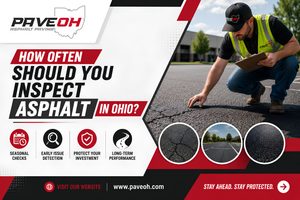
1. Inspect Asphalt Regularly
The first step is identifying cracks while they are still relatively small.
Inspect driveways, parking lots, and other asphalt surfaces for:
- Hairline cracks
- Long transverse cracks
- Longitudinal cracks
- Cracks around potholes
- Crumbling pavement edges
- Areas where separate cracks are beginning to connect
Pave OH recommends regular inspections and early attention to small cracks as part of residential asphalt maintenance.
2. Seal Suitable Cracks Early
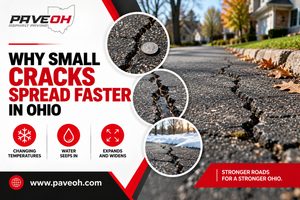
Water can enter through cracks and reach areas beneath the asphalt. Keeping moisture out is therefore an important part of preventative maintenance.
Pave OH describes crack sealing as a way to close pavement openings and reduce water penetration. Its driveway sealing guidance also explains that untreated cracks can allow moisture beneath the asphalt, where Ohio’s freeze-thaw cycles can worsen deterioration.
Crack treatment should be selected according to the type and condition of the pavement rather than applied to every crack automatically.
3. Don’t Ignore Drainage
Good drainage is essential to pavement performance.
Standing water around cracked asphalt can increase moisture exposure and contribute to deterioration. Pave OH considers drainage and grading when evaluating asphalt projects and emphasizes proper water management as part of pavement care.
Watch for:
- Repeated puddles
- Low areas
- Blocked drainage
- Water flowing toward pavement
- Erosion along pavement edges
- Cracks that repeatedly appear in the same location
If cracking and standing water occur together, the drainage problem may need to be addressed alongside the asphalt damage.
4. Prepare Asphalt Before Winter
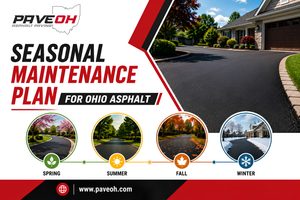
Ohio’s freezing and thawing conditions can put additional stress on existing cracks.
Before winter, inspect the pavement and address appropriate cracks, drainage issues, and other visible deterioration. Pave OH notes that Ohio asphalt is exposed to freeze-thaw cycles, rainfall, road salt, and changing temperatures.
Preparing pavement before harsh seasonal conditions can help limit opportunities for moisture to enter vulnerable areas.
5. Keep the Surface Clean
Routine cleaning makes cracks and other pavement problems easier to identify.
Leaves, dirt, and debris can hide small openings. Oil and chemical spills can also contribute to surface deterioration if they remain on asphalt.
Pave OH recommends keeping asphalt clean and removing oil, fuel, and chemical spills promptly.
A clean surface also makes professional inspection and repair preparation easier.
6. Consider Sealcoating for Suitable Asphalt
Sealcoating can provide additional surface protection when the asphalt is structurally sound.
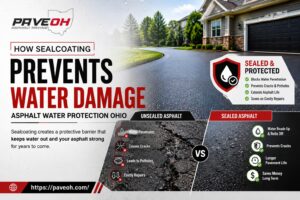
Pave OH describes sealcoating as a preventative treatment that helps protect asphalt from moisture, oxidation, UV exposure, oil, chemicals, and everyday surface wear.
However, sealcoating shouldn’t be used to simply cover significant pavement damage. Cracks and necessary repairs should be addressed before the coating is applied.
Pave OH specifically states that crack sealing and proper preparation are important before sealcoating because untreated cracks can allow moisture-related problems to continue beneath the coating.
7. Repair Potholes Promptly
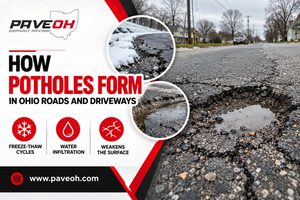
Cracking and potholes can develop together.
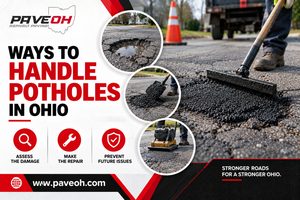
Once a pothole forms, continued traffic and moisture can cause surrounding asphalt to deteriorate further. Pave OH recommends timely pothole repair as part of maintaining pavement and preventing localized damage from becoming more extensive.
If potholes repeatedly return in the same area, the underlying drainage or base conditions should also be evaluated.
8. Watch for Connecting Cracks
A single crack is different from a network of cracks spreading across a large section of pavement.
When cracks begin connecting, the affected area may be experiencing broader deterioration.
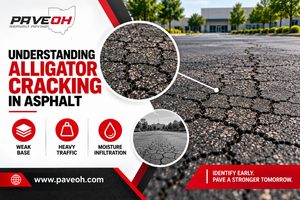
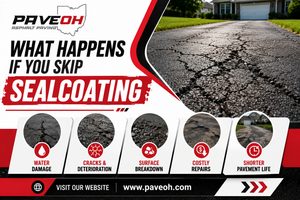
Pave OH explains that minor cracks can eventually contribute to potholes, base failure, or widespread surface damage when they remain untreated.
If cracks are becoming interconnected, a professional evaluation can help determine whether simple crack treatment remains appropriate.
9. Protect Pavement From Unnecessary Stress
Traffic is another factor in asphalt deterioration.
Heavy vehicles, repeated turning, and concentrated traffic can place additional stress on already weakened pavement. Pave OH considers traffic demands when recommending asphalt solutions for residential and commercial properties.
Where practical, avoid placing unnecessary heavy loads on visibly damaged areas and address pavement problems before they become more extensive.
10. Know When Crack Sealing Isn’t Enough
Not every pavement problem can be solved with crack sealing.
If asphalt has widespread interconnected cracking, potholes, settlement, or structural deterioration, the underlying problem may require a different repair approach.
Pave OH offers several repair options, including crack sealing, patching, resurfacing, and replacement, depending on pavement condition.
The goal is to match the treatment to the actual condition of the pavement.
11. Consider Patching for Localized Damage
If deterioration is limited to specific areas, asphalt patching may be appropriate.
Pave OH describes patching as a method for repairing localized problems such as cracks, potholes, depressions, and eroded areas. The process includes preparing the damaged section, installing asphalt material, and compacting the repair.
Addressing localized damage early can help prevent it from spreading into surrounding pavement.
12. Consider Resurfacing When Surface Damage Is Widespread
When cracking and surface deterioration affect a larger area, individual crack repairs may no longer be enough.
If the existing pavement remains structurally suitable, resurfacing can provide a new asphalt surface over the prepared pavement. Pave OH lists asphalt resurfacing and overlays among its services for worn pavement.
Resurfacing should be based on an evaluation of the existing pavement rather than used simply to hide a failed foundation.
Asphalt Crack Prevention Checklist
| Maintenance Step | Purpose |
|---|---|
| Inspect regularly | Identify cracks early |
| Seal suitable cracks | Reduce moisture entry |
| Maintain drainage | Limit standing water |
| Repair potholes | Prevent localized damage from expanding |
| Clean spills | Reduce surface deterioration |
| Sealcoat suitable pavement | Add surface protection |
| Inspect after winter | Identify seasonal damage |
| Monitor recurring cracks | Find possible underlying problems |
| Consider resurfacing when appropriate | Address widespread surface wear |
When Should You Have the Pavement Evaluated?
A professional assessment is particularly useful when:
- Cracks are getting wider
- Multiple cracks are connecting
- Potholes are developing
- Water repeatedly collects near cracks
- Previous repairs are failing
- Cracking covers a substantial area
- The pavement is also sinking or breaking apart
Pave OH’s asphalt repair process begins with evaluating the severity and spread of damage before recommending an appropriate repair method.
This helps distinguish a maintenance issue from a larger structural pavement problem.
Final Thoughts
Effective crack prevention asphalt Ohio starts with early detection. Small cracks can provide pathways for moisture, and Ohio’s seasonal freezing and thawing can place additional stress on already vulnerable pavement. Regular inspections, appropriate crack sealing, proper drainage, timely pothole repairs, and suitable sealcoating can all form part of a preventative maintenance program.
Pave OH recommends addressing small cracks before they expand and combining crack care with broader pavement maintenance. When deterioration becomes widespread, patching, resurfacing, or replacement may be considered depending on the condition of the existing pavement.
For Pave OH’s asphalt services in Columbus Ohio, the appropriate solution is based on factors such as pavement condition, drainage, grading, traffic demands, and intended use. Its services include asphalt repair, crack sealing, resurfacing, sealcoating, and other pavement maintenance solutions.
The key is to address cracks while the surrounding pavement is still sound. Early maintenance can help limit moisture intrusion, slow deterioration, and preserve the useful life of Ohio asphalt.