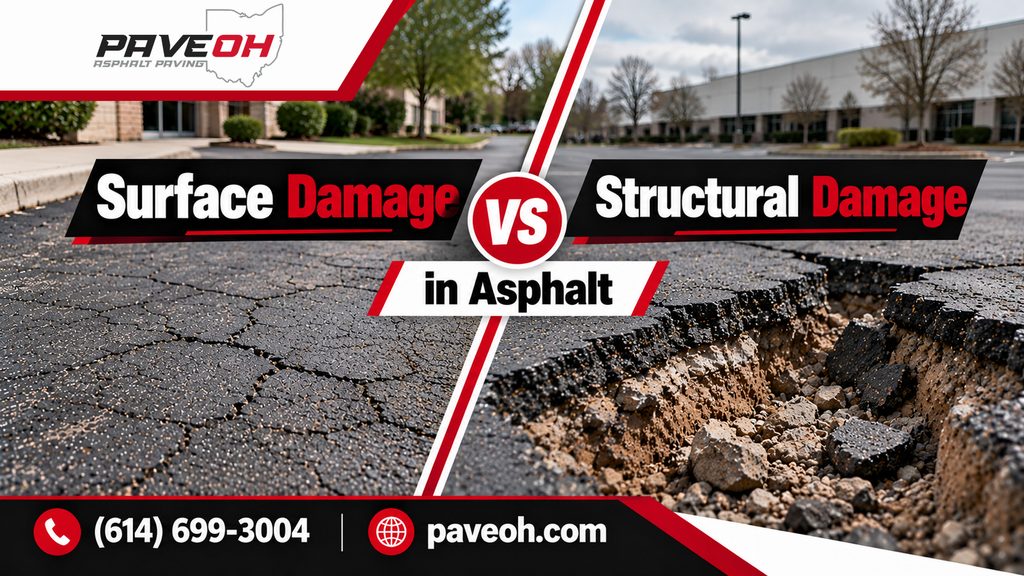
Is your asphalt driveway or parking lot developing cracks, potholes, or uneven areas? These problems may look similar on the surface, but they can have very different causes. Surface damage affects the upper layer of asphalt, while structural damage can compromise the pavement’s ability to support vehicles and resist repeated traffic loads. Identifying the difference is essential to choosing the right repair and preventing deterioration from spreading.
In Ohio, asphalt pavement faces several challenges throughout the year. Winter freezing and thawing, moisture infiltration, changing temperatures, vehicle traffic, and natural aging can all contribute to pavement deterioration. A small crack may initially require only localized maintenance, while a sunken area or widespread interconnected cracking may indicate deeper problems that need more extensive attention. Pave OH helps property owners understand their pavement’s condition and determine suitable asphalt repair options for residential driveways, commercial parking lots, and other paved surfaces.
The key is to look beyond the appearance of the damage. Understanding where the problem occurs, how quickly it spreads, and whether the pavement remains stable can help you make a better maintenance decision.
What Is Asphalt Surface Damage?
Asphalt surface damage refers to deterioration that primarily affects the top layer of the pavement. The underlying asphalt layers and supporting base may still be stable, although an inspection is necessary to confirm this.
Surface damage often develops gradually. Sunlight and air can age the asphalt binder, making it less flexible over time. Water can enter small openings, while vehicle tires gradually wear the surface. If maintenance is delayed, these relatively minor defects may expand and allow moisture to penetrate deeper into the pavement.
Common forms of surface damage include:
- Minor cracking: Small, isolated cracks that have not caused significant movement or deformation.
- Raveling: The gradual loss of fine particles and aggregate from the asphalt surface.
- Surface wear: A rough, uneven, or worn texture caused by aging and traffic.
- Localized deterioration: Small damaged areas where the surface begins breaking apart.
- Surface-level potholes: Small areas of missing asphalt that may result from localized deterioration or separation between pavement layers.
Not every surface defect is harmless. For example, raveling may begin near the top but become more serious if it continues into deeper layers. Similarly, a crack that initially appears minor can become an entry point for water.
The most important consideration is whether the pavement beneath the damaged area remains strong and stable.
What Is Structural Damage in Asphalt?
Structural damage occurs when the pavement’s load-bearing capacity is weakened. The problem may involve the asphalt itself, the aggregate base beneath it, or the soil supporting the pavement.
Asphalt pavement is built in layers. The surface layer provides a smooth, durable driving area, while the lower layers distribute vehicle loads and support the pavement. If one or more of these layers become unstable, the pavement may crack, settle, deform, or repeatedly fail even after repairs.
Structural damage can develop because of several conditions:
- Water entering the pavement and weakening the base or supporting soil.
- Poor drainage that allows moisture to remain beneath the surface.
- Repeated heavy vehicle loads exceeding the pavement’s ability to support them.
- Inadequate compaction or weaknesses in the pavement foundation.
- Repeated freeze-thaw cycles that worsen existing cracks and moisture-related problems.
- Deterioration that has progressed beyond the surface layer.
Common warning signs include interconnected alligator cracking, deep wheel-path ruts, recurring potholes, localized sinking, and areas that continue breaking apart after previous repairs.
The Ohio Department of Transportation’s pavement repair guidance distinguishes between different pavement defects and recommends choosing repairs based on the type and severity of the damage. It also notes that visible surface deterioration can sometimes hide problems in the supporting layers.
This is why simply covering a damaged area with fresh asphalt may not provide a lasting solution. If the underlying base is weak, the new surface can deteriorate again.
Surface Damage vs. Structural Damage: Key Differences
The following comparison can help property owners understand the warning signs and the types of repairs that may be appropriate.
| Comparison Factor | Surface Damage | Structural Damage |
|---|---|---|
| Primary location | Mostly the upper asphalt layer | Asphalt layers, base, or supporting soil |
| Typical appearance | Minor cracks, fading, light raveling | Alligator cracking, deep ruts, sinking, recurring potholes |
| Pavement stability | May remain firm and stable | May feel uneven or show signs of movement |
| Common contributing factors | Aging, weather exposure, surface wear | Weak base, poor drainage, heavy loads, deeper deterioration |
| Water-related concerns | Moisture may enter through surface defects | Moisture may weaken the base or subgrade |
| Potential repair methods | Crack sealing, localized patching, suitable surface treatments | Full-depth patching, base repair, drainage correction, or reconstruction |
| Main repair objective | Protect the surface and slow deterioration | Restore the pavement’s strength and stability |
| What happens if ignored? | Defects may expand and allow deeper water intrusion | Continued movement, repeated failures, and more extensive deterioration may occur |
Important: These are general indicators, not a definitive diagnosis. Some defects that appear on the surface can indicate deeper damage, so repair depth should be determined through an appropriate inspection.
Common Types of Asphalt Surface Damage in Ohio
1. Minor Cracks
Small cracks are among the most recognizable signs of asphalt deterioration. They can develop as the pavement ages, loses flexibility, or experiences temperature-related stress.
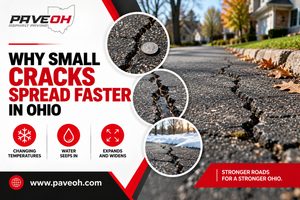
In Ohio, seasonal temperature changes can cause pavement materials to expand and contract. Existing cracks may widen, and moisture can enter through openings in the surface.
Minor cracking may be suitable for crack sealing when the surrounding pavement is stable and the crack is appropriate for that treatment. However, widespread cracking, cracks that continue returning, or cracks accompanied by sinking should be investigated more carefully.
What to look for: Isolated cracks with no obvious depression, widespread breakup, or movement around the damaged area.
2. Raveling and Loose Aggregate
Raveling occurs when aggregate particles gradually detach from the asphalt surface. The pavement may appear rough, grainy, or worn, with loose stones becoming visible.
Possible causes include aging asphalt binder, inadequate compaction, mixture-related problems, and moisture damage. As more material separates from the surface, the pavement can become increasingly rough and vulnerable to water infiltration.
Early deterioration may be limited to the surface. If the damage becomes extensive, however, localized repairs or removal and replacement of the affected pavement layer may be needed.
What to look for: Loose aggregate, a progressively rough texture, or small areas where the asphalt surface appears to be disintegrating.
3. Surface Wear and Aging
Asphalt naturally changes as it ages. Exposure to air and sunlight contributes to oxidation, which can make the binder harder and less flexible. Traffic also gradually wears the surface.
Older pavement may become faded, rough, or more vulnerable to cracking. A change in color alone does not necessarily mean structural failure, but fading combined with brittleness, cracking, or aggregate loss deserves attention.
What to look for: A weathered appearance, a rougher texture, or small cracks developing across an otherwise stable pavement.
4. Localized Surface Breakup
Sometimes the asphalt begins breaking apart in a limited area while the surrounding pavement remains relatively sound. This may be related to surface deterioration, poor bonding between layers, or localized moisture damage.
The repair depends on the depth of the defect. If the problem is confined to a thin surface layer, a partial-depth repair may be suitable. If the damage extends deeper, the affected material may need to be removed to reach sound pavement.
What to look for: Small, isolated areas of missing asphalt without widespread deformation around them.
Common Signs of Structural Asphalt Damage
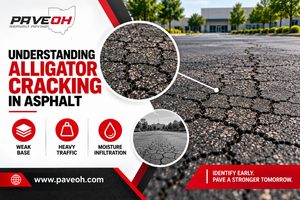
1. Alligator Cracking
Alligator cracking is a pattern of interconnected cracks that resembles the scales of an alligator. It often develops in areas repeatedly exposed to vehicle loads.
Unlike a few isolated surface cracks, this pattern can indicate fatigue damage and inadequate support beneath the pavement. Repeated traffic stresses the asphalt, and the cracking may spread as the pavement becomes less capable of distributing loads.
Alligator cracking should not automatically be treated as a surface-only problem. Its depth, extent, and underlying cause need to be evaluated before selecting a repair.
What to look for: Numerous connected cracks forming small blocks, particularly in wheel paths or heavily trafficked areas.
2. Deep Ruts in Wheel Paths
Rutting refers to depressions that develop along the paths where vehicle tires regularly travel. Shallow irregularities may have several causes, but deeper ruts can indicate deformation within the asphalt layers or supporting materials.
Heavy vehicles, unstable asphalt mixtures, repeated loading, and inadequate support may all contribute to rutting. Standing water can collect in the depressions, increasing maintenance concerns and potentially allowing more moisture to enter existing defects.
What to look for: Noticeable grooves where tires travel, especially when accompanied by raised edges, water accumulation, or other signs of pavement movement.
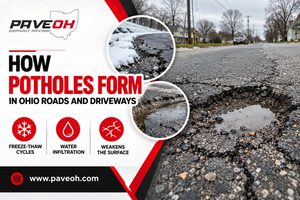
3. Recurring Potholes
A pothole may begin as localized surface deterioration, but it can become a structural concern when the surrounding asphalt or base has weakened.
Water can enter cracks and loosen material. Traffic then places repeated stress on the weakened area, causing pieces of asphalt to break away. If the underlying problem remains, a repaired pothole may return.
The appropriate repair depends on the depth of the failure. Surface-level damage may need a more limited repair, while a pothole caused by weak base or subgrade conditions may require full-depth work.
What to look for: Potholes that repeatedly appear in the same location, deep cavities, or surrounding areas that are sinking or breaking apart.
4. Sinking or Settling Pavement
A sunken section of asphalt can indicate movement in the supporting soil or base. Possible contributing factors include inadequate compaction, erosion, water infiltration, or changes in the underlying materials.
Settlement may also create drainage problems. Water can collect in low spots, increasing the likelihood of additional deterioration.
What to look for: Depressions, uneven transitions, areas that collect water, or sections that appear lower than the surrounding pavement.
5. Repeated Failure After Repairs
If the same area continues cracking or developing potholes after repairs, the original treatment may not have addressed the root cause.
For example, a surface patch cannot reliably correct a weak foundation beneath it. Similarly, resurfacing over a structurally unstable area may only hide the problem temporarily.
Repeated failures are a reason to reassess the pavement’s condition rather than continue applying the same repair method.
What to look for: Cracks returning along patch edges, potholes reappearing in the same location, or new depressions forming around previously repaired areas.
Why Ohio Weather Can Make Asphalt Damage Worse
Ohio’s seasonal weather creates several challenges for asphalt pavement. While weather alone does not determine whether damage becomes structural, it can accelerate deterioration when combined with existing defects, drainage problems, or weaknesses in the pavement structure.
Freeze-Thaw Cycles
During colder months, water can enter existing cracks and freeze when temperatures drop. When water freezes, it expands, placing stress on the surrounding materials. As temperatures rise, the ice melts, and the pavement may be left with additional space for water to enter.
Repeated cycles can gradually widen cracks, loosen surface material, and contribute to pothole development. If moisture reaches vulnerable base materials, the damage may extend below the asphalt surface.
Moisture and Poor Drainage
Water is a major contributor to pavement deterioration. When drainage is inadequate, water may remain on the surface or enter through cracks and damaged edges.
Moisture beneath the asphalt can weaken supporting materials, encourage erosion, and reduce the pavement’s ability to distribute traffic loads. A surface that repeatedly becomes wet or collects standing water should be evaluated for drainage problems.
Heavy Traffic and Repeated Loading
Driveways, parking lots, and access roads experience different types of traffic stress. Delivery trucks, service vehicles, and frequent turning or braking can place additional pressure on pavement.
If the pavement structure is not adequately supported for its traffic demands, repeated loads may contribute to fatigue cracking, rutting, and localized failures.
Aging and Delayed Maintenance
As asphalt ages, the binder can become harder and less flexible. Small cracks and surface defects may gradually spread, especially when moisture enters and maintenance is postponed.
Early attention helps property owners identify developing problems before they become more extensive. However, the appropriate treatment still depends on whether the pavement remains structurally sound.
How to Determine Which Type of Damage Your Pavement Has
A careful assessment should consider more than the visible size of a crack or pothole. The following steps can help identify the likely severity of a pavement problem.
Step 1: Examine the damage pattern
Look for isolated cracks, loose aggregate, interconnected cracking, deep ruts, or depressions. The pattern provides clues about the type of deterioration.
Step 2: Check drainage conditions
Notice whether water regularly collects near cracks, potholes, pavement edges, or low areas. Poor drainage may be contributing to the problem.
Step 3: Consider the depth of the damage
A surface defect may be limited to the upper layer, while deep cracking, sinking, or recurring failures may suggest deeper deterioration. Visual inspection alone cannot always confirm the depth.
Step 4: Review previous repairs
If the same area has repeatedly failed, determine whether earlier repairs addressed the underlying cause or only covered the visible damage.
Step 5: Arrange a professional assessment when needed
An experienced paving professional can evaluate the damaged area, drainage, and pavement layers. Depending on the situation, additional testing may help confirm whether the base or subgrade is compromised.
For significant or recurring defects, subsurface evaluation may be necessary. Ohio’s pavement repair guidance discusses using methods such as core sampling or nondestructive testing to investigate problems that cannot be fully understood from the surface alone.
Which Repair Method Is Appropriate?
The right repair depends on the damage’s depth, extent, cause, and the condition of the surrounding pavement.
| Repair Method | Best-Suited Situation | Main Purpose |
|---|---|---|
| Crack sealing | Suitable isolated cracks in otherwise sound pavement | Limit water entry and slow crack deterioration |
| Localized asphalt patching | Small damaged areas or suitable shallow defects | Restore the affected surface |
| Partial-depth repair | Deterioration confined to an upper pavement layer | Remove and replace damaged material |
| Full-depth patching | Localized failures extending into deeper pavement layers | Restore the damaged asphalt and, where necessary, supporting materials |
| Asphalt resurfacing or overlay | Existing pavement that is suitable for resurfacing | Renew the riding surface and address appropriate surface defects |
| Base repair or reconstruction | Significant foundation failure or widespread structural deterioration | Restore support and pavement stability |
| Drainage correction | Water accumulation or drainage-related deterioration | Address a contributing source of pavement damage |
These are general repair categories, not automatic recommendations for every defect. An overlay, for example, is not a dependable substitute for correcting a weak base. Likewise, crack sealing alone will not resolve widespread structural failure. The Ohio Department of Transportation’s repair guidance emphasizes matching treatment to the specific distress and its severity.
How to Prevent Asphalt Surface Damage from Becoming Structural Damage
Although not every pavement problem can be prevented, consistent maintenance can help reduce avoidable deterioration.
1. Inspect the Pavement Regularly
Check driveways, parking areas, and access roads periodically for new cracks, loose aggregate, potholes, and depressions. Pay particular attention to areas where water collects or vehicles turn and brake frequently.
Identifying changes early makes it easier to determine whether maintenance or a more extensive repair is needed.
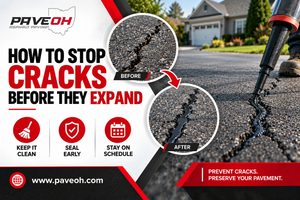
2. Address Cracks Before They Widen
Cracks provide openings through which water can enter the pavement. When the surrounding asphalt is stable and the cracks are suitable for sealing, timely crack maintenance can help limit moisture intrusion.
However, widespread interconnected cracking or cracks associated with sinking may require a deeper assessment before treatment.
3. Maintain Proper Drainage
Make sure water can flow away from paved areas rather than remaining in depressions or along vulnerable edges. Persistent standing water deserves attention, especially when cracks or pavement movement are also present.
Drainage improvements may be necessary when water is contributing to deterioration beneath the surface.
4. Use Appropriate Surface Treatments
Sealcoating and other suitable surface treatments may help protect sound asphalt from weather exposure and slow certain forms of surface deterioration. These treatments are most useful when the pavement is suitable for them.
They do not rebuild a failed base or repair severe structural damage. Underlying defects should be addressed before relying on a protective surface treatment.
5. Choose Repairs Based on the Underlying Cause
Repeatedly patching a damaged area without investigating why it keeps failing can lead to disappointing results. If the cause is weak supporting material, poor drainage, or deeper pavement deterioration, the repair should address that problem.
The goal is not simply to make the pavement look smooth again. It is to restore the function of the affected area and reduce the likelihood of recurring damage.
6. Consider Traffic Demands
Pavement should be suitable for the vehicles that regularly use it. Areas exposed to frequent delivery trucks or other heavy vehicles may require different structural support from a residential driveway with light traffic.
Understanding traffic demands can help guide appropriate repair and future pavement planning.
When Should You Seek Professional Asphalt Repair?
Some pavement defects are relatively minor, but others warrant prompt assessment. Consider professional help when you notice:
- Widespread alligator cracking across a driveway or parking lot.
- Deep ruts or noticeable depressions in wheel paths.
- Potholes that repeatedly return after patching.
- Areas that sink, shift, or appear unstable.
- Water collecting persistently in damaged sections.
- Extensive loose aggregate or pavement breakup.
- Cracks that continue spreading despite maintenance.
A professional assessment can help distinguish between defects that can be managed with surface maintenance and those requiring more substantial repairs. It can also help avoid choosing an inappropriate treatment that leaves the underlying problem unresolved.
Why Correctly Identifying Asphalt Damage Matters
Surface and structural damage may begin with similar warning signs, but they do not always require the same solution. Minor cracking and localized surface wear may be manageable through suitable maintenance, while deep rutting, recurring potholes, widespread alligator cracking, and settlement may indicate more serious problems.
For property owners researching asphalt surface damage Ohio, the most important step is to understand the condition of the entire pavement system—not just its visible surface. Ohio’s changing weather, moisture exposure, traffic demands, and pavement aging can all contribute to deterioration, making early identification and appropriate repair especially important.
Pave OH provides asphalt repair services in Columbus and Central Ohio, helping property owners evaluate pavement problems and choose repair solutions suited to their surfaces. By identifying the difference between surface deterioration and structural failure, property owners can make more informed maintenance decisions, protect their paved areas, and work toward longer-lasting pavement performance.