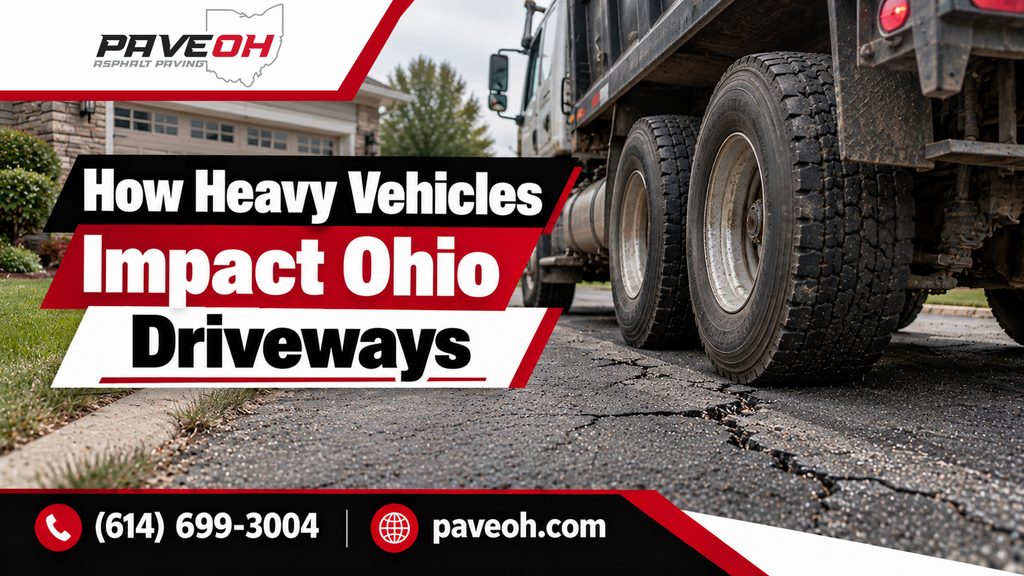
How do heavy vehicles damage driveways in Ohio? Heavy vehicles can damage asphalt driveways by placing greater stress on the pavement and its supporting base than ordinary passenger cars. Delivery trucks, moving vans, construction equipment, loaded trailers, and large work vehicles may contribute to cracking, rutting, sinking, potholes, and broken pvement edges. The risk increases when a driveway was designed for lighter traffic, has a weak foundation, or already has drainage and surface problems.
In Ohio, seasonal weather changes can make an already vulnerable driveway more susceptible to deterioration. Moisture can enter cracks and weaken supporting materials, while freezing and thawing can worsen existing defects. Repeated heavy loading may accelerate these problems, especially in areas where vehicles stop, turn, or park in the same place.
Pave OH serves residential and commercial property owners throughout Columbus and Central Ohio with asphalt paving, repairs, resurfacing, and replacement services. Understanding how heavy vehicles affect pavement helps property owners recognize early warning signs, make better decisions about vehicle access, and choose an appropriate paving solution for their property.
1. Why Heavy Vehicles Put More Stress on Asphalt
Asphalt pavement is built as a system of layers. The visible asphalt surface sits above supporting base materials and the underlying soil. Each layer helps distribute vehicle loads and maintain a stable driving surface.
When a passenger car travels over a properly constructed driveway, the pavement experiences loads that it may be designed to handle regularly. A loaded delivery truck or construction vehicle can place substantially greater demands on the same structure.
The amount of stress depends on several factors, including vehicle weight, axle configuration, tire loads, how the vehicle moves, and the condition of the pavement. A vehicle’s total weight matters, but how that weight is distributed also influences the load placed on the surface.
A driveway designed primarily for household cars may not provide the same structural support required for frequent heavy-truck traffic. If the pavement layers are too weak for the loads they experience, the surface can gradually deform or develop cracks.
Ohio Department of Transportation pavement guidance emphasizes accounting for expected traffic loading when designing pavement. It also notes that additional thickness may be appropriate for commercial driveway areas exposed to unusual vehicle weights. These principles illustrate why the intended use of a driveway matters when planning new asphalt or evaluating an existing surface.
2. Common Heavy Vehicles That Can Damage Driveways
Heavy vehicles do not affect every driveway in the same way. The frequency of use, vehicle load, pavement condition, and movement patterns all influence the level of stress.
Delivery and freight trucks
Large delivery trucks may enter residential streets and driveways when delivering building materials, appliances, furniture, or other bulky items. Some vehicles are heavier when fully loaded than when traveling empty.
A driveway that regularly receives these vehicles may experience more stress than one used only by household cars. Repeated access through the same narrow entrance can also concentrate loads on particular pavement sections.
Moving vans
Moving vans are commonly used during home relocations. Their impact depends on the vehicle’s loaded weight, access route, and whether it repeatedly drives over the same area.
Turning near a garage or reversing across a driveway can place additional stress on the surface, particularly when the pavement is already cracked or uneven.
Construction vehicles and equipment
Construction projects may involve dump trucks, concrete delivery trucks, loaders, and other equipment. These vehicles can be especially demanding on residential asphalt that was not designed for construction traffic.
Before allowing repeated construction access, property owners should consider the driveway’s condition and whether its base and surface can tolerate the anticipated loads. Temporary protective measures or a designated access route may be appropriate for some projects.
Trailers and recreational vehicles
Boat trailers, campers, large utility trailers, and recreational vehicles can place concentrated loads on driveway parking areas. Repeatedly keeping a heavy vehicle or trailer in one location may contribute to deformation when the pavement or underlying soil lacks sufficient support.
The impact depends on the loaded weight, tire arrangement, and duration of parking, as well as the structural condition of the driveway.
Garbage and service trucks
Some properties receive regular visits from heavy service vehicles. Repeated access through the same entrance can contribute to wear, especially if the driveway has a narrow turning area, weak edges, or an existing drainage problem.
The key consideration is not simply whether a vehicle is large. It is whether the pavement was designed and maintained for the type and frequency of traffic it receives.
3. Warning Signs of Heavy Load Damage on Ohio Driveways
Heavy vehicles may cause visible damage gradually rather than immediately. Monitoring the surface after unusually heavy traffic can help property owners identify changes before they become extensive.
Alligator cracking
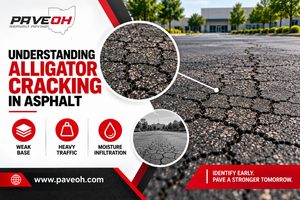
Alligator cracking appears as a network of interconnected cracks. It can develop when repeated loading stresses the asphalt and its supporting layers.
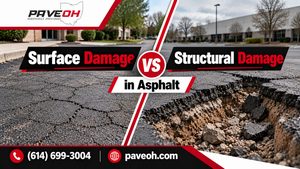
Extensive alligator cracking may indicate structural weakness rather than a surface-only problem. Simply filling the visible cracks may not address a weakened foundation.
Rutting in wheel paths
Rutting occurs when depressions form along the paths where vehicle tires regularly travel. Heavy loads may contribute to deformation in the asphalt, base, or subgrade.
Look for two parallel depressions where a vehicle’s tires typically pass. If the depressions deepen or collect water, the pavement should be evaluated.
Cracks near driveway entrances
Driveway entrances can experience repeated loading and turning forces as vehicles move from the street onto the property. If heavy vehicles regularly cross the same area, cracks may develop or existing damage may worsen.
The cause should be assessed before choosing a repair method, especially when the cracks extend across a large area or appear with settlement.
Sinking or depressed pavement
Depressions can occur when the supporting layers or underlying soil move under load. Moisture, inadequate compaction, or weak base materials may also contribute.
If the pavement keeps sinking in the same location, installing a new surface without addressing the underlying condition may not provide a lasting solution.
Broken or crumbling edges
The edges of asphalt driveways can deteriorate when vehicle tires travel too close to the boundary, especially if the edges lack adequate support.
Heavy trucks and trailers can place added pressure on these areas. Crumbling edges should be assessed before additional traffic causes more material to break away.
Recurring potholes
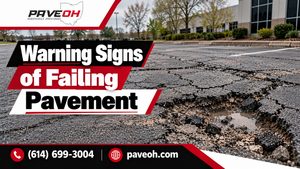
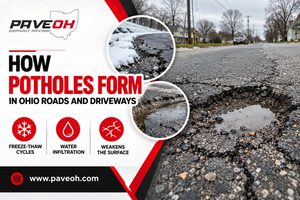
Potholes can develop when weakened asphalt breaks apart under traffic. Heavy vehicle loads may worsen existing deterioration, especially when moisture has compromised the pavement structure.
Repeated potholes around a driveway entrance or parking area may indicate that a more comprehensive assessment is needed.
4. Why Turning, Braking, and Parking Can Increase the Risk
Heavy vehicle damage is not determined by weight alone. The way a vehicle moves over the pavement can also influence the stresses placed on the surface.
Turning movements
When a large vehicle turns, its tires apply lateral forces as well as vertical loads. Tight turns can place additional stress on asphalt, particularly when a vehicle’s tires pivot or scrub across the same area.
Driveway entrances, narrow turning spaces, and locations near garages may be especially vulnerable when heavy vehicles repeatedly maneuver there.
Braking and acceleration
Vehicles often slow down, stop, and accelerate near entrances. These movements can contribute to surface stress, especially where heavy vehicles repeatedly use the same stopping point.
If the pavement is already weakened, repeated traffic can contribute to cracking or deformation.
Prolonged parking
A heavy vehicle parked in one place for an extended period may place sustained pressure on the pavement beneath its tires. The risk depends on the vehicle’s load, tire configuration, pavement structure, temperature, and foundation conditions.
Parking a large vehicle on a driveway is not automatically harmful. However, recurring deformation beneath its usual parking position may indicate that the surface needs evaluation.
5. How Ohio Weather Makes Heavy Load Damage Worse
Heavy vehicle traffic and weather can affect asphalt together. A driveway may withstand ordinary traffic under dry conditions but become more vulnerable when its supporting materials are wet or weakened.
Rain and moisture
Water can enter pavement cracks and reach the layers beneath the asphalt. If the base or underlying soil becomes weakened, vehicle loads may cause greater movement and deformation.
Drainage problems can therefore make heavy traffic more damaging. Water pooling around a driveway entrance or parking space should not be ignored.
Freeze-thaw cycles
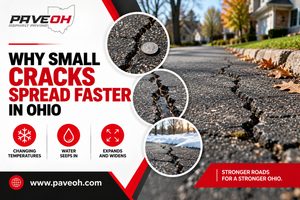
Ohio experiences seasonal temperature changes that can cause moisture to freeze and thaw. These cycles can worsen existing cracks and contribute to the deterioration of vulnerable pavement and supporting materials.
A driveway with open cracks, poor drainage, and frequent heavy loading may experience several sources of stress at once.
Summer heat
High pavement temperatures can make some asphalt surfaces more susceptible to deformation under heavy loads, depending on the mixture, pavement structure, and site conditions.
Large vehicles that turn sharply or remain in the same location may contribute to rutting or surface deformation when the pavement is not designed for the load.
Snow and winter conditions
Winter weather can make existing defects more difficult to identify and maintain. Moisture, temperature fluctuations, and repeated traffic can contribute to the progression of damage.
Regular inspections during milder weather help property owners spot cracks, depressions, and drainage problems that may have developed or worsened during winter.
6. Why Driveway Thickness and Base Preparation Matter
The durability of an asphalt driveway depends on more than the thickness of its visible surface. The pavement structure must be appropriate for its expected use and supported by properly prepared underlying materials.
A residential driveway intended for passenger vehicles may require a different design from a driveway that regularly accommodates loaded trucks or heavy equipment. Suitable asphalt thickness, base materials, compaction, drainage, and subgrade conditions all influence performance.
Increasing the asphalt thickness alone does not automatically solve every problem. A weak or moisture-affected foundation can still cause movement and cracking if it is not properly addressed.
Before constructing a driveway that may receive heavy vehicles, consider the largest expected vehicles, how often they will enter, whether they will turn or park on the surface, and which areas will carry the greatest load.
Residential asphalt driveway in Columbus Ohio projects should be planned around the property’s intended use. A driveway expected to accommodate occasional deliveries may have different requirements from one used frequently by large trucks or work vehicles.
The appropriate design should be based on the site conditions and anticipated loading rather than a one-size-fits-all thickness.
7. Which Parts of a Driveway Are Most Vulnerable?
Heavy vehicle damage frequently develops where loads repeatedly concentrate or where the pavement has less support.
| Driveway area | Why it may be vulnerable | Warning signs to watch for |
|---|---|---|
| Street-to-driveway entrance | Repeated crossing, braking, and turning | Cracks, rutting, settlement |
| Garage approach | Frequent stopping and steering | Surface deformation, cracking |
| Regular parking space | Repeated or prolonged loading | Depressions beneath tires |
| Driveway edges | Limited lateral support | Crumbling and broken asphalt |
| Narrow turning area | Concentrated tire movement | Scuffing, cracking, surface displacement |
| Low-lying sections | Water may collect and weaken support | Puddles, sinking, recurring cracks |
| Areas with previous patches | Underlying problems may remain | Cracks returning around repairs |
Not every damaged area requires complete driveway replacement. The pattern and severity of the damage, the condition of the underlying base, and the property’s drainage should be considered together.
8. How to Reduce Heavy Vehicle Damage to Your Driveway
Property owners cannot always avoid delivery trucks or service vehicles, but thoughtful planning can reduce unnecessary stress on vulnerable pavement.
Plan vehicle access
Where practical, identify the route that provides the most suitable space for vehicles to enter, turn, and leave without repeatedly crossing weak edges or damaged sections.
For construction projects, discuss access requirements with the contractor before heavy equipment arrives. A surface that looks intact may still have a weakened base.
Avoid unnecessary repeated movements
Repeated turning, reversing, or repositioning in the same small area can concentrate stress. When site conditions permit, a clear access plan can reduce unnecessary maneuvering across the same section.
Monitor regular parking locations
If a large vehicle or trailer is regularly parked in one place, inspect the area for emerging depressions, cracking, or standing water. Visible changes can signal that the pavement needs attention.
Keep drainage paths clear
Water should be able to drain away from the driveway. Remove debris that blocks intended drainage routes and investigate recurring puddles or low spots.
Drainage maintenance cannot compensate for a failed foundation, but it can help reduce avoidable moisture exposure.
Address developing cracks
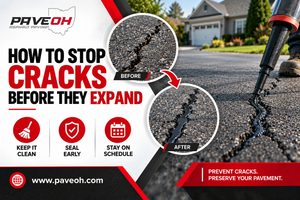
Small cracks should be evaluated so property owners can determine whether suitable crack maintenance is appropriate. Filling cracks may help limit water entry in some situations, but extensive structural cracking requires a more thorough assessment.
Avoid heavy traffic on fresh asphalt
New asphalt needs appropriate time and conditions to cool and gain stability before it experiences normal use. The recommended timing depends on the project and weather, so follow the paving contractor’s instructions before allowing heavy vehicles onto a newly installed surface.
9. What to Do When Heavy Vehicles Have Already Damaged the Pavement
When damage is visible, the next step is to identify its severity and likely cause. The best approach depends on whether deterioration affects only the surface or extends into the pavement’s supporting layers.
Localized surface damage
If the damage is limited to a small area and the surrounding pavement remains stable, a targeted repair may be suitable.
Asphalt repair in Columbus Ohio can be considered when a driveway has localized cracks, potholes, or damaged sections. The repair method should match the condition of the pavement and address any underlying cause that could lead to repeated failure.
Widespread surface wear
When a larger area has surface deterioration but the existing structure remains stable, resurfacing may be an option. The pavement must be inspected to confirm that it can support a new surface layer.
Asphalt resurfacing in Columbus Ohio may be suitable for certain worn surfaces when the base remains sound and deeper structural problems are not present. Resurfacing alone is not a reliable solution for significant settlement or widespread foundation failure.
Extensive structural damage
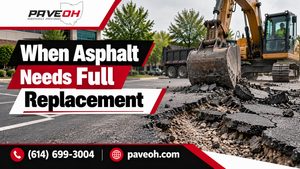
When heavy vehicle use has contributed to deep rutting, widespread alligator cracking, repeated potholes, or continuing settlement, more extensive repairs may be necessary.
Driveway replacement in Columbus Ohio may be appropriate when the existing surface or foundation has deteriorated beyond effective repair. Replacement planning should include an evaluation of the base, drainage, grading, and the loads the driveway is expected to carry in the future.
The important point is to correct the source of damage rather than simply cover the visible symptoms.
10. Heavy Vehicles and Commercial Paving Requirements
Residential driveways are not the only surfaces affected by heavy traffic. Businesses, apartment communities, industrial properties, and other commercial sites may receive regular truck deliveries or service vehicles.
A pavement design that works for light parking may not be adequate for frequent heavy vehicles, concentrated loading, or repeated movements in loading areas. High-use locations may require a different structural design, appropriate materials, and more robust base preparation.
Commercial asphalt paving in Columbus Ohio should account for the expected traffic, vehicle weights, loading areas, turning movements, drainage, and subgrade conditions. The right plan depends on how the paved area will be used.
For a commercial property that already shows rutting or cracking in truck routes, the damaged areas should be assessed to determine whether localized repair, deeper reconstruction, or another treatment is appropriate.
Planning for heavy vehicles before construction can help avoid creating a pavement that is repeatedly stressed beyond its intended use.
11. Common Mistakes That Can Make Driveway Damage Worse
Assuming all asphalt is designed for trucks
A driveway built primarily for ordinary household vehicles may not be suitable for frequent heavy-truck traffic. Vehicle use should be considered when planning new paving.
Ignoring early signs of rutting
Shallow depressions can be easy to overlook, especially after rain or when dirt accumulates on the surface. Monitor changes over time and investigate areas that continue to deform.
Applying sealcoat over structural damage
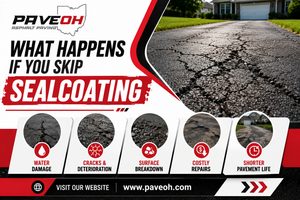
Sealcoating is a surface maintenance treatment. It can protect suitable asphalt from some forms of surface weathering, but it cannot rebuild a weak base or correct deep settlement.
Driveway seal coating in Columbus Ohio is most appropriate when the existing asphalt is structurally sound and suitable for this type of maintenance. Major cracks, potholes, or structural problems should be evaluated before applying a protective surface treatment.
Repeatedly patching the same failure
Recurring damage can mean that the original repair did not resolve the underlying problem. Continuing to patch the same location without investigating the cause may not be the most effective approach.
Failing to consider drainage
Heavy loads can be especially problematic when water has weakened the supporting materials. A repair or replacement plan should account for drainage conditions rather than focus solely on the visible asphalt.
Choosing a replacement design for light traffic when heavy use is expected
Replacing a driveway without considering its future vehicle loads can lead to another cycle of premature deterioration. The new surface and supporting foundation should be appropriate for the vehicles likely to use it.
12. How Pave OH Can Help Protect Your Driveway
Managing heavy vehicle traffic begins with understanding the driveway’s condition and intended use. A professional assessment can help identify signs of structural distress, determine whether the base is stable, and establish which treatment is appropriate.
Pave OH provides asphalt paving and related services for residential and commercial properties in Columbus and Central Ohio. The right recommendation depends on the extent of damage, site conditions, drainage, and the loads the pavement is expected to handle.
For homeowners planning a driveway that may receive large delivery vehicles, trailers, or work trucks, discussing those needs before installation can help guide the pavement design.
For existing driveways with cracks, rutting, or repeated potholes, an evaluation can help distinguish between damage that may be repaired and conditions that require more extensive work.
Property owners should also consider how the driveway will be used in the future. If heavy vehicles will become a regular part of the property’s use, the pavement may need to be designed or upgraded accordingly.
Frequently Asked Questions
Can a delivery truck damage a residential asphalt driveway?
Yes. The risk depends on the truck’s weight, axle loads, the condition of the driveway, and how frequently the vehicle enters. A properly designed driveway may tolerate occasional deliveries, while a weak or deteriorated pavement may be more vulnerable.
Why does my driveway develop ruts where trucks drive?
Rutting can result from deformation in the asphalt, base layers, or underlying soil. Heavy traffic may contribute to the problem, especially when the pavement structure is not adequate for the loads or moisture has weakened the supporting materials.
Are occasional heavy vehicles enough to damage asphalt?
Occasional use does not automatically cause damage. Risk depends on factors such as the vehicle load, pavement design, foundation stability, weather, and the condition of the surface. Existing cracks or weak areas may be more vulnerable.
Can I park a camper or trailer on my driveway?
It depends on the loaded weight, the pavement structure, and the condition of the driveway. If depressions or cracks begin developing where the trailer is regularly parked, the area should be evaluated.
Does thicker asphalt prevent heavy vehicle damage?
Appropriate asphalt thickness can be an important part of a pavement design, but thickness alone does not guarantee durability. Base preparation, compaction, drainage, soil support, materials, and expected loads must also be considered.
Should I repair or replace a driveway damaged by heavy vehicles?
Localized damage may be repairable if the supporting structure remains stable. Widespread cracking, deep rutting, repeated potholes, or significant settlement may require more extensive work. A site evaluation helps determine the most appropriate option.
Does sealcoating protect asphalt from heavy trucks?
Sealcoating can help protect a suitable asphalt surface from certain forms of weathering and surface wear. It does not increase the driveway’s structural load capacity or repair a weak foundation.
What should I do before allowing construction vehicles onto my driveway?
Review the driveway’s condition and discuss vehicle access with the project contractor. Consider the size and weight of the expected vehicles, how they will maneuver, and whether an alternate access route or temporary protection is appropriate. If the driveway is already damaged, have it assessed before repeated heavy traffic begins.
Conclusion: Protect Your Ohio Driveway From Heavy Load Damage
Heavy vehicles can place greater demands on an asphalt driveway than ordinary passenger cars, particularly when they repeatedly enter the same area, turn near the garage, or remain parked in one location. Over time, unsuitable loading can contribute to cracking, rutting, sinking, potholes, and broken edges. Poor drainage, weak foundations, and Ohio’s seasonal weather changes can make existing problems worse.
The best protection starts with choosing a pavement structure suited to its expected use, maintaining effective drainage, and addressing developing defects before they spread. When damage appears, the right treatment depends on its severity and whether the underlying support remains stable. A targeted repair, resurfacing, or full replacement may be appropriate depending on the situation.
Pave OH helps residential and commercial property owners throughout Columbus and Central Ohio plan paving work and address existing asphalt problems. If heavy vehicles are damaging your driveway or you are planning a surface that must accommodate heavier traffic, contact Pave OH at (614) 699-3004 to discuss your paving needs and request an estimate.