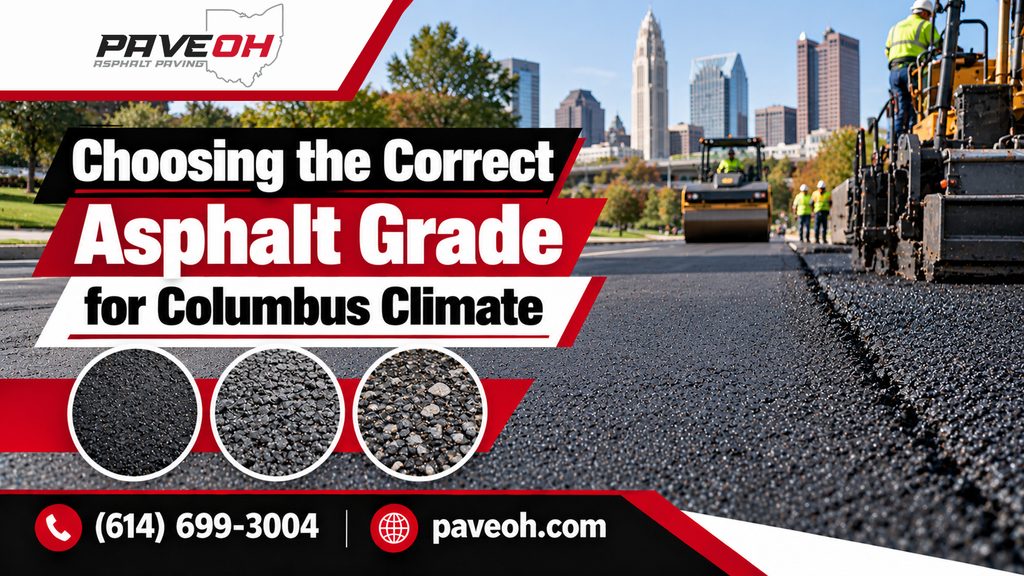
What is the right asphalt grade for Columbus, Ohio’s climate? The best asphalt grade depends on how the pavement will be used, the temperature range it must handle, the expected traffic, and the condition of the underlying base. Columbus experiences hot summer weather, cold winters, precipitation, and repeated freeze-thaw cycles, so asphalt must be selected and installed to perform under changing conditions. Choosing a suitable binder grade and asphalt mix, along with proper base preparation and drainage, can help reduce premature cracking and rutting.
Not all asphalt is the same. Different mixes use different aggregates, binder properties, and gradations, which affect how the pavement handles temperature changes and vehicle loads. A residential driveway used mainly by passenger cars has different requirements from a commercial parking lot with frequent deliveries or heavy trucks.
Pave OH provides residential and commercial asphalt paving throughout Columbus and Central Ohio. Understanding the difference between asphalt grades, mix types, pavement thickness, and installation requirements helps property owners make informed decisions before starting a paving project. The goal is not simply to choose the hardest or most expensive material, but to select a pavement system suited to the property’s conditions and intended use.
1. What Does Asphalt Grade Mean?
The phrase asphalt grade can refer to different things, so understanding the terminology is an important first step.
One common meaning is the Performance Grade (PG) of the asphalt binder. The binder is the material that holds the aggregate particles together. Its performance grade describes how it is expected to behave within a specified high- and low-temperature range.
Another consideration is the asphalt mixture. The mix combines binder and aggregate in proportions designed for a particular application. Mix type and aggregate gradation affect characteristics such as surface texture, workability, stability, and suitability for different pavement layers.
Pavement thickness is a separate consideration. It describes how much asphalt and supporting material is installed, rather than the temperature performance of the binder.
These elements work together, but they are not interchangeable. Choosing a temperature-appropriate binder will not compensate for an inadequate base, and increasing pavement thickness alone will not correct poor drainage.
For a Columbus driveway or parking area, the selection process should consider the binder grade, mix requirements, foundation, traffic loads, and installation conditions as parts of one system.
2. Understanding PG Asphalt Binder Grades
Performance Grade designations use two numbers. The first represents the high-temperature performance threshold, while the second represents the low-temperature threshold.
For example, PG 64-22 is designed to meet binder performance requirements associated with a high pavement temperature of 64°C and a low pavement temperature of −22°C.
The designation does not mean the asphalt must be installed when the weather reaches those temperatures. It also does not describe the thickness of the pavement.
Ohio Department of Transportation guidance identifies several binder grades used in Ohio, including PG 64-22, PG 64-28, PG 70-22M, PG 76-22M, and PG 88-22M. The guidance explains that the appropriate grade depends on normal traffic conditions and, in higher-stress locations, whether additional resistance to deformation is necessary.
What the high-temperature number means
The first number relates to the binder’s expected performance at higher pavement temperatures. Hot conditions and repeated vehicle loads can contribute to deformation, particularly when the mix or pavement structure is unsuitable for the application.
A higher high-temperature grade may be considered for certain high-stress locations, such as areas where vehicles repeatedly turn, brake, or apply concentrated loads.
What the low-temperature number means
The second number, which appears with a minus sign, relates to low-temperature binder performance. Cold temperatures can cause asphalt materials to contract, and a suitable binder helps the pavement resist low-temperature cracking.
The best choice is not necessarily the grade with the highest numbers. The binder must be appropriate for the local temperature range and the project’s requirements.
3. Why Columbus Climate Matters When Selecting Asphalt
Central Ohio’s seasonal conditions can put asphalt under different kinds of stress throughout the year. A suitable asphalt selection should account for summer heat, winter cold, moisture, and changes in the pavement’s supporting conditions.
Summer heat and deformation
During hot weather, the pavement surface can become much warmer than the surrounding air. Under repeated loading, asphalt that is not suited to the application may become more susceptible to rutting or surface deformation.
Driveway entrances and commercial parking areas may experience additional stress where vehicles turn, brake, or remain stationary. The pavement’s mix design, binder grade, thickness, and foundation all influence how well it handles these demands.
Winter cold and cracking
As temperatures fall, asphalt contracts. The binder and mixture must be suitable for the temperature conditions so the pavement can better resist thermal stress.
If cracking develops, it may allow water to enter vulnerable parts of the pavement. Cold weather can then worsen existing problems, particularly when the surface or supporting layers are already deteriorated.
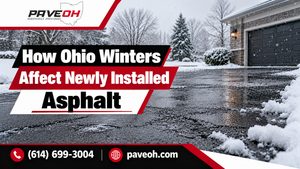
Freeze-thaw cycles and moisture
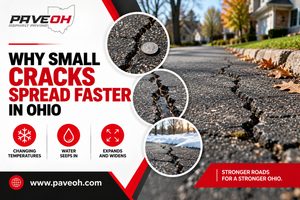
Repeated freezing and thawing can contribute to the deterioration of pavement that is vulnerable to moisture. Water may enter through cracks, joints, or poorly drained areas and affect the layers beneath the surface.
This is why choosing an appropriate asphalt grade is only part of preparing for Columbus weather. Good drainage, a stable base, correct grading, and proper compaction are also essential considerations.
4. Which Asphalt Grade Is Commonly Used for Driveways in Columbus?
There is no single binder grade that should automatically be specified for every driveway in Columbus. The appropriate selection depends on project requirements, the intended use, the paving specification, and site conditions.
Columbus municipal specifications identify PG 64-22 binder with Type 1 surface gradation for certain asphalt concrete driveway applications. This provides a useful local reference, but it should not be treated as a universal requirement for every private residential or commercial project.
The specification for a particular property should be confirmed with the paving contractor and adjusted as needed for the intended application.
Residential driveways
A typical residential driveway primarily accommodates passenger cars, light utility vehicles, and occasional deliveries. The pavement design should account for the traffic expected during its service life rather than just the vehicles using it on installation day.
Residential asphalt paving in Columbus Ohio should consider the driveway’s slope, soil conditions, drainage, expected vehicle loads, and required pavement thickness. Selecting a suitable mix is important, but base preparation and compaction are equally important parts of the installation.
Driveways that receive heavier vehicles
Some residential driveways regularly accommodate large vans, loaded trailers, work trucks, or construction vehicles. Those uses may create greater demands than ordinary passenger-car traffic.
In these situations, the contractor should evaluate the anticipated loads and determine whether a different pavement structure or binder selection is appropriate. A standard residential design should not be assumed suitable for repeated heavy-truck traffic without an assessment.
5. How Asphalt Grade Selection Changes for Commercial Properties
Commercial properties often experience different traffic conditions from residential driveways. Parking lots, delivery areas, private roads, and industrial properties may have higher traffic volumes or heavier vehicles.
The right asphalt mixture depends on how the site functions. A parking area primarily used by passenger vehicles may have different needs from a loading area used by heavy delivery trucks.
Commercial asphalt paving in Columbus Ohio should be planned around traffic volume, vehicle weights, turning movements, pavement thickness, drainage, and the supporting base. Selecting the binder and mix should follow the requirements for the intended application rather than relying on a residential driveway specification.
High-stress locations may require additional resistance to rutting. Ohio’s pavement guidance describes situations where a higher high-temperature binder grade should be considered, particularly where traffic places unusual stress on the surface.
However, using a higher binder grade is not a substitute for appropriate structural design. A commercial pavement that carries heavy vehicles needs a suitable foundation and layer structure as well as an appropriate asphalt mix.
6. Asphalt Binder Grade vs. Asphalt Mix Type
Binder grade and mix type are related, but each serves a different purpose.
| Selection factor | What it describes | Why it matters in Columbus |
|---|---|---|
| Binder performance grade | Expected binder performance across high- and low-temperature ranges | Helps address temperature-related deformation and cracking |
| Aggregate gradation | The distribution of aggregate particle sizes in the mix | Influences texture, stability, workability, and suitability for a pavement layer |
| Asphalt mixture type | The specified combination of binder and aggregate for the application | Helps match the material to the intended use and layer |
| Pavement thickness | The depth of asphalt and other pavement layers | Influences structural capacity and load distribution |
| Base and subgrade | The supporting materials beneath the asphalt | Affect settlement, cracking, and pavement strength |
| Drainage and grading | How water moves around and across the pavement | Helps limit moisture-related deterioration |
| Compaction | How thoroughly the asphalt is consolidated during installation | Influences density, durability, and resistance to moisture entry |
The appropriate combination depends on the site. The binder grade should not be selected in isolation from the mix specification and pavement design.
7. How Drainage and Base Preparation Affect Asphalt Performance
Even a suitable asphalt grade can perform poorly when the foundation is weak or water is allowed to accumulate around the pavement.
A stable base distributes vehicle loads
The base supports the asphalt and helps distribute loads to the underlying soil. If the base is poorly compacted or unstable, the pavement can settle, crack, or deform under traffic.
Before installing new asphalt, the contractor should assess the existing base and identify whether it needs grading, compaction, stabilization, or replacement.
Drainage limits moisture exposure
Water can collect in depressions, flow toward driveway edges, or enter through cracks. If moisture affects supporting materials, the pavement may become more vulnerable to movement and deterioration.
Effective drainage and suitable grading help move water away from vulnerable areas. These measures are particularly important in areas that experience repeated rainfall and freeze-thaw cycles.
Compaction supports durability
Proper compaction helps create a stable asphalt surface. Installation conditions, mix temperature, lift thickness, and construction technique all influence the result.
A correctly selected binder cannot compensate for poor compaction or a weak foundation. Material selection and construction quality must work together.
8. Choosing Asphalt for Resurfacing Projects
Not every existing driveway or parking lot needs complete replacement. Resurfacing may be an option when the pavement’s surface has deteriorated but the underlying structure remains suitable.
Before selecting the new asphalt mix, the existing pavement should be assessed for cracking, rutting, settlement, drainage problems, and signs of base failure.
Asphalt resurfacing in Columbus Ohio may be appropriate when the existing pavement can support a new layer and the underlying problems are manageable. The selected mix should suit the surface application and the expected traffic.
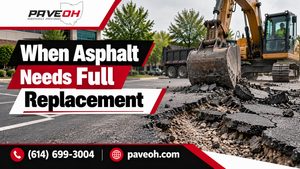
Resurfacing does not automatically correct widespread structural failure. If the base is unstable or water continues to damage the pavement, those issues should be addressed before a new surface is installed.
9. Warning Signs That the Existing Asphalt May Be Unsuitable
Asphalt problems may indicate a mismatch between the pavement structure and the conditions it experiences, although no single symptom proves that the binder grade is incorrect.
Premature rutting
Ruts that develop in wheel paths may indicate deformation within the asphalt or supporting layers. High temperatures and repeated loading can contribute, but weak base materials and inadequate compaction may also be involved.
Widespread cracking
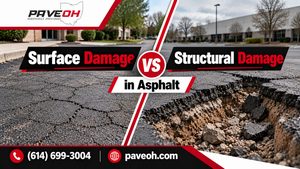
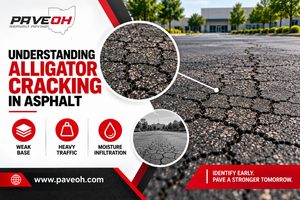
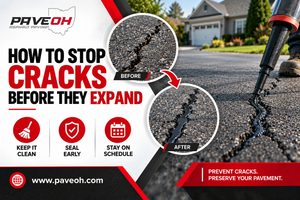
Cracking can result from temperature-related stresses, aging, moisture, structural movement, or construction issues. The pattern and extent of cracking help determine which causes should be investigated.
Repeated potholes
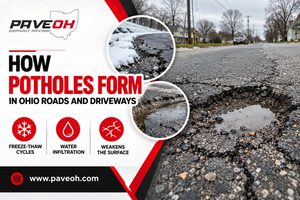
Potholes may indicate deterioration of the surface, loss of support, water intrusion, or several factors working together. Repeated potholes after repairs deserve an assessment of the underlying conditions.
Settlement and uneven areas
Depressions can occur when the base or subgrade moves. Replacing or resurfacing the surface without correcting the supporting problem may allow the same damage to return.
Property owners should avoid assuming that every defect can be solved by choosing a different binder grade. A proper inspection should determine whether the issue concerns the asphalt mix, pavement design, installation, drainage, or foundation.
10. Common Mistakes When Choosing Asphalt Grade
Choosing the highest grade automatically
A higher performance grade is not always the best choice for every project. Binder selection should reflect the climate, application, expected traffic, and governing specification.
Confusing binder grade with thickness
Binder grade describes performance characteristics, while thickness contributes to the pavement’s structural capacity. One does not replace the other.
Ignoring vehicle loads
A surface designed for light traffic may not be appropriate for frequent heavy trucks. Project planning should consider how the property will actually be used.
Overlooking the existing foundation
A suitable binder cannot correct unstable soil, inadequate compaction, or poor drainage. These conditions must be evaluated as part of the pavement design.
Selecting a mix based only on price
The least expensive option may not be suitable for the property’s demands. Material selection should consider specifications, traffic, preparation needs, and the expected performance of the complete pavement system.
Assuming one specification applies to every property
Public road specifications, local driveway requirements, and private paving projects can have different requirements. The correct selection should follow the specification that applies to the specific project.
11. How Pave OH Helps Select Asphalt for Columbus Conditions
Choosing asphalt involves more than identifying one binder grade. The contractor must consider the pavement’s purpose, site preparation, drainage, mix requirements, thickness, expected loads, and local weather.
Pave OH serves residential and commercial customers throughout Columbus and Central Ohio. Its paving approach includes evaluating site conditions and considering the traffic and weather that the pavement will experience.
For a new driveway, the recommended pavement system should reflect the property layout, foundation, drainage, and expected vehicles.
For an existing surface, an assessment can help determine whether repair, resurfacing, or replacement is the appropriate option before deciding on the materials for the work.
Asphalt paving in Columbus Ohio should combine suitable materials with proper preparation, grading, drainage, and compaction. These factors work together to help create a durable surface designed for the property’s actual requirements.
If a project has unusual loading demands or must follow a specific public or commercial specification, the binder and mix should be selected according to the relevant technical requirements rather than a general residential recommendation.
Frequently Asked Questions About Asphalt Grade in Columbus Ohio
What asphalt grade is commonly used for driveways in Columbus?
Columbus municipal specifications identify PG 64-22 binder for certain driveway asphalt applications. However, the appropriate selection for a private driveway should be confirmed against the project’s requirements, intended use, and contractor recommendations.
What does PG 64-22 mean?
PG 64-22 is a Performance Grade binder designation. The numbers represent high- and low-temperature performance thresholds expressed in degrees Celsius. The designation helps describe the temperature conditions the binder is designed to withstand.
Is a higher PG grade always better?
No. A higher high-temperature grade may be suitable for some high-stress locations, but the right binder depends on local temperature conditions, traffic demands, the mix, and the specification for the project.
Does asphalt grade affect winter cracking?
Binder selection can influence low-temperature performance, but cracking also depends on the mix, pavement age, construction quality, drainage, foundation stability, and temperature changes. Choosing a suitable grade is one part of a broader pavement design.
Does a thicker driveway need a different asphalt grade?
Not automatically. Thickness and binder grade describe different aspects of the pavement. The project’s design should determine both according to traffic loads, site conditions, and the intended application.
Is the same asphalt grade suitable for driveways and parking lots?
Not necessarily. Driveways and parking lots can experience different traffic volumes, vehicle loads, turning movements, and operational demands. The mix and pavement structure should suit the use of the property.
Can the wrong asphalt grade cause potholes?
An unsuitable mix can contribute to poor pavement performance, but potholes have several possible causes, including moisture intrusion, weakened support, cracking, inadequate compaction, and repeated vehicle loading. An inspection is needed to identify the actual cause.
Should I choose asphalt grade before or after site preparation?
The project requirements and expected traffic should be considered during planning, before installation begins. Site evaluation, grading, drainage, and base preparation must then be coordinated with the selected mix and pavement design.
Conclusion: Choose Asphalt That Suits Columbus Weather and Your Property
Choosing the right asphalt grade for Columbus requires understanding the difference between binder performance, mix type, pavement thickness, and foundation design. Central Ohio’s temperature changes, summer heat, winter cold, moisture, and traffic loads all influence how asphalt performs.
PG 64-22 is identified in Columbus municipal specifications for certain driveway asphalt applications, but it should not be treated as a universal grade for every project. Commercial pavement, high-stress areas, and driveways that receive heavy vehicles may require a different design based on their specific demands.
Proper drainage, a stable foundation, suitable materials, and thorough compaction are just as important as binder selection. Pave OH provides residential and commercial paving services throughout Columbus and Central Ohio, helping property owners plan pavement suited to their site and intended use. Contact Pave OH at (614) 699-3004 to discuss your paving project and request an estimate.