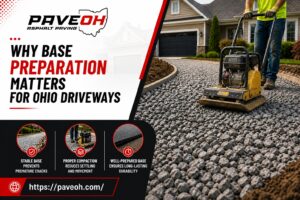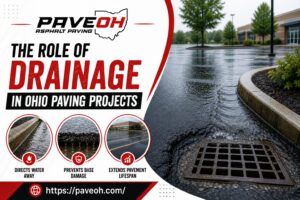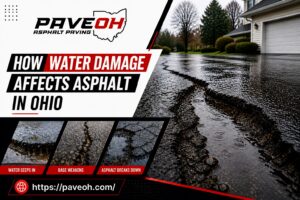

Ever look at your asphalt driveway and wonder what it endures? In Columbus, Ohio, it’s a battle against the elements year-round! This isn’t just a black strip; it’s a home investment – a long-term one, potentially lasting 20 to 30 years with the right care – that deserves seasonal attention to stay both beautiful and functional.
Your asphalt driveway is more than just a parking spot—it’s a key part of your home’s curb appeal, functionality, and value. In Columbus, Ohio, where freeze-thaw cycles, heavy winter snow, spring rains, and summer heat put constant stress on pavement, asphalt driveway maintenance in Columbus Ohio is essential to ensure it lasts 20+ years. At Pave OH, with over 15 years of local experience, we’ve helped thousands of homeowners protect their investment with proven, season-specific strategies. This comprehensive guide walks you through year-round maintenance tailored to Central Ohio’s challenging climate, helping you avoid costly repairs and keep your driveway smooth, safe, and beautiful.
Whether you have a newly installed driveway or one that’s been in place for years, consistent care prevents small issues from becoming major problems. From sealing cracks before winter to cleaning debris after fall storms, these steps—backed by Pave OH’s expertise—will extend your driveway’s lifespan and maintain its performance through every Columbus season.
The Columbus Climate Gauntlet: Why Your Driveway is Always on Edge
Columbus’s climate isn’t exactly driveway-friendly. Consider winter’s nemesis: the infamous freeze-thaw cycle. Our winters are a rollercoaster of freezing and thawing, which turns tiny cracks into major headaches. Water seeps in, freezes, expands by up to 10%, and boom – wider cracks and potholes appear. To make matters worse, cold asphalt becomes brittle, making it even more vulnerable.
But don’t think summer lets your driveway off easy. Black asphalt can hit temperatures exceeding 120°F, causing it to soften, oxidize, and lose flexibility. This leads to cracking and unsightly ruts from parked cars. And let’s not forget the drainage dilemma: standing water is a death sentence. Good grading is your driveway’s superpower against deterioration.
Your Seasonal Survival Kit: Essential Driveway Maintenance
So, how do we fight back against this environmental onslaught? With a seasonal maintenance strategy:
Spring Refresh: Shaking off winter’s chill.
- Post-Winter Inspection: Be a driveway detective! Look for new cracks, uneven spots, or tiny potholes.
- Deep Clean: Sweep away debris, then hose it down. For oil/grease stains, use asphalt-safe cleaners (never petroleum!).
- Sealcoating (Prime Time!): Your driveway’s “sunscreen,” protecting against UV, water, and chemicals. It’s recommended every 2-3 years, but remember to wait 6-12 months for new asphalt. Most pros agree it’s a vital preventative step.
- Summer Shield: Beating the heat.
- Crack Repair (Act FAST!): This is the most critical defense. Clean out cracks, then fill them. Hot-pour rubberized filler is best for bigger cracks, while cold-pour works for smaller DIY fixes. It’s essential for structural integrity.
- Pothole Patching: Don’t delay! Use patch kits for small ones, fresh asphalt for larger craters.
- Weed Warrior: Pull those stubborn weeds before they exacerbate crack damage.
- Fall Fortification: Gearing up for the big freeze.
- Final Crack & Pothole Patrol: This is crucial before freezing temperatures set in. Don’t give water an easy entry point!
- Drainage Check: Ensure gutters and driveway slopes are clear to prevent water pooling.
- Winterizing: Confirm your sealcoat is robust, and never use rock salt, as it accelerates deterioration!
- Winter Watch: Gentle care during the cold.
- Prompt Snow Removal: Use plastic shovels or snowblowers to avoid scraping and damaging the asphalt surface.
- Strategic De-icer Use: Opt for asphalt-safe options like calcium or magnesium chloride, and use sparingly.
The Asphalt Arena: Debates & Dilemmas
Now, let’s wade into some of the debates surrounding asphalt driveway care. Take the coal tar controversy, for example. It’s highly durable, but its high PAH content makes it an environmental and health hazard, leading to many bans and restrictions. It’s crucial to know what’s going on in your driveway!
Then there’s the question: Is sealcoating just “lipstick on a pig?” Some experts argue that well-constructed asphalt, especially with good crack sealing, might not need frequent sealcoating beyond aesthetics. They warn of quick wear, messy application, and potential long-term issues if the sealant hardens and fails. However, proponents champion it as a cost-effective shield against oxidation and water damage, extending pavement life. The takeaway? Quality, proper application, and understanding your driveway’s needs are key to making it worthwhile.
And what about crack filling vs. crack sealing? They sound similar, but they’re not! “Filling” is for non-moving cracks with less flexible material, while “sealing” uses flexible, rubberized material designed to expand and contract with “working” cracks. Using the wrong one can lead to quick failure.
Finally, there’s the question of DIY vs. Professional work. Minor fixes? DIY is doable. But for lasting results, especially with hot-pour rubberized materials, professional services often offer superior durability and expertise.
Paving the Future: Innovations for Your Driveway
The future of asphalt is looking… greener? Consider warm-mix asphalt (WMA): lower temperatures, less energy, fewer emissions – a win for your wallet and the planet. Then there’s recycled asphalt pavement (RAP): turning old into new, saving resources. I even hear whispers of bio-binders from plants and even algae!
Permeable pavements let water soak through, reducing stormwater runoff and helping Columbus hit its massive stormwater diversion goals. Cool pavements utilize lighter colors to combat the urban heat island effect.
And what about self-healing asphalt – research is making asphalt that fixes its own minor cracks a reality. Fewer repairs, longer life! Imagine aerial inspections detecting tiny defects before they become big problems, enabling predictive maintenance with drones and AI. Your future driveway might even talk to you (or your contractor) through embedded sensors, giving real-time data on temperature, moisture, and wear.
Columbus-Specifics: The Local Lowdown
Let’s get down to the Columbus rulebook. New driveways must be a hard surface (asphalt or concrete) – no new gravel! (Unless it’s a pre-1985 grandfathered gravel driveway). You need to be aware of specific width requirements (min 10ft, max 20ft for a 2-car garage, 35ft at the curb with approval). Beware of parking setbacks! Permits are key for curb cuts (Right-of-Way) and new/expanded driveways (Zoning Clearance).
Your Columbus Driveway, Decades of Durability
Your asphalt driveway in Columbus takes a beating from all seasons. But armed with this seasonal maintenance guide, you’re ready to tackle anything Mother Nature throws your way. Inspect regularly, address issues promptly, and make smart maintenance choices. Here’s to a smooth, long-lasting driveway!
At PaveOH, we take pride in helping homeowners maintain driveways that look great and last for years. From seasonal inspections and crack repairs to sealcoating and resurfacing, we deliver reliable results tailored to Ohio’s weather challenges. Our team combines technical expertise with premium materials to ensure your driveway remains durable, attractive, and safe in every season for Residential Asphalt Paving in Columbus Ohio, or Commercial Asphalt Paving in Columbus Ohio what you need.
Ready to protect your investment? Contact PaveOH today to schedule your driveway maintenance service in Columbus, Ohio—and keep your asphalt looking its best all year long.