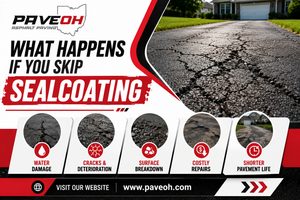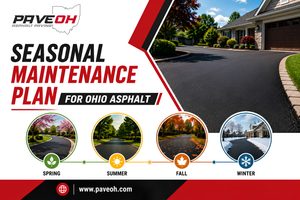
Why Do Small Asphalt Cracks Spread Faster in Ohio? Why can a tiny crack in an asphalt driveway or parking lot become a much larger problem after only a few seasons? In Ohio, asphalt crack spreading Ohio is closely connected to moisture, freezing and thawing temperatures, traffic, and the natural aging of pavement.
A small crack may initially look like a minor surface imperfection. However, once water enters the opening, seasonal temperature changes can place additional stress on the surrounding asphalt. Pave OH explains that water infiltration, freeze-thaw cycles, UV exposure, heavy traffic, and lack of maintenance are among the common causes of asphalt deterioration.
The good news is that early identification and appropriate crack treatment can help slow the progression of pavement damage.
1. Water Gets Into Small Cracks
One of the biggest reasons cracks become larger is moisture.
Even a narrow opening can provide a pathway for water to enter the pavement. Once moisture gets below the surface, it can affect the supporting layers and contribute to further deterioration.
Pave OH specifically notes that cracks can allow water to seep into asphalt, potentially leading to more extensive damage over time.
This is why a crack should not be ignored simply because it is small.
2. Ohio’s Freeze-Thaw Cycles Widen Cracks
Ohio experiences repeated changes between freezing and thawing conditions.
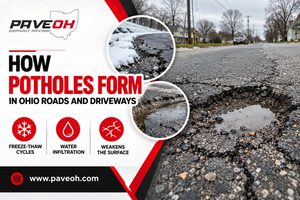
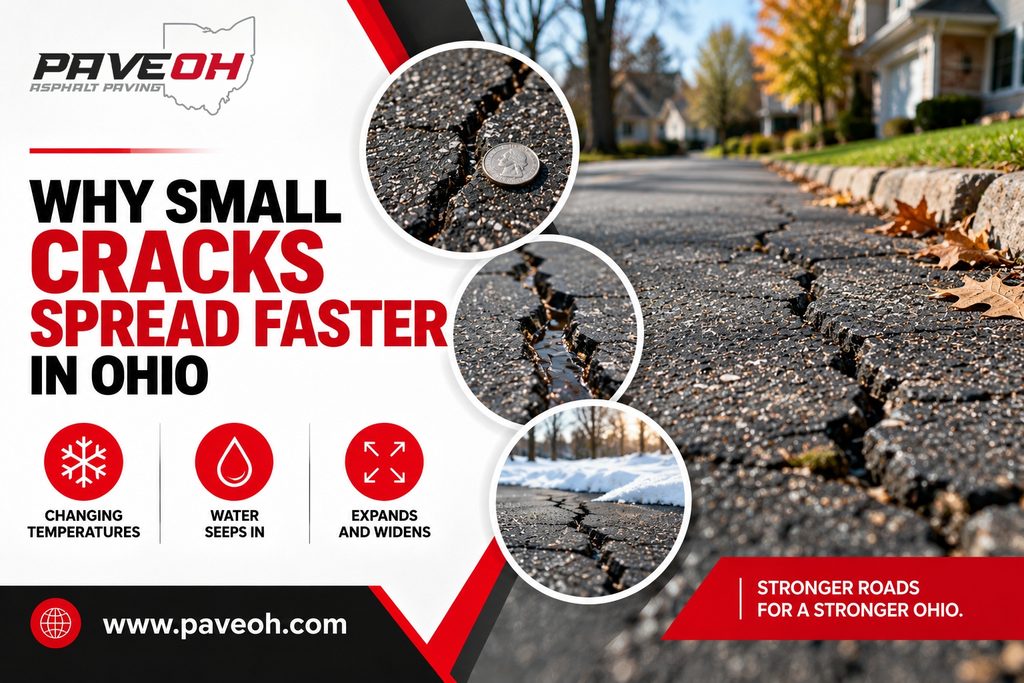
When water enters a pavement crack and freezes, it expands. When temperatures rise, the ice melts. Repeated cycles can progressively stress the pavement surrounding the crack.
Pave OH identifies seasonal freeze-thaw cycles and fluctuating temperatures as particularly important factors affecting asphalt in Central Ohio.
A simplified progression is:
Small crack → water enters → freezing → pavement stress → thawing → additional water enters → repeated cycles → wider crack
This process helps explain why pavement problems can become more noticeable after winter.
3. Traffic Places Additional Stress on Cracked Asphalt
Weather isn’t the only factor.
Vehicles repeatedly place loads on asphalt. When pavement is already weakened around a crack, traffic can contribute to further movement and deterioration.
Heavy or frequent traffic can be especially demanding on:
- Commercial parking lots
- Drive lanes
- Intersections
- Loading areas
- Busy private roads
- Driveway entrances
Pave OH states that heavy vehicle traffic is among the factors that contribute to asphalt deterioration and emphasizes addressing minor damage before it develops into larger problems.
4. Small Cracks Can Allow Debris to Enter
Cracks don’t only provide access for water.
Dirt, sand, and other debris can also accumulate in openings. This can interfere with maintenance and make cracks more difficult to properly treat.
Keeping asphalt surfaces clean and inspecting them regularly makes it easier to identify developing cracks before they become widespread.
5. Untreated Cracks Can Lead to Potholes
A crack doesn’t automatically become a pothole, but untreated cracking can contribute to conditions that eventually produce more serious damage.
Pave OH explains that minor cracks can expand into potholes, base failure, and broader surface damage when they are left untreated.
The risk becomes greater when cracking is combined with:
- Water infiltration
- Freeze-thaw cycles
- Heavy traffic
- Poor drainage
- Weak pavement structure
This is why crack maintenance is an important part of preventative asphalt care.
6. Interconnected Cracks Are a Warning Sign
A single isolated crack is different from an area where multiple cracks begin connecting.
As cracks spread and intersect, they can create larger weakened sections of pavement.
Pave OH’s asphalt repair guidance identifies widespread cracking as a sign that pavement may require more substantial attention rather than simple spot maintenance.
Property owners should therefore monitor whether cracks are:
- Becoming longer
- Becoming wider
- Connecting with other cracks
- Developing around potholes
- Appearing across large sections
7. Poor Drainage Can Make Cracking Worse
Water needs a clear path away from pavement.
When drainage is poor, water may remain on or around asphalt for extended periods. This increases the pavement’s exposure to moisture.
Pave OH evaluates drainage and base conditions when assessing asphalt damage, because these factors can influence how pavement deteriorates and whether repairs provide lasting results.
If cracks repeatedly develop in the same low area, drainage should be considered as part of the investigation.
8. Aging Asphalt Becomes More Vulnerable
Asphalt changes as it ages.
Sun exposure, oxygen, moisture, traffic, and seasonal weather gradually affect the asphalt binder. Over time, the surface can become less flexible and more vulnerable to cracking.
This doesn’t mean older pavement will automatically fail. Proper maintenance can help extend its useful service life.
Pave OH recommends regular inspections and timely repairs to prevent minor asphalt problems from becoming larger pavement failures.
Common Reasons Asphalt Cracks Spread in Ohio
| Cause | Effect on Asphalt |
|---|---|
| Water infiltration | Allows moisture into pavement |
| Freeze-thaw cycles | Repeatedly stress cracks |
| Heavy traffic | Adds repeated loads to weakened areas |
| Poor drainage | Keeps pavement exposed to moisture |
| UV exposure | Contributes to asphalt aging |
| Lack of maintenance | Allows small problems to progress |
| Weak base conditions | Can contribute to recurring deterioration |
Usually, several of these factors work together rather than one factor acting alone.
How to Recognize a Spreading Crack
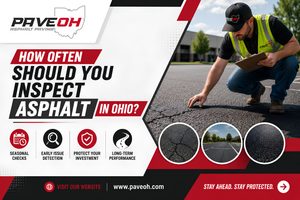
Regular inspections make changes easier to identify.
Look for cracks that are:
Getting wider
A narrow line gradually becomes a more visible opening.
Getting longer
The crack extends farther across the pavement.
Connecting
Several individual cracks begin forming a network.
Developing near potholes
Cracking appears around an existing damaged area.
Reappearing after repair
A previously repaired crack opens again.
Associated with standing water
Water repeatedly collects near or inside the crack.
These signs indicate that the pavement should be evaluated rather than simply ignored.
Why Crack Sealing Can Help
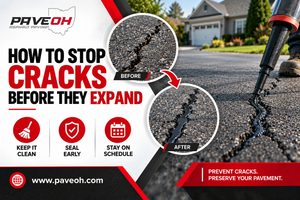
Crack sealing is a preventative maintenance technique designed to limit water infiltration through appropriate pavement cracks.
Pave OH explains that professional crack sealing closes entry points for water and debris and can help prevent further pavement deterioration.
The company also describes using hot-pour rubberized sealant designed to remain flexible as pavement expands and contracts with temperature changes.
However, not every crack should automatically be sealed. The appropriate treatment depends on crack type, width, pavement condition, and the underlying cause.
When Is Crack Sealing Appropriate?
Crack sealing can be useful when:
- Cracking is relatively localized
- The surrounding pavement remains structurally sound
- Moisture infiltration is a concern
- Cracks have not developed into widespread structural deterioration
- Preventative maintenance is appropriate
The objective is to address cracks before they contribute to larger pavement problems.
When Is Crack Repair Not Enough?
Sometimes cracking indicates a larger pavement issue.
If asphalt has widespread cracking, potholes, settlement, or significant structural deterioration, sealing individual cracks may not address the underlying problem.
Pave OH offers multiple repair approaches, including crack sealing, patching, overlays, resurfacing, and replacement, depending on the condition of the pavement.
A professional inspection can help determine which approach fits the actual condition.
Could Resurfacing Be the Right Solution?
If cracking is widespread but the pavement foundation remains suitable, resurfacing may be considered.
Pave OH describes resurfacing as a way to restore worn asphalt by applying a new surface layer after appropriate preparation. Its services page also lists asphalt recap/resurfacing as a method for restoring worn pavement.
Resurfacing may be considered when:
- Surface deterioration affects a broad area
- The pavement has extensive wear
- Localized repairs are becoming frequent
- The underlying structure remains suitable
A new surface layer should not simply be used to hide a failed base.
When Does Asphalt Need Replacement?
If cracks have become extensive and are accompanied by serious structural deterioration, resurfacing may not be enough.
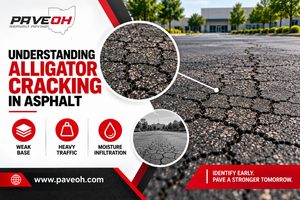
Pave OH identifies severe alligator cracking, recurring potholes and depressions, crumbling surfaces, drainage problems, and compromised subbase conditions as signs that full asphalt replacement may need to be considered.
The important distinction is whether the problem is primarily at the surface or within the pavement structure.
How to Slow Asphalt Crack Spreading in Ohio
Property owners can take several preventative steps.
Inspect asphalt regularly
Look for new cracks and changes in existing ones.
Maintain drainage
Prevent water from repeatedly collecting around pavement.
Address cracks early
Appropriate crack sealing can help limit water infiltration.
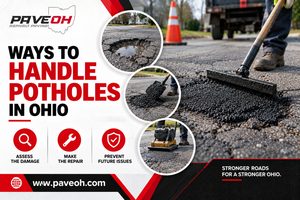
Repair potholes promptly
Don’t allow localized damage to continue expanding.
Maintain the surface
Appropriate preventative treatments can help protect sound pavement.
Monitor pavement after winter
Spring inspections can reveal damage caused or accelerated by freeze-thaw conditions.
Pave OH recommends regular inspections and timely repairs as part of maintaining asphalt and preventing minor problems from developing into more extensive damage.
A Simple Ohio Asphalt Inspection Checklist
| What to Check | Why It Matters |
|---|---|
| New hairline cracks | May indicate early pavement aging |
| Wider cracks | Can allow more moisture penetration |
| Connected cracks | May indicate increasing deterioration |
| Potholes | Can signal deeper pavement damage |
| Standing water | Indicates possible drainage concerns |
| Crumbling edges | May indicate pavement weakness |
| Recurring repairs | May point to an underlying problem |
| Surface fading and wear | Can indicate aging asphalt |
Regular checks make it easier to identify changes before they become major repairs.
Why Early Repair Matters
The earlier a pavement problem is identified, the more maintenance options may be available.
Pave OH states that timely asphalt repairs can extend pavement life, improve safety, enhance appearance, and reduce the likelihood of more extensive repairs.
This doesn’t mean every crack requires immediate major work. Instead, the goal is to understand the condition of the pavement and respond appropriately.
A small crack on otherwise healthy pavement is a very different situation from widespread interconnected cracking across an aging surface.
Final Thoughts
Asphalt crack spreading Ohio property owners see is often the result of several conditions working together. Water can enter cracks, freezing temperatures can stress the pavement, thawing can allow additional moisture to enter, and traffic can place repeated loads on already weakened areas. Ohio’s seasonal freeze-thaw conditions make regular pavement inspection and maintenance particularly important.
The most effective response depends on the extent of deterioration. Appropriate crack sealing can help protect sound pavement from moisture infiltration, while patching or resurfacing may be more suitable when damage becomes more widespread. If the underlying pavement structure has failed, replacement may be necessary.
For Pave OH’s paving services in Columbus Ohio, the company evaluates factors such as pavement condition, drainage, grading, traffic demands, and intended use when recommending an asphalt solution. Its service range includes asphalt repair, resurfacing, replacement, crack sealing, and other pavement services.
Addressing small cracks while the surrounding pavement is still sound can help prevent moisture-related deterioration from progressing. Regular inspections, proper drainage, timely crack treatment, and appropriate asphalt repairs are all important parts of keeping Ohio pavement in better condition.