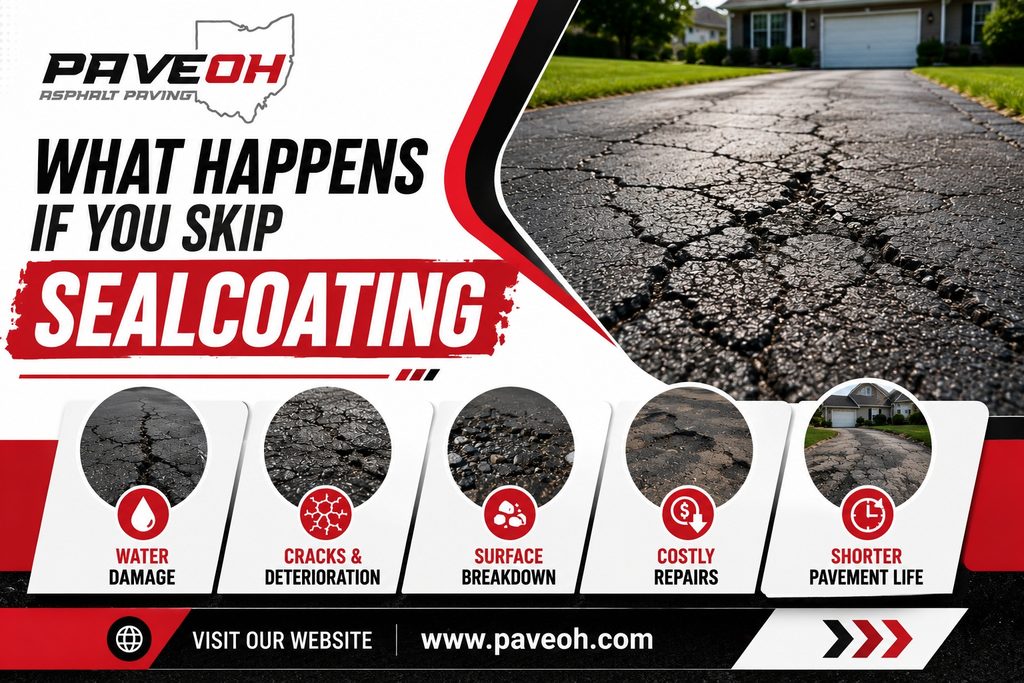
What Happens If You Skip Sealcoating? What happens when an asphalt driveway or parking area is left without regular protective maintenance? Over time, the surface can become more vulnerable to oxidation, moisture, cracking, fading, and general wear. Understanding sealcoating importance Ohio property owners can help them make better decisions about maintaining suitable asphalt before deterioration becomes more extensive.
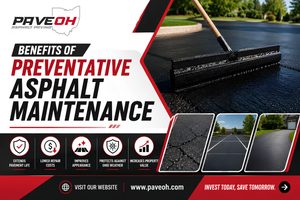
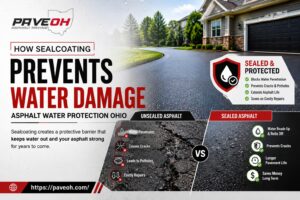
Sealcoating is a preventative surface treatment rather than a structural repair. Pave OH explains that sealing helps protect asphalt from water penetration, oxidation, weather exposure, and everyday vehicle use.
Ohio’s changing weather makes pavement protection particularly relevant. Freezing temperatures, thawing, rain, sunlight, road salt, and traffic can all contribute to asphalt aging. Regular maintenance can help slow that process when the pavement is still in suitable condition.
What Does Sealcoating Actually Do?
Sealcoating places a protective layer over an existing asphalt surface.
Its purpose is primarily to help reduce exposure to environmental elements that contribute to surface deterioration. Pave OH describes driveway sealing as a maintenance process that helps protect asphalt against moisture, oxidation, weather, and everyday vehicle traffic.
The Federal Highway Administration-supported research conducted for ODOT has also examined asphalt pavement preservation treatments designed to reduce the effects of weathering and aging on asphalt surfaces.
Sealcoating doesn’t rebuild a failed pavement structure. Instead, it is most useful as part of preventative maintenance while the existing asphalt remains reasonably sound.
1. Unprotected Asphalt Becomes More Exposed to Oxidation
One of the first things that happens as asphalt ages is oxidation.
Sunlight and oxygen gradually affect the asphalt binder. As the binder ages, the pavement can become less flexible and more susceptible to surface deterioration.
ODOT’s pavement repair guidance identifies asphalt aging as a contributing factor in certain forms of cracking.
Pave OH similarly explains that asphalt naturally loses some of the protective oils that help keep it flexible and durable, making the pavement more vulnerable to cracking and other deterioration.
Sealcoating provides an additional surface barrier that can help slow this exposure.
2. Moisture Can Reach Vulnerable Areas
Water is another major concern for asphalt.
Rain and melting snow can enter existing cracks and other openings. Once moisture gets into vulnerable pavement areas, Ohio’s seasonal temperature changes can make the situation more challenging.
The ODOT pavement guide identifies water-related conditions and freeze-thaw effects among contributors to several pavement distresses.
A sealcoat can help reduce direct surface exposure to moisture, but it should not be treated as a solution for significant existing cracks or drainage failures.
3. Small Cracks May Become More Difficult to Manage
Skipping preventative maintenance doesn’t mean every crack will automatically become a major failure. However, existing cracks should not simply be ignored.
Cracks can allow water to reach lower pavement layers. ODOT identifies crack sealing as a maintenance strategy for several types of pavement cracking.
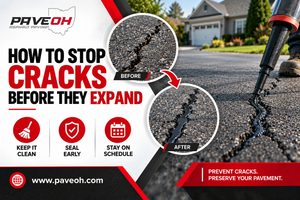
Pave OH also recommends addressing small cracks before they expand as part of residential driveway maintenance.
For that reason, sealcoating should normally be considered alongside crack repair rather than used as a substitute for it.
4. Freeze-Thaw Conditions Can Become More Concerning
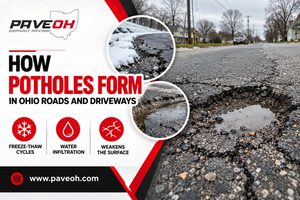
Ohio’s winter weather creates repeated cycles of freezing and thawing.
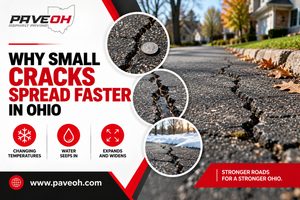
When moisture enters pavement openings and temperatures fall below freezing, the water can freeze and expand. Repeated cycles can contribute to pavement deterioration.
ODOT’s pavement guidance identifies freeze-thaw action as a contributing factor in certain potholes and other pavement problems.
Maintaining the surface and addressing suitable cracks before winter can therefore be an important part of an overall pavement preservation plan.
5. Asphalt Can Lose Its Fresh Appearance
The effects of aging aren’t only structural.
Asphalt commonly becomes lighter and more weathered-looking as it ages. Sun exposure, oxidation, traffic, and weather gradually change the appearance of the surface.
Pave OH notes that sealing can restore a darker, cleaner appearance to residential asphalt while providing a protective surface layer.
So, when sealcoating is skipped, one noticeable result can simply be a more weathered-looking driveway or pavement surface.
6. Surface Wear Can Become More Noticeable
Everyday vehicle traffic gradually wears asphalt.
Turning movements, braking, acceleration, parking, and repeated vehicle loading all contribute to surface wear.
A properly maintained pavement can generally be monitored and treated according to its condition. Without a preventative maintenance plan, deterioration may be allowed to progress until more substantial repairs are required.
Pave OH describes sealcoating as a way to help protect asphalt from daily vehicle use and surface wear.
7. Oil and Chemical Exposure Can Affect Asphalt
Driveways and parking areas can be exposed to vehicle fluids, fuel, and other chemicals.
Pave OH recommends cleaning oil, fuel, and chemical spills promptly as part of routine asphalt maintenance.
A sealcoat can provide an additional protective surface against some forms of contamination, but spills should still be cleaned rather than relying on the coating alone.
This is particularly important in parking areas where vehicle fluid exposure is more frequent.
8. Maintenance Problems Can Become More Expensive
One reason preventative maintenance matters is timing.
A relatively sound pavement may be a candidate for preservation treatments. A pavement with extensive structural deterioration may require substantially more extensive rehabilitation.
The distinction is important because sealcoating cannot repair major structural failures.
The Texas Department of Transportation’s seal-coat guidance, for example, notes that seal coats have little structural strength themselves and are not intended to correct load-associated structural cracking.
Therefore, skipping maintenance doesn’t automatically mean a driveway must be replaced. It means property owners may lose opportunities to address suitable surface-level deterioration before more extensive work becomes necessary.
9. Sealcoating Cannot Fix Existing Structural Problems
This is one of the most important points to understand.
Sealcoating is not designed to repair:
- Deep structural cracks
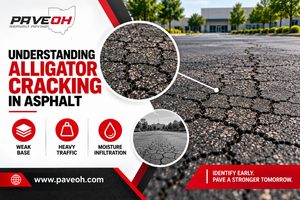
- Severe alligator cracking
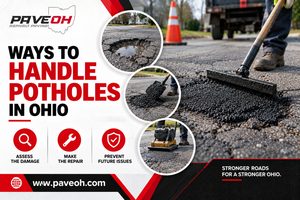
- Major potholes
- Significant settlement
- Failed base layers
- Serious drainage problems
Pave OH explains that sealcoating is a preventative maintenance treatment and does not correct structural asphalt problems.
If serious deterioration is already present, the pavement should be evaluated before any surface treatment is applied.
10. Skipping Sealcoating Doesn’t Mean You Need It Immediately
Property owners shouldn’t assume that every asphalt surface requires sealcoating on the same schedule.
Maintenance timing depends on:
- Pavement age
- Existing condition
- Traffic volume
- Weather exposure
- Drainage
- Previous maintenance
- Type and quality of asphalt
- Surface preparation
Pave OH states that its residential driveway sealing typically lasts around two to three years, with actual longevity depending on exposure, traffic, preparation, and material selection.
Therefore, the condition of the pavement should be considered rather than following a rigid calendar.
Sealcoating vs. No Preventative Surface Treatment
| With Appropriate Sealcoating | Without Preventative Surface Protection |
|---|---|
| Adds a protective surface layer | Asphalt remains directly exposed |
| Helps limit moisture exposure | Moisture can reach existing openings |
| Helps slow oxidation | Oxidation continues without added surface protection |
| Can refresh appearance | Surface may gradually fade |
| Supports preventative maintenance | More reliance on repairs after deterioration |
| Works best on suitable asphalt | Existing deterioration continues to require monitoring |
Sealcoating is only one part of a complete maintenance program. Crack repair, drainage management, cleaning, inspections, and appropriate repairs remain important.
When Is Sealcoating Appropriate?
Sealcoating generally makes the most sense when the asphalt is still structurally sound and the goal is preventative protection.
A property may be a candidate when:
- The pavement is generally intact
- Surface oxidation is becoming noticeable
- Minor surface wear is present
- Existing cracks can be appropriately treated
- Drainage is functioning properly
- Major structural deterioration is absent
Pave OH describes sealcoating as preventative maintenance rather than a replacement for resurfacing or structural repair.
What Should Happen Before Sealcoating?
Good preparation matters.
Pave OH’s sealcoating information emphasizes cleaning the surface, addressing cracks, maintaining proper drainage, and allowing appropriate curing time after application.
A typical preparation process may involve:
- Inspecting the pavement
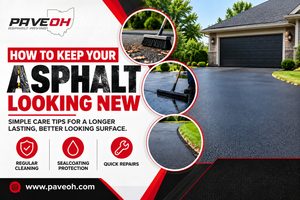
- Cleaning the surface
- Removing loose debris
- Treating appropriate cracks
- Addressing necessary repairs
- Applying the sealcoat under suitable conditions
- Allowing adequate curing time
Applying sealcoat over serious pavement problems doesn’t eliminate those problems.
Why Ohio Weather Makes Preventative Care Important
Ohio asphalt experiences significant seasonal variation.
Pave OH specifically points to Ohio’s winter conditions, freeze-thaw cycles, rainfall, and road salt as stresses that asphalt surfaces can experience.
That doesn’t mean sealcoating prevents all winter damage. Instead, it can be one component of a broader strategy that includes:
- Crack maintenance
- Drainage management
- Regular inspections
- Cleaning
- Timely pothole repairs
- Appropriate surface protection
The objective is to keep suitable pavement protected and address problems before they become more extensive.
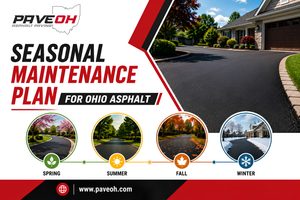
A Simple Ohio Asphalt Maintenance Routine
Spring
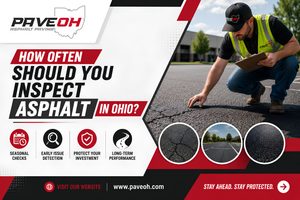
Inspect the pavement after winter.
Look for new cracks, potholes, drainage issues, and edge deterioration.
Summer
Clean the surface and monitor wear. If sealcoating is appropriate, warm-weather conditions can provide an opportunity for the work.
Fall
Address suitable cracks and drainage problems before winter.
Winter
Monitor the pavement and watch for new potholes, standing water, and other deterioration.
This seasonal approach works better than waiting until visible damage becomes severe.
Final Thoughts
The sealcoating importance Ohio property owners should understand is primarily about preventative pavement care. Sealcoating can provide a protective surface layer that helps reduce exposure to moisture, oxidation, weather, and everyday wear. Pave OH specifically describes sealing as a way to protect asphalt from water penetration, oxidation, weather exposure, and vehicle use.
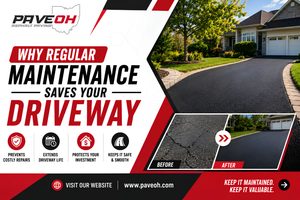
But skipping sealcoating does not automatically mean an asphalt driveway will fail. Pavement performance depends on construction quality, drainage, traffic, age, climate exposure, and maintenance history. The more important point is that regular maintenance gives property owners opportunities to identify deterioration and choose appropriate treatments while the pavement remains suitable for preservation.
Sealcoating also has clear limitations. It cannot correct major structural failures, severe cracking, failed bases, or serious drainage problems. Those conditions may require repairs, resurfacing, or reconstruction instead.
For Paving Services in Columbus Ohio, Pave OH provides asphalt paving, repair, resurfacing, driveway sealing, and related pavement maintenance services. Its approach emphasizes evaluating existing pavement conditions and selecting maintenance or paving work based on the property’s actual needs.