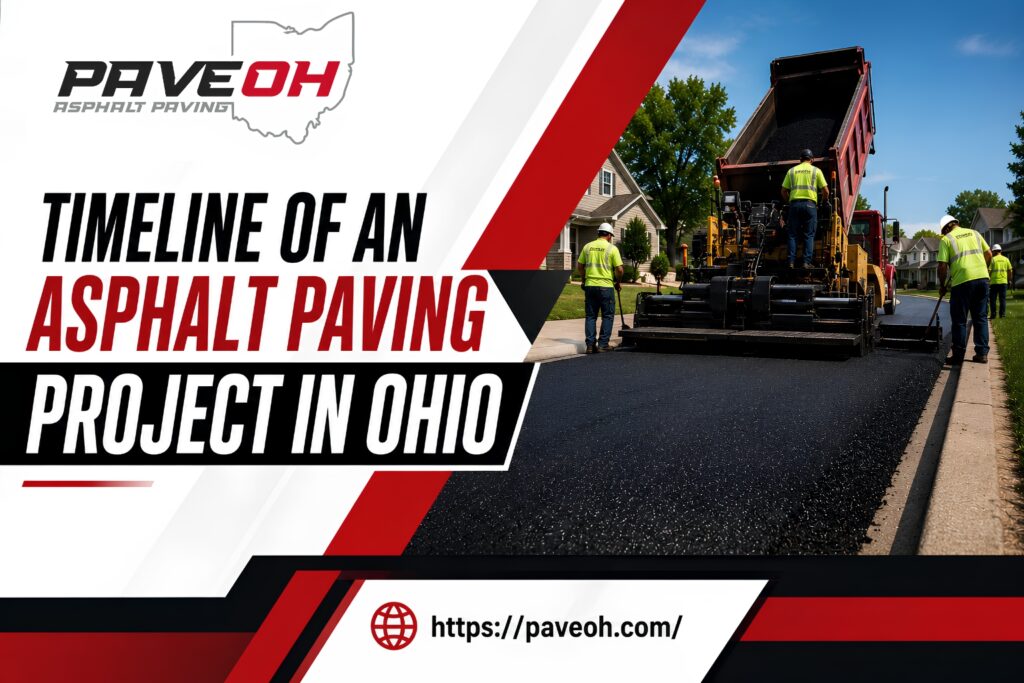
How long does an asphalt paving job really take from start to finish? The answer depends on the project size, site conditions, weather, and whether the surface needs major preparation, but the process is usually much more structured than most property owners expect. A well-planned project moves through a clear sequence of steps, and understanding that sequence helps you know what to expect at every stage.
For homeowners and business owners comparing asphalt paving in Columbus Ohio, the biggest advantage of knowing the asphalt project timeline Ohio is that it removes the guesswork. When you understand how the work unfolds, it becomes easier to plan parking, manage access, and prepare for curing and final use. Many property owners also prefer working with professional paving experts in Columbus Ohio because experienced crews can keep the project moving smoothly while making sure each phase is done correctly.
Why an Asphalt Project Timeline Matters
A paving project is not just one event. It is a series of steps that build on each other, and each step affects the final quality of the surface. When the process is rushed or skipped, the pavement may look fine at first but fail much sooner than expected.
Why the timeline affects results
Typical Asphalt Project Timeline in Ohio
The exact schedule depends on the size and condition of the site, but most asphalt paving projects follow a general pattern.
| Project Stage | What Happens | Why It Matters |
|---|---|---|
| Initial consultation | Site review, measurements, and planning | Helps define scope and identify issues |
| Site preparation | Removal of old pavement, debris, or weak material | Creates a clean starting point |
| Excavation and grading | Soil is shaped and leveled | Supports drainage and stability |
| Base installation | Aggregate base is added and compacted | Gives the pavement strength |
| Asphalt paving | Hot asphalt is placed and spread | Creates the finished driving surface |
| Compaction | Rollers press the asphalt into place | Improves density and durability |
| Striping and finishing | Markings and final details are added | Improves function and appearance |
| Curing and reopening | Surface sets before full use | Ensures proper performance |
Step 1: Initial Consultation and Site Review
Every project begins with a detailed assessment of the property. This step helps determine what kind of work is needed and how long the project is likely to take.
What happens during this phase
- The contractor inspects the site.
The crew evaluates the existing pavement, drainage, slope, traffic needs, and visible damage. This review helps them understand whether the project is a new installation, resurfacing job, or full replacement. - Measurements are taken.
Accurate measurements matter because they affect how much material is needed and how the project is planned. The size and shape of the area also influence the overall schedule. - Problem areas are identified.
The contractor looks for soft spots, standing water, cracking, and settlement. If these issues are present, they may add extra time to the project because the foundation will need more preparation.
Step 2: Planning and Scheduling
Once the site has been reviewed, the project is scheduled. This is where the timeline starts to take shape more clearly.
Why scheduling matters
- Weather must be considered.
Ohio weather can change quickly, and paving works best when conditions are dry and suitable for compaction. Rain, cold temperatures, or excessive moisture can delay the project. - Traffic access has to be managed.
For commercial properties, the contractor may need to phase the work so the business can stay open. For residential properties, homeowners may need to arrange parking elsewhere during the job. - Materials and crew availability affect timing.
A smooth project depends on having the right equipment, materials, and team ready at the same time. Good planning reduces delays and helps the project move forward efficiently.
Step 3: Removal of Old Material
If the project involves replacing an existing driveway or parking lot, the next step is usually removal. This clears away damaged pavement and makes room for the new structure.
Why this step is important
- It exposes the base underneath.
Once the old asphalt is removed, the contractor can inspect the foundation below. This is often where hidden problems are discovered. - It allows for better rebuilding.
Removing damaged material gives the crew a chance to fix weak areas instead of covering them over. That results in a stronger finished product. - It creates a clean working surface.
A proper installation starts with a clean, stable site. Debris, broken pavement, and unstable material have to be removed before new layers can be added.
Step 4: Excavation and Grading
Excavation and grading are essential parts of the asphalt project timeline Ohio because they prepare the land for the new surface.
What happens during grading
- Soil is shaped to the right slope.
The surface must be sloped correctly so water drains away instead of sitting on the pavement. This is especially important in Ohio, where moisture and freeze-thaw cycles can shorten pavement life. - Uneven ground is corrected.
Low spots, raised areas, and soft ground are adjusted so the driveway or lot sits evenly. - The area is prepared for the base layer.
A properly graded site creates the right conditions for the next step, which is base installation.
Step 5: Base Installation and Compaction
The base is one of the most important parts of the entire project. It supports the asphalt and helps distribute weight across the surface.
Why the base matters so much
- It provides structural support.
The asphalt surface is only as strong as the foundation beneath it. A stable base prevents settling and helps the pavement handle traffic. - It improves drainage.
A well-prepared base helps water move away from the surface instead of collecting under the pavement. - It increases the lifespan of the project.
A strong base helps the asphalt resist cracking, rutting, and premature failure.
What happens during this phase
- Aggregate is added.
Crushed stone or similar material is spread across the area. - The material is compacted.
Heavy machinery compresses the base to create a firm, stable foundation. - The contractor checks for evenness.
Before paving begins, the team confirms the base is level and ready.
Step 6: Asphalt Placement
This is the stage most people picture when they think about paving. Hot asphalt is delivered, spread, and shaped across the prepared base.
Why timing matters here
- The asphalt must be placed while it is hot.
Asphalt needs the right temperature to stay workable. If it cools too much before placement is finished, it becomes harder to compact and shape properly. - The thickness must be consistent.
Even coverage helps the surface perform correctly. Thin spots may wear out faster, while uneven areas can create weak points. - The crew must work efficiently.
Asphalt installation is time-sensitive, so experienced crews move quickly while still maintaining precision.
Step 7: Compaction and Rolling
After the asphalt is placed, it must be compacted with rollers to create a dense, durable finish.
Why compaction is critical
- It improves pavement strength.
Compaction removes air pockets and helps the asphalt settle into a stronger structure. - It creates a smoother surface.
Rolling helps level the asphalt and gives it a cleaner final appearance. - It supports longer-term performance.
Proper compaction helps prevent early wear, cracking, and moisture penetration.
Step 8: Striping, Edging, and Final Details
For commercial properties, striping often comes after the asphalt has been installed and compacted. For residential projects, final detailing may include edges, transitions, and cleanup.
Why finishing work matters
- It improves usability.
Striping helps drivers understand where to park and how to move through the lot. - It makes the property look complete.
Clean lines and neat edges create a polished, professional result. - It supports safety and organization.
Markings, lanes, and boundaries help reduce confusion and improve traffic flow.
Step 9: Curing and Reopening
Even after the asphalt is finished, it still needs time to settle before full use.
What homeowners and property owners should expect
- The surface should not be used too soon.
Giving the asphalt time to cure helps it stabilize and perform properly. - Traffic may need to be limited at first.
Light use may be allowed earlier than full use, depending on the project and weather conditions. - The contractor will advise on reopening.
Following those instructions helps protect the new surface from damage.
How Weather Affects the Timeline
Ohio weather can affect every phase of the paving process.
Rain
- Can delay excavation and paving
Wet conditions make it harder to prepare the base and install asphalt properly. - Can weaken the site if not managed well
Excess moisture can affect compaction and final performance.
Temperature
- Cold weather can slow or pause paving
Asphalt performs best in suitable temperatures, so cold days can affect timing. - Heat can also influence the process
Asphalt must be placed and compacted before it cools too much.
Freeze-thaw cycles
- Make drainage and base prep even more important
Ohio’s seasonal weather changes create long-term stress on pavement, so preparation matters even more than the visible surface work.
Common Delays in an Asphalt Project
- Poor weather conditions
Rain and cold can push timelines back. - Hidden base problems
If the ground underneath is weaker than expected, extra repair work may be needed. - Unexpected drainage issues
Water flow problems may require additional grading or correction before paving can continue. - Material or equipment scheduling issues
Professional teams plan around these risks, but large projects can still shift slightly if conditions change.
Why Professional Paving Experts Make a Difference
Hiring experienced contractors helps keep the timeline realistic and the results dependable.
Benefits of working with professionals
- They plan each stage correctly.
A skilled contractor knows how to sequence the work so the project moves efficiently and avoids unnecessary setbacks. - They know how to handle Ohio conditions.
Weather, soil, and drainage issues all affect pavement performance. Local experience helps contractors make better decisions during the project. - They protect the quality of the finish.
A good timeline is not only about speed. It is also about making sure every step is done in the right order and to the right standard.
Our Asphalt Services in Columbus
At PaveOH, we provide reliable solutions designed to keep each project on schedule and built for long-term performance.
What we offer
- Asphalt paving in Columbus Ohio
We handle new installations, replacements, and paving projects with attention to detail at every stage. - Driveway and parking lot services
From residential driveways to larger commercial surfaces, we create strong, clean, and functional pavement. - Repair and maintenance support
We also help property owners extend the life of their asphalt with the right maintenance services.
Why choose our team
- Professional paving experts in Columbus Ohio
Our crew understands the details that affect project timing, quality, and durability. - Local knowledge and practical planning
We know how to work with Ohio conditions so the finished pavement performs well over time. - Customer-focused service
We keep the process clear and manageable from consultation through completion.
Final Thoughts
A paving project works best when every phase follows a clear plan. From the first site review to the final curing stage, each part of the timeline supports the next one. That is why understanding the asphalt project timeline Ohio can make the whole experience easier and more predictable.
When the project is handled properly, you get more than a new surface. You get a driveway or parking lot that is built to handle Ohio weather, daily use, and long-term performance.
Ready to Start Your Project?
If you are planning a new pavement installation or replacement, PaveOH is here to help. Our team delivers dependable results with a process designed for quality and efficiency. Contact us today to schedule your consultation and move forward with a paving project built for Ohio conditions.