Can your driveway or parking lot handle Ohio’s changing weather without developing cracks, potholes, and surface damage? The type of asphalt used in your paving project can make a big difference.
Ohio experiences cold winters, hot summers, rain, and frequent freeze-thaw cycles. These conditions can put extra stress on asphalt surfaces. Regular traffic and heavy vehicles can also cause damage over time.
This is where polymer-modified asphalt can help. It uses special additives to improve the performance of traditional asphalt. These additives help the asphalt binder become more flexible and better resist certain types of pavement damage.
For homeowners and business owners, this can mean a stronger and more reliable pavement surface when the right materials and installation methods are used.
In this guide, we will explain what polymer-modified asphalt is, how it works, and why it may be a good option for paving projects in Ohio.
What Is Polymer-Modified Asphalt?
Polymer-modified asphalt is a type of asphalt that contains special polymer additives. These additives improve the properties of the asphalt binder, which holds the stone and other materials together.
Traditional asphalt works well for many paving projects. However, extreme temperatures and regular traffic can affect its performance.
Polymer additives help improve the binder’s strength, flexibility, and ability to recover after stress. This can help the pavement handle changing temperatures and repeated vehicle loads.
The result is an asphalt mixture that may offer better resistance to common pavement problems, such as:
- Surface cracking
- Rutting and tire marks
- Water-related damage
- Surface wear
- Heavy traffic stress
The actual results depend on the polymer type, asphalt mix, base preparation, drainage, and installation quality. Polymer-modified asphalt is not a replacement for proper pavement construction. It works best as part of a well-planned paving system.
Why Does Ohio’s Weather Matter for Asphalt?
Ohio’s weather can be tough on paved surfaces. Temperatures change throughout the year, and each season brings different challenges.
Here are some common weather-related problems that affect asphalt in Ohio.
1. Freeze-Thaw Cycles
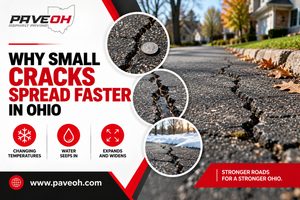
During winter, water can enter small cracks in the asphalt. When temperatures drop, the water freezes and expands. When it melts, small spaces can remain inside the pavement.
Over time, this process can make cracks wider and lead to potholes.
2. Summer Heat
High summer temperatures can soften asphalt. When heavy vehicles pass over the surface, the pavement may start to move or develop low spots.
3. Rain and Moisture
Rainwater can enter cracks and reach the pavement base. If water stays under the surface, it can weaken the foundation and lead to uneven areas.
4. Heavy Vehicle Traffic
Driveways, parking lots, and commercial access roads face regular vehicle pressure. Trucks and other heavy vehicles can place even more stress on the pavement.
These conditions make material selection, proper drainage, and a strong foundation important for long-lasting asphalt.
7 Key Benefits of Polymer-Modified Asphalt in Ohio
Polymer-modified asphalt offers several advantages for residential and commercial paving projects. Let’s look at the most important ones.
1. Better Resistance to Cracking
Cracks are one of the most common problems with asphalt pavement. Temperature changes, aging, water, and repeated vehicle loads can all contribute to cracking.
Polymer additives can improve the flexibility and elastic recovery of asphalt binder. This helps the pavement handle repeated stress more effectively.
For Ohio property owners, this can be useful during seasonal temperature changes.
However, polymer modification cannot prevent every crack. A weak base, poor drainage, or incorrect installation can still cause pavement failure.
2. Improved Resistance to Rutting
Have you noticed long, sunken lines where vehicle tires usually travel?
These marks are called ruts. They often develop when asphalt or the layers below it move under repeated traffic pressure.
Polymer-modified asphalt can improve resistance to this type of deformation. Its improved binder properties help the pavement maintain its shape under vehicle loads.
This benefit can be especially useful for parking areas, commercial driveways, and roads that experience regular traffic.
3. Better Performance in Changing Temperatures
Asphalt expands and contracts as temperatures change. Repeated temperature changes can create stress inside the pavement.
Polymer additives can help reduce the effect of temperature changes on asphalt performance. Depending on the polymer and mix design, they can improve high-temperature stability and support better resistance to low-temperature cracking.
This makes polymer-modified asphalt worth considering for projects exposed to Ohio’s seasonal weather.
4. Improved Resistance to Water Damage
Water is one of the biggest threats to asphalt pavement.
When water enters the pavement, it can weaken the bond between the asphalt binder and the stone. This problem can cause the surface to lose small pieces or develop potholes.
Some polymer-modified asphalt mixtures offer better resistance to moisture-related damage.
A properly designed mixture, good compaction, and effective drainage can help reduce these problems.
5. Better Performance Under Heavy Traffic
Not all paved surfaces have the same needs.
A residential driveway may only handle a few vehicles each day. A commercial parking lot may deal with cars, delivery trucks, and service vehicles throughout the day.
Polymer-modified asphalt can help improve pavement performance under repeated traffic loads.
It may be a useful option for commercial properties where surface strength and long-term performance are important.
6. Improved Surface Durability
Regular traffic, weather exposure, and aging can slowly wear down asphalt.
This may cause the surface to lose small stones, become rough, or develop visible damage.
Certain polymer-modified asphalt mixtures can help reduce surface wear and improve aggregate retention.
A well-built pavement surface can provide a smoother driving experience and maintain a cleaner appearance for longer.
7. Potentially Longer Pavement Service Life
Every property owner wants pavement that lasts.
Polymer-modified asphalt can improve resistance to several common types of pavement damage. This may help reduce the rate of deterioration and extend the useful life of a properly designed pavement.
However, no asphalt material lasts forever. The final result also depends on traffic, soil conditions, drainage, installation, and regular maintenance.
For this reason, choosing the right material and building a strong foundation are equally important.
Traditional Asphalt vs. Polymer-Modified Asphalt
Both options can work well for paving projects. The right choice depends on the property’s needs, traffic conditions, and expected pavement performance.
Here is a simple comparison:
| Feature | Traditional Asphalt | Polymer-Modified Asphalt |
|---|---|---|
| Binder composition | Standard asphalt binder | Binder with polymer additives |
| Flexibility | Depends on the binder grade | Can offer improved elastic recovery |
| Rutting resistance | Varies by mix design | Often improved |
| Temperature performance | Depends on binder selection | Can offer a wider performance range |
| Moisture resistance | Depends on mix and construction | May offer improved resistance |
| Traffic performance | Suitable for many applications | Useful for demanding conditions |
| Maintenance | Requires regular care | Still requires regular care |
Important: Polymer-modified asphalt does not automatically outperform every traditional asphalt mixture. The actual performance depends on the material specification, project conditions, and construction quality.
Where Can Polymer-Modified Asphalt Be Used?
Polymer-modified asphalt can be used in different types of paving applications. Its suitability depends on the traffic level, surface condition, and project requirements.
Here are some common applications.
Residential Driveways
Home driveways face daily vehicle traffic and changing weather conditions.
For homeowners considering Residential Asphalt Paving in Columbus Ohio, polymer-modified asphalt may be worth discussing when durability and resistance to surface damage are important.
It can be considered for new driveway installations or certain resurfacing projects.
Commercial Parking Lots
Commercial parking lots often experience higher traffic than residential driveways. Delivery vehicles, customer traffic, and service trucks can place extra pressure on the surface.
For Commercial Asphalt Paving in Columbus Ohio, the right asphalt mixture should match the expected traffic and pavement requirements.
Polymer modification may provide additional performance benefits in suitable applications.
Driveway Replacement Projects
An old driveway may have deep cracks, potholes, sinking areas, or widespread surface damage.
When the existing base has failed, a simple surface repair may not solve the problem.
During Driveway Replacement in Columbus Ohio, the contractor should inspect the existing pavement, soil, drainage, and base before selecting the right asphalt mixture.
Polymer-modified asphalt may be considered when the project calls for improved surface performance.
Asphalt Driveway Repairs
Not every damaged driveway needs complete replacement.
Small cracks and isolated potholes may be repaired without rebuilding the entire surface.
For Asphalt Driveway Repair in Columbus Ohio, the first step is to identify what caused the damage. Polymer-modified asphalt may be suitable for certain repair or overlay applications, but the correct repair method depends on the condition of the existing pavement.
Is Polymer-Modified Asphalt Right for Every Paving Project?
Not necessarily.
Every paving project has different needs. Some properties may benefit from polymer-modified asphalt, while others may perform well with a standard asphalt mixture.
Before choosing a material, consider these factors:
- Traffic volume: How many vehicles use the pavement each day?
- Vehicle weight: Does the surface need to support heavy trucks or delivery vehicles?
- Weather exposure: Is the pavement exposed to frequent temperature changes and moisture?
- Existing pavement condition: Is the current surface damaged, or is the base also weak?
- Drainage: Can rainwater flow away from the paved area?
- Project goals: Is the main goal better surface performance, improved durability, or a new pavement installation?
A professional site inspection can help determine which asphalt mixture is suitable for your property.
What Makes Asphalt Last Longer in Ohio?
Choosing a suitable asphalt mixture is important, but material selection is only one part of the process.
A long-lasting pavement needs proper preparation and installation. Here are five important factors.
1. Strong Base Preparation
The stone base supports the asphalt above it. If the base is weak or poorly compacted, the surface may crack, sink, or become uneven.
2. Proper Drainage
Water should flow away from the pavement instead of collecting on the surface. Good drainage helps protect the base from moisture damage.
3. Correct Asphalt Thickness
The pavement thickness should match the expected traffic. Areas with heavy vehicles may need a stronger pavement structure.
4. Proper Installation and Compaction
Asphalt must be placed and compacted correctly. Poor compaction can leave spaces that allow water to enter and weaken the pavement.
5. Regular Maintenance
Small cracks should be addressed before they become larger problems. Regular inspections and suitable maintenance can help protect the surface.
These steps work together to improve pavement performance, regardless of whether the project uses traditional or polymer-modified asphalt.
How Does PaveOH Help Property Owners Make the Right Paving Decision?
Choosing the right paving solution should not feel confusing. Property owners need clear information, honest recommendations, and professional support before work begins.
At PaveOH, we understand the paving challenges that homeowners and businesses face across Columbus and Central Ohio.
Our team looks beyond the visible surface. We check the existing pavement, base condition, drainage, and expected traffic before recommending a solution.
Our approach focuses on:
- Honest Recommendations: We explain whether your property needs a repair, resurfacing, or complete replacement.
- Proper Site Preparation: We pay attention to grading, drainage, base preparation, and compaction.
- Clear Communication: We explain the project scope and keep you updated throughout the work.
- Quality Workmanship: We focus on the details that help create a smooth and reliable pavement surface.
- Customer Support: We provide clear aftercare instructions and guidance to help you maintain your new pavement.
We believe every customer deserves a paving solution that meets their property’s needs. Our goal is to make the entire process simple, clear, and stress-free, from the first site visit to project completion.
If you are planning a new driveway, repairing an existing surface, or upgrading a commercial parking lot, PaveOH is here to help you make an informed decision and feel confident about your paving project.
Frequently Asked Questions (FAQs)
1. What is polymer-modified asphalt?
Polymer-modified asphalt is a type of asphalt that contains special additives called polymers. These additives improve the asphalt binder’s flexibility, strength, and resistance to certain types of pavement damage.
2. Is polymer-modified asphalt good for Ohio weather?
It can be a good option for suitable projects in Ohio. It may offer better resistance to rutting and improved temperature performance. However, proper installation and drainage are still essential.
3. Does polymer-modified asphalt prevent cracks?
No asphalt can prevent all cracks. Polymer additives can improve flexibility and resistance to certain types of cracking. However, poor drainage, weak foundations, and extreme weather can still cause damage.
4. Is polymer-modified asphalt suitable for residential driveways?
Yes, it can be suitable for certain residential driveway projects. The best choice depends on the driveway’s condition, traffic, soil, drainage, and project requirements.
5. Can polymer-modified asphalt be used for commercial parking lots?
Yes. It can be considered for commercial parking areas that experience regular or heavy traffic. The asphalt mixture should be selected based on the expected vehicle loads and site conditions.
6. Does polymer-modified asphalt require maintenance?
Yes. It still needs regular inspections and proper maintenance. Crack repair, suitable sealcoating, and good drainage can help protect the pavement over time.
7. Is polymer-modified asphalt always better than traditional asphalt?
Not always. Both materials have suitable applications. Polymer-modified asphalt may offer additional performance benefits, but the right choice depends on the project and its specific requirements.