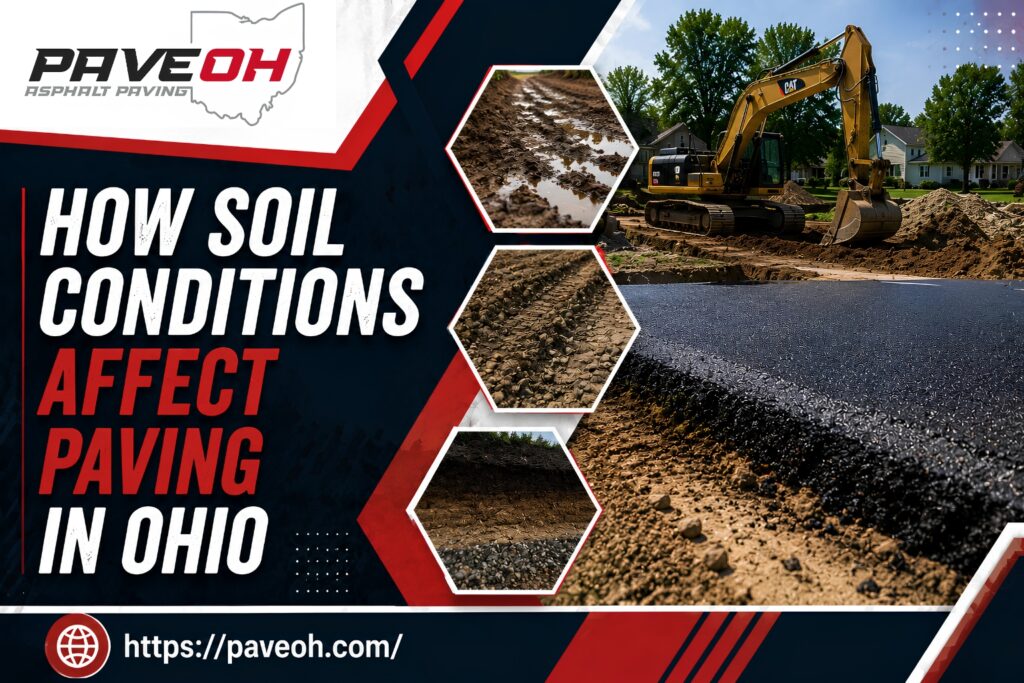
Why does one paved surface stay smooth and stable while another starts settling, cracking, or breaking apart early? In many cases, the answer begins in the soil beneath the asphalt. The ground under a driveway or parking lot controls how well the pavement is supported, how water drains, and how much stress the surface can handle over time. That is why soil conditions paving Ohio projects depend so heavily on site evaluation, grading, and base preparation. Asphalt performance is closely tied to the condition of the subgrade, and water trapped in the soil beneath pavement can soften support layers, weaken the structure, and contribute to rutting, cracking, and potholes.
For property owners comparing asphalt paving in Columbus Ohio, soil is not something to ignore or guess about. Pave OH says its paving approach considers material strength, weather resistance, and adequate drainage, and that it designs surfaces to perform under Ohio’s freeze-thaw cycles, traffic loads, and seasonal rain. The company also says it has over 25 years of experience, serves Columbus and Central Ohio, and handles residential and commercial paving, resurfacing, driveway replacement, repair, sealing, blacktop repair, and related services.
Why soil matters before asphalt is even installed
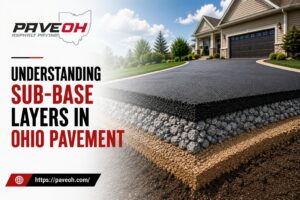
Asphalt does not sit on the ground by accident. It depends on a foundation system made up of the soil below, the compacted base above that soil, and the asphalt layers on top. If the soil is weak, too wet, or uneven, the whole pavement system becomes more vulnerable to settlement and early failure. Pavement references note that water trapped under the pavement softens the subbase and subgrade, making the road more vulnerable to traffic loads, and that saturated soil provides little support during spring thaw.
That is why professional paving experts in Columbus Ohio look at the site as a system instead of just a surface. Pave OH says it begins with a property evaluation and considers drainage, structural concerns, and long-term use before paving begins. It also says every project is engineered for long-term performance, with attention to safety, appearance, and local environmental demands.
What kinds of soil problems affect paving?
1. Clay soil holds water too long
Clay-heavy soil can retain moisture and stay soft for long periods after rain. When that happens under asphalt, the support layer becomes weaker and the surface can move more than it should. Asphalt references note that water under pavement softens the subbase and subgrade and makes the road more vulnerable to traffic loads, while freeze-thaw cycles can enlarge cracks and lead to potholes.
2. Silty soil can weaken quickly when wet
Silty soil tends to lose strength once moisture enters it. That makes the pavement more likely to settle, crack, or develop depressions. In pavement terms, poor drainage combined with weak support is a common path to fatigue cracking and premature failure.
3. Loose or poorly compacted soil can shift
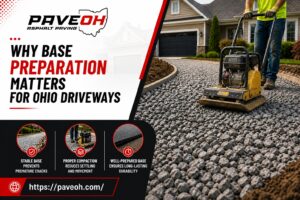
Even soil that is not especially wet can create problems if it is not compacted well before paving. When the subgrade shifts or compresses later under traffic, the asphalt above it can sink or deform. Potholes and fatigue cracking often begin when the soil underneath the pavement no longer provides enough support.
4. Freeze-thaw cycles make weak soil worse
Ohio weather adds another layer of stress. Water in the soil can freeze, expand, thaw, and then return as moisture again. That repeated movement can widen cracks and weaken support beneath the pavement. Technical references note that freeze-thaw activity is especially damaging when water remains trapped in or under the pavement structure.
How soil problems show up in the pavement
Soil issues are often visible later through pavement distress rather than directly in the ground itself. One of the most common signs is alligator cracking, which pavement references describe as a network of interlaced cracks that is often linked to sub-base failure, poor drainage, or repeated overloading. In advanced cases, that cracking can lead to potholes or premature pavement failure.
Another sign is rutting or depressions. When the soil beneath the pavement is too weak, the surface can begin to sink where vehicles repeatedly drive or park. Over time, those low spots collect water, and the water makes the support even weaker. Pothole formation is also strongly tied to water in the underlying soil structure combined with traffic, which is why a small weak area can turn into a larger repair problem.
Why drainage and grading matter so much
Soil conditions cannot be separated from drainage. Even good soil can create pavement problems if water is allowed to stay in the system too long. Pave OH says its paving method considers adequate drainage and weather resistance to help surfaces perform under Ohio’s seasonal conditions, and it emphasizes strong foundations and proper grading in its service approach.
Proper drainage helps the soil stay firm enough to support the pavement. Poor drainage does the opposite. It allows moisture to collect under the asphalt, where it softens the support layers and increases the risk of cracks, potholes, and settlement. That is especially important in Columbus and Central Ohio because seasonal rain and freeze-thaw cycles can quickly turn drainage problems into structural damage.
Why soil testing and site evaluation matter
Before paving starts, the contractor should understand what kind of soil is present and how it behaves with moisture. That is why site evaluation is so important. Pave OH says every project begins with a consultation and property evaluation that looks at structural concerns, drainage, traffic load, and long-term use. It also says its team provides personalized solutions for each project and is fully licensed and insured in Ohio.
A careful evaluation helps determine whether the site needs more excavation, stronger compaction, base correction, or drainage improvements before asphalt goes down. Without that step, the pavement may look fine at first but fail earlier because the soil beneath it was never properly prepared. Soil support and moisture control are key factors in pavement performance.
What strong paving prep does for weak soil
When soil conditions are challenging, good paving work focuses on strengthening the full support structure. That usually means correcting grading, improving drainage, compacting the subgrade correctly, and building a stable base before the asphalt layer is installed. Pavement design references explain that the subgrade and base are essential because they support the pavement above and help distribute traffic loads.
Pave OH says it works with premium materials and precision craftsmanship and offers services such as asphalt resurfacing, driveway replacement, driveway repair, sealcoating, and blacktop repair. Those services matter because some soil-related pavement problems can be handled with repair or resurfacing, while more serious base problems may require replacement.
How soil affects residential and commercial projects differently
Residential driveways and commercial parking lots face the same basic soil issues, but the impact can be different because commercial areas typically carry heavier traffic and more frequent movement. That makes stable soil and strong base preparation even more important in larger projects. Pave OH notes that it handles both residential and commercial asphalt paving and that it designs surfaces to handle traffic loads and Ohio weather conditions.
On a driveway, weak soil may show up as a soft spot, cracking, or edge failure. On a parking lot, the same problem can spread faster because more vehicles repeat the same stress patterns. Fatigue cracking and potholes become more likely when the pavement is not adequately supported from below.
Common warning signs that soil may be causing pavement problems
- Cracks spreading in connected patterns often point to support failure beneath the surface.
- Potholes or recurring holes in the same area usually suggest water and traffic are breaking down weak support below the asphalt.
- Low spots or sinking sections can mean the soil has settled or was not compacted properly before paving.
- Water that sits after rain is a sign drainage and soil support may not be working together correctly.
Why local experience matters in Columbus and Central Ohio
Soil conditions vary by property, but Ohio weather adds a consistent challenge across the region. That is why local experience matters. Pave OH says it has over 25 years of industry experience, understands Ohio’s environmental demands, and builds every project for long-term performance. It also says it serves Columbus and surrounding Central Ohio communities with residential and commercial paving solutions.
A contractor who understands the area is better prepared to recognize when the soil needs extra attention and when a drainage issue may be driving the pavement damage. That helps prevent quick fixes that do not address the real cause.
Our paving services in Columbus
Pave OH provides residential asphalt paving, commercial asphalt paving, driveway replacement, driveway repair, driveway sealing, blacktop repair, asphalt resurfacing, new asphalt driveways, parking lot construction, pothole repair, and more. The company says its goal is to deliver smooth, safe, and long-lasting results that can endure Ohio’s freeze-thaw cycles, traffic loads, and seasonal rain.
If soil conditions are causing pavement trouble, the right fix may be repair, resurfacing, or full replacement depending on the severity of the issue. Pave OH’s service lineup is built to cover those different scenarios, with a focus on foundation strength and drainage as part of the overall solution.
Final thoughts
Soil conditions have a major effect on paving in Ohio because the pavement depends on what is underneath it just as much as what is on top. Clay, silty soil, poor compaction, weak drainage, and freeze-thaw cycles can all shorten the life of asphalt if they are not addressed early. The most durable pavements start with a strong, well-prepared foundation.
For property owners comparing soil conditions paving Ohio solutions, the smartest path is to work with a contractor who evaluates the site, understands local conditions, and builds the asphalt system from the ground up. Pave OH says it does exactly that across Columbus and Central Ohio, with more than 25 years of experience and a full range of residential and commercial paving services.