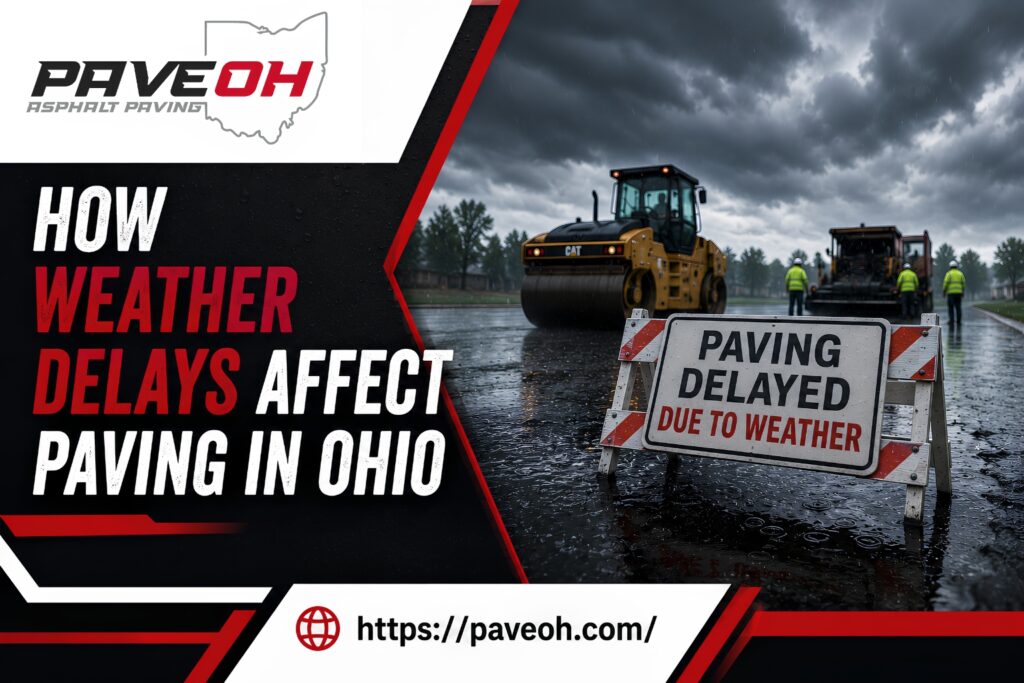
What makes an asphalt project stop, shift, or get rescheduled even when everything is ready on paper? In Ohio, weather is often the deciding factor. Rain, cold temperatures, and freeze-thaw conditions can all affect how asphalt is prepared, placed, and compacted, which is why weather delays are so common in paving work. Pave OH says its paving approach is built around material strength, weather resistance, and drainage because Ohio’s freeze-thaw cycles, traffic loads, and seasonal rain all affect performance.
For homeowners and businesses comparing asphalt paving in Columbus Ohio, understanding paving weather delays Ohio projects may face is important because delays are not just scheduling issues; they help protect the quality of the finished surface. Pave OH provides residential and commercial asphalt paving, driveway replacement, driveway repair, driveway sealing, blacktop repair, and asphalt resurfacing across Columbus and Central Ohio, and the company says it brings more than 25 years of experience to those projects.
Why weather matters so much in paving
Asphalt is a hot-mix material that must be placed and compacted while it is still workable. In general, paving and compaction have to happen while the asphalt is sufficiently hot, and colder conditions can cool it too quickly before it reaches the needed density.
1. Rain can interrupt surface preparation
- Wet conditions make it harder to prepare the base correctly.
Before asphalt is installed, the ground and base have to be shaped, graded, and compacted. If rain softens the soil or leaves standing water on the site, the base may not support the new pavement properly. That matters because moisture under asphalt can weaken the supporting soil and lead to premature failure. - Rain can delay compaction and finishing.
Hot-mix asphalt needs to be handled while it remains hot enough to compact properly. If rain starts during the process, the crew may need to pause rather than risk a weak or uneven surface. - Moisture can shorten pavement life later.
Water trapped under pavement softens the subbase and subgrade, which makes the asphalt more vulnerable to traffic loads and eventually potholes. That is why Pave OH emphasizes drainage and weather resistance in its paving approach.
2. Cold temperatures change how asphalt behaves
- Cold weather makes the material less workable.
Asphalt becomes harder to place and compact when temperatures drop. If it cools too fast, the surface may not achieve the density needed for long-term performance. In many places, paving is limited in winter because the base cools the asphalt too quickly. - Cold weather increases the risk of cracking later.
Cold temperatures can make asphalt contract, and repeated temperature swings add stress to the pavement. That is one reason Ohio projects need careful planning around seasonal conditions. - Cold delays can stretch the project timeline.
When temperatures are not suitable for paving, crews may need to postpone work until the surface can be installed and compacted correctly. That delay protects the final result rather than rushing a weak finish.
3. Freeze-thaw cycles create the biggest long-term risk
- Water expands when it freezes.
If moisture gets into small cracks or beneath the pavement, freezing weather can widen the openings and damage the base. As thaw begins, the soil beneath the pavement can stay saturated and weak, which makes the surface more likely to break apart. - Freeze-thaw cycles can turn small issues into larger failures.
Fatigue cracking often begins with weak support under the pavement. Once those cracks connect and spread, potholes can form. That is why weather delays sometimes prevent bigger repair problems later. - Ohio’s seasonal changes make this especially important.
Because Pave OH specifically mentions Ohio’s freeze-thaw cycles in its own service description, scheduling around weather is part of building pavement that performs well here.
How weather delays affect different stages of a paving project
Weather does not affect every part of a paving job equally. Some phases are more sensitive than others.
Site preparation
If the site is too wet, crews may need to wait before excavating, grading, or compacting the base. A weak or muddy subgrade can undermine the entire project because asphalt relies on the layers below it for support.
Asphalt placement
Hot-mix asphalt must be placed while it is still hot enough to compact. Rain or cold can shorten the workable window, which can lead to pauses or rescheduling. That is one reason experienced contractors pay close attention to daily conditions before starting.
Compaction and finishing
Compaction is critical because it gives the pavement density and strength. If the surface cools too quickly or gets exposed to moisture during this stage, the finish may not be as strong or uniform as it should be.
Curing and early use
Even after installation, the pavement needs time to settle into its final condition. Weather during this early period can affect how well the surface performs, which is why contractors often give specific instructions before the area is reopened.
Why delays are often the smarter choice
A weather delay can feel inconvenient, but it usually protects the quality of the pavement.
- It helps the asphalt bond correctly.
Proper placement and compaction depend on the right conditions. Waiting for a better window helps the new surface perform as intended. - It reduces the chance of early failure.
Moisture and temperature stress can weaken pavement underneath. Delaying the job can prevent cracking, potholes, and premature wear. - It supports better long-term value.
Pave OH says its projects are built for long-term performance, safety, and visual appeal, and its services include resurfacing, repair, sealing, and replacement when pavement needs more than a quick fix. Weather-aware scheduling helps protect that investment.
What property owners should expect during weather delays
Communication matters
A good contractor should explain why the delay is happening and what the next workable window looks like. Pave OH says it works closely with clients and provides reliable timelines, which is especially useful when weather forces adjustments.
The schedule may shift more than once
Ohio weather can change quickly, so a project may move from one day to another as rain or temperature conditions change. That is normal in paving work because the material and the base both depend on suitable conditions.
The final result should be better for it
When a contractor waits for the right conditions, the finished surface is more likely to stay smooth, drain properly, and resist early damage. That is exactly why Pave OH stresses drainage, strength, and weather resistance in its Columbus paving services.
Why local experience matters in Columbus and Central Ohio
Weather delays are not just about the forecast. They are also about knowing how Ohio weather interacts with pavement over time. Pave OH says it has over 25 years of experience, serves Columbus and Central Ohio, and is fully licensed and insured. It also says its services are designed for the region’s climate and traffic demands, including residential and commercial asphalt paving, asphalt resurfacing, driveway repair, driveway sealing, and blacktop repair.
That local experience matters because experienced asphalt contractors in Central Ohio know when weather conditions are likely to create problems, when to pause, and when it is better to wait for a stronger installation window.
Final thoughts
Weather delays affect paving in Ohio because asphalt is sensitive to rain, cold, and freeze-thaw conditions. Water can weaken the supporting layers beneath the pavement, cold can make asphalt harder to compact, and seasonal weather swings can create long-term cracking and pothole risks. Delays may be inconvenient, but they often protect the quality of the finished surface and help it last longer.
For property owners who want dependable paving weather delays Ohio guidance, choosing a contractor that understands local conditions is key. Pave OH presents itself as a Columbus-area paving company with more than 25 years of experience, a full range of residential and commercial asphalt services, and a strong focus on weather resistance, drainage, and long-term performance.