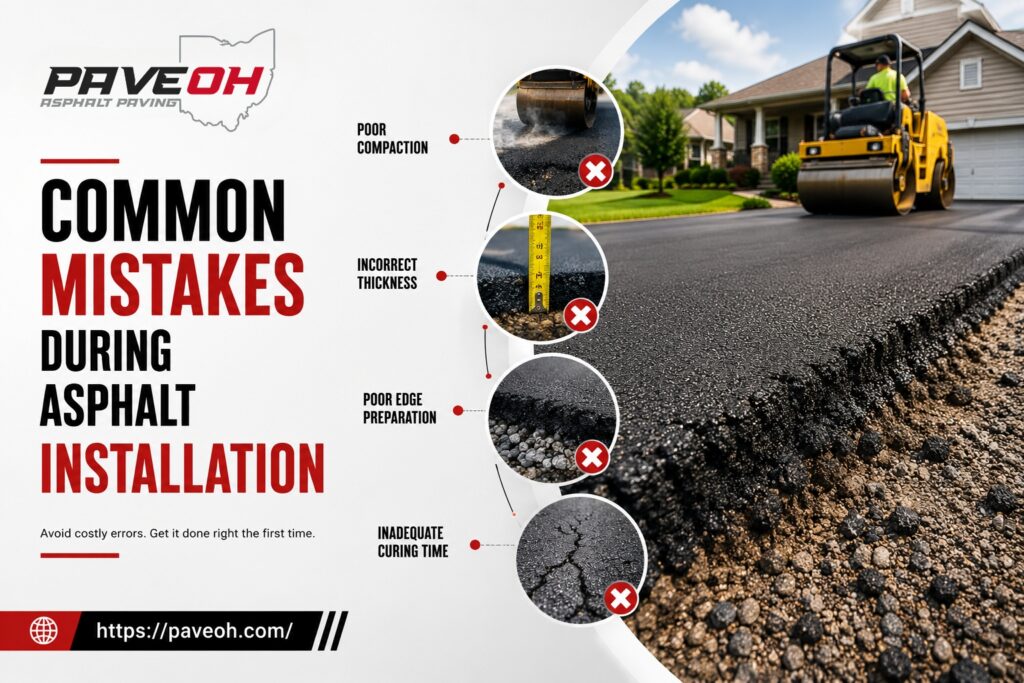
Do you know the most common asphalt installation mistakes? Even high-quality asphalt can fail prematurely when proper installation practices are overlooked. Poor base preparation, incorrect asphalt thickness, inadequate compaction, and unfavorable weather conditions can all lead to cracks, rutting, uneven surfaces, and early deterioration. Understanding these common asphalt installation mistakes helps property owners recognize quality workmanship and ensure a stronger, longer-lasting pavement.
At Pave OH, every paving project follows a carefully planned installation process designed for Ohio’s demanding climate. From site evaluation and drainage planning to premium materials, proper grading, and precision compaction, each step contributes to long-lasting pavement performance. Ohio’s freeze-thaw cycles, seasonal rainfall, and heavy traffic make professional installation even more important because even small construction mistakes can lead to significant structural problems over time.
Why Proper Asphalt Installation Matters
Many people think asphalt installation simply involves spreading hot asphalt over the ground.
In reality, successful paving is a complete engineering process that includes:
- Site evaluation
- Soil analysis
- Excavation
- Base preparation
- Drainage planning
- Asphalt placement
- Precision compaction
- Final finishing
Each stage supports the next. If one step is performed incorrectly, the entire pavement system may suffer long-term damage. Pave OH emphasizes that durable asphalt depends on proper preparation, drainage, material quality, and installation—not just the asphalt itself.
Common Asphalt Installation Mistakes
| Installation Mistake | Possible Result |
|---|---|
| Poor site preparation | Weak pavement foundation |
| Inadequate excavation | Uneven settling |
| Weak base construction | Cracking and potholes |
| Poor drainage design | Water damage |
| Incorrect asphalt thickness | Premature deterioration |
| Poor asphalt temperature control | Weak bonding |
| Improper compaction | Surface failure |
| Rushing the installation | Reduced pavement lifespan |
| Using low-quality materials | Faster wear |
| Ignoring curing time | Surface deformation |
1. Skipping Proper Site Evaluation
Every successful asphalt project begins long before paving equipment arrives.
One of the biggest installation mistakes is failing to evaluate the property before construction begins.
Professional contractors inspect:
- Existing pavement
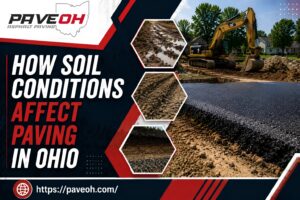
- Soil conditions
- Drainage patterns
- Elevation changes
- Traffic requirements
- Water runoff
- Utility locations
- Long-term pavement use
Without proper planning, hidden issues may remain undetected until after installation.
Pave OH begins every project with a complete property evaluation to understand drainage, structural conditions, traffic loads, and long-term performance requirements.
2. Poor Excavation
Some contractors attempt to save time by removing too little existing material.
Improper excavation creates several problems:
- Weak support
- Uneven settlement
- Poor drainage
- Reduced pavement thickness
- Soft spots
Excavation creates the space necessary for building a strong pavement structure.
If unstable materials remain beneath the asphalt, future cracking becomes much more likely.
3. Weak Base Preparation
The base supports every vehicle that travels across the pavement.
Without a properly constructed foundation, even thick asphalt will eventually fail.
Professional base preparation includes:
- High-quality aggregate
- Layered installation
- Moisture control
- Precision grading
- Multiple compaction stages
Weak base construction often leads to:
- Alligator cracking
- Surface depressions
- Rutting
- Potholes
- Premature failure
Pave OH identifies strong base preparation as one of the most important steps in producing long-lasting asphalt surfaces.
4. Ignoring Drainage
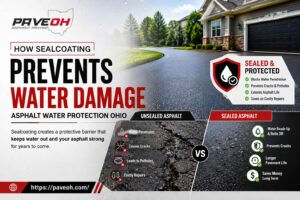
Water is one of asphalt’s greatest enemies.
Unfortunately, drainage mistakes are among the most common installation errors.
Poor drainage allows:
- Standing water
- Moisture infiltration
- Base erosion
- Freeze-thaw damage
- Surface deterioration
Professional contractors carefully design pavement slopes so rainwater moves away from the asphalt instead of collecting on its surface.
Pave OH incorporates grading and drainage planning into every paving project because proper water management significantly improves pavement longevity.
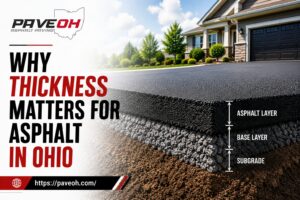
5. Installing Incorrect Asphalt Thickness
Not every pavement requires the same asphalt thickness.
Residential driveways and commercial parking lots experience different traffic loads.
If the asphalt layer is too thin, problems may include:
- Early cracking
- Surface flexing
- Wheel rutting
- Structural fatigue
Professional contractors determine pavement thickness based on expected traffic and site conditions.
6. Using Low-Quality Asphalt Materials
High-quality materials directly affect pavement performance.
Lower-quality asphalt mixtures may:
- Wear faster
- Crack sooner
- Resist weather poorly
- Lose flexibility
Pave OH states that it uses premium asphalt materials selected to perform well under Ohio’s climate and traffic conditions.
7. Incorrect Asphalt Temperature
Temperature is critical during installation.
Hot-mix asphalt must be installed and compacted while it remains within the proper temperature range.
If the asphalt cools too quickly:
- Compaction becomes difficult
- Bonding weakens
- Air voids remain
- Durability decreases
Professional crews carefully coordinate material delivery, paving, and rolling to maintain proper temperatures throughout installation.
8. Poor Compaction
Compaction may be the single most important stage of asphalt installation.
Without proper rolling, the pavement contains excess air spaces that reduce strength.
Poor compaction often results in:
- Early cracking
- Moisture penetration
- Surface raveling
- Potholes
- Reduced load capacity
Professional rollers compress the asphalt to achieve the density required for long-term durability.
Pave OH explains that inadequate compaction allows pavement movement and moisture intrusion, accelerating deterioration.
9. Rushing the Installation Process
Some installation mistakes occur simply because contractors rush the project.
Skipping or shortening important steps can affect:
- Base stability
- Asphalt quality
- Drainage
- Surface smoothness
- Long-term durability
Professional paving follows a carefully planned sequence rather than prioritizing speed over quality.
10. Opening the Pavement Too Soon
Even after installation is complete, the asphalt still requires time to cool and stabilize.
Allowing heavy traffic too early may cause:
- Tire marks
- Surface deformation
- Edge damage
- Reduced finish quality
Professional contractors provide guidance on when the pavement is ready for normal use after installation.
Signs That Installation Mistakes May Have Occurred
Property owners should monitor new pavement for early warning signs.
| Warning Sign | Possible Cause |
|---|---|
| Early cracking | Weak base or poor compaction |
| Standing water | Improper grading |
| Surface depressions | Poor base preparation |
| Edge crumbling | Weak edge support |
| Rutting | Insufficient thickness |
| Loose aggregate | Improper compaction |
| Uneven pavement | Poor installation practices |
| Recurring repairs | Underlying construction issues |
Early detection allows repairs before more serious structural damage develops.
How Professional Contractors Prevent Installation Mistakes
Experienced paving contractors follow a proven installation process.
Professional installation includes:
- Detailed planning
- Accurate site measurements
- Proper excavation
- Engineered base preparation
- Drainage correction
- Premium asphalt materials
- Controlled paving temperatures
- Precision compaction
- Quality inspections
This systematic approach helps maximize pavement performance and reduce future maintenance.
Benefits of Professional Asphalt Installation
| Professional Practice | Long-Term Benefit |
|---|---|
| Thorough site evaluation | Better project planning |
| Proper excavation | Stable pavement foundation |
| Strong aggregate base | Increased structural strength |
| Effective drainage | Reduced water damage |
| Premium materials | Longer pavement life |
| Proper compaction | Greater durability |
| Quality workmanship | Lower maintenance needs |
| Professional finishing | Improved appearance |
Why Choose Pave OH?
At Pave OH, we understand that long-lasting asphalt begins with proper installation—not shortcuts. Every paving project is completed using proven construction methods designed specifically for Ohio’s climate and traffic conditions.
Our professional paving services include:
- Residential asphalt paving
- Commercial asphalt paving
- Driveway installation
- Parking lot construction
- Asphalt resurfacing
- Blacktop repair
- Milling and grading
- Base preparation
- Drainage improvements
- Sealcoating and pavement maintenance
With more than 25 years of experience serving Columbus and Central Ohio, our team carefully evaluates every property before construction begins. We focus on proper grading, engineered base preparation, premium asphalt materials, precision compaction, and strict quality control to ensure every project delivers long-term durability, safety, and curb appeal. Whether you’re installing a new driveway or a large commercial parking lot, Pave OH is committed to building pavement that performs for years to come.
Final Thoughts
Avoiding common asphalt installation mistakes is one of the most important steps in achieving pavement that lasts. Problems such as poor site preparation, weak foundations, inadequate drainage, improper compaction, incorrect asphalt temperatures, and rushed workmanship often lead to premature cracking, potholes, and costly repairs. Investing in a professional installation process helps ensure the pavement performs as intended through Ohio’s changing seasons and daily traffic.
If you’re planning a new asphalt driveway, parking lot, or commercial paving project, Pave OH provides expert installation services throughout Columbus and Central Ohio. Our experienced team follows proven construction practices from initial site evaluation through final compaction, delivering durable asphalt surfaces designed for long-term performance, safety, and value.