
What determines how long asphalt pavement truly lasts in Central Ohio? While asphalt may appear simple, its durability is the result of precise engineering, material composition, and adaptation to environmental conditions. In a region defined by temperature fluctuations, moisture exposure, and traffic loads, pavement performance depends on how well asphalt responds to these stresses. Understanding the factors behind asphalt durability in Columbus, Ohio helps explain why some pavements perform for decades while others fail far too soon.
Columbus experiences hot summers, freezing winters, frequent rain, and constant freeze-thaw cycles. These conditions place unique demands on asphalt, making durability a product of both construction quality and ongoing maintenance.
Why Asphalt Durability Is a Scientific Process
Before examining individual factors, it’s important to understand that asphalt durability is not accidental. It is engineered through a balance of materials, structure, and environmental resistance.
Durable asphalt must:
- Remain flexible in cold weather
- Resist softening in heat
- Prevent water infiltration
- Support repeated traffic loads
When one of these elements fails, deterioration accelerates.
The Role of Asphalt Binder Chemistry
At the core of asphalt durability is the binder—the black, sticky material that holds aggregate together. Binder chemistry determines how asphalt reacts to temperature changes.
In Columbus:
- Cold winters require binders that resist cracking
- Warm summers demand resistance to softening
Asphalt binders are graded to perform within specific temperature ranges, ensuring pavement can expand and contract without breaking down.
Aggregate Selection and Structural Strength
Aggregate makes up roughly 90–95% of asphalt by weight. The size, shape, and hardness of aggregate directly affect pavement strength.
High-quality aggregates:
- Improve load-bearing capacity
- Increase resistance to wear
- Enhance surface stability
Poor aggregate selection can lead to raveling, cracking, and premature surface loss, especially under heavy traffic.
Layer Thickness and Pavement Design
Asphalt durability is also influenced by pavement structure. Proper thickness ensures that loads are distributed evenly across the surface and base.
In Columbus, pavement design must account for:
- Passenger vehicle traffic
- Delivery trucks and service vehicles
- Snowplow stress
Insufficient thickness leads to bending stress and early cracking.
Freeze-Thaw Cycles and Asphalt Flexibility
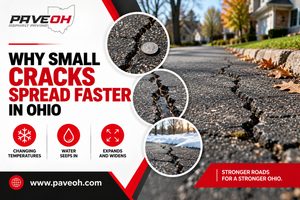
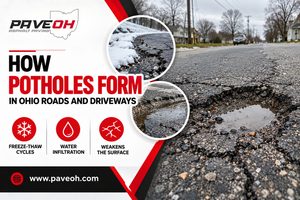
One of the most challenging aspects of Columbus weather is freeze-thaw cycling. Water that enters pavement expands when frozen, forcing cracks wider with each cycle.
Durable asphalt minimizes this risk by:
- Limiting water penetration
- Maintaining flexibility at low temperatures
- Using proper base compaction
Without these measures, freeze-thaw damage accelerates pavement failure.
Moisture Resistance and Drainage Science
Water is asphalt’s greatest enemy. In Columbus, rainfall and snowmelt frequently expose pavement to moisture.
Effective moisture control includes:
- Proper surface slope
- Well-compacted base layers
- Sealed surface pores
When water reaches the base, it weakens structural support and causes surface collapse.
Thermal Expansion and Contraction
Asphalt expands in heat and contracts in cold. Columbus experiences wide seasonal temperature swings, making thermal movement unavoidable.
Well-designed asphalt accommodates movement by:
- Using flexible binders
- Allowing controlled expansion
- Preventing rigid restraint
Poorly designed pavements crack when they cannot adapt to thermal stress.
Traffic Load Distribution
Traffic volume and weight play a significant role in asphalt durability. Repeated loading causes fatigue, especially at slow-moving or stationary traffic areas.
High-stress areas include:
- Intersections
- Parking lot entrances
- Loading zones
Durable pavement design reinforces these zones to resist deformation.
Oxidation and Aging Processes
Over time, oxygen reacts with asphalt binder, causing oxidation. This process hardens asphalt and reduces flexibility.
In Columbus, oxidation is influenced by:
- UV exposure during summer
- Air exposure during dry periods
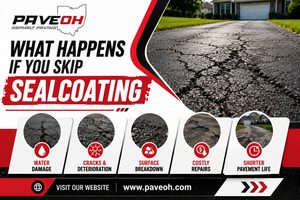
Sealcoating slows oxidation by limiting exposure to air and sunlight.
Maintenance as a Scientific Extension of Durability
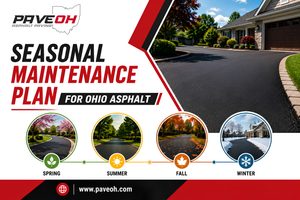
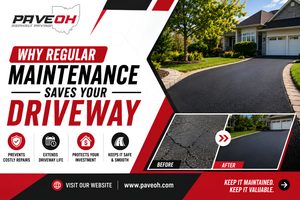
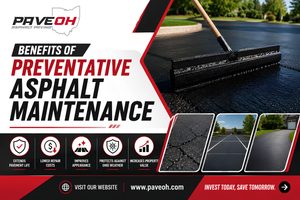
Durability does not end after installation. Maintenance preserves the engineered properties of asphalt.
Key maintenance practices include:
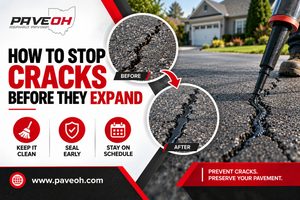
- Crack sealing to prevent moisture entry
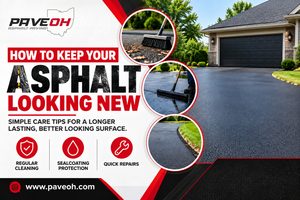
- Sealcoating to block UV radiation
- Drainage inspections to protect the base
Each maintenance step slows the chemical and physical aging process.
Durability Factors Comparison Table
| Durability Factor | Scientific Role | Impact on Pavement Life |
|---|---|---|
| Binder Flexibility | Controls cracking | Prevents cold-weather failure |
| Aggregate Quality | Structural strength | Reduces wear and deformation |
| Pavement Thickness | Load distribution | Prevents fatigue cracking |
| Drainage Control | Moisture resistance | Stops base erosion |
| Maintenance Timing | Aging prevention | Extends service life |
How Science Extends Asphalt Lifespan in Columbus
When science-driven design and maintenance are combined, asphalt pavements in Columbus can last 20–30 years. Without it, surfaces may fail in less than half that time.
Durability is achieved by:
- Matching materials to climate
- Engineering for traffic loads
- Protecting against water and oxidation
Each element reinforces the others.
Final Thoughts
Asphalt durability is the result of chemistry, physics, and environmental adaptation working together. In Central Ohio’s demanding climate, asphalt durability Columbus Ohio property owners rely on comes from proper material selection, thoughtful pavement design, and ongoing maintenance. Asphalt performance in Central Ohio is driven by the interaction of material composition, structural design, and environmental conditions. Temperature fluctuations, moisture exposure, and freeze-thaw cycles demand asphalt that is both strong and flexible. Our approach focuses on selecting the right mix designs, building a stable pavement structure, and supporting long-term performance through routine maintenance.
When these scientific and engineering principles are applied correctly, asphalt can withstand years of seasonal stress without losing integrity. By respecting the factors that influence asphalt durability, Central Ohio property owners gain pavement surfaces that remain dependable, resilient, and cost-effective over the long term.