What separates a driveway or parking lot that lasts from one that starts failing early? In most cases, it is the quality of the installation process. A professional asphalt project is not just about laying down blacktop; it is about building a stable foundation, properly shaping the site, placing the mix at the right temperature, and compacting it before it cools too quickly. Hot-mix asphalt must be placed and compacted while it is still sufficiently hot, which is why timing and workmanship matter so much.
For property owners comparing asphalt paving in Columbus Ohio, the process matters because Ohio weather puts extra stress on pavement. Pave OH says its paving approach is built around material strength, weather resistance, and adequate drainage so surfaces can perform through freeze-thaw cycles, traffic loads, and seasonal rain. The company also says it provides asphalt paving, resurfacing, driveway replacement and repair, sealing, blacktop repair, and related services throughout Columbus and Central Ohio.
Working with professional paving experts in Columbus Ohio also matters because the best results come from a step-by-step process that includes consultation, grading, permits when needed, quality materials, and careful compaction. Pave OH says every project begins with a property evaluation that looks at drainage, traffic load, and long-term use, followed by proper grading and installation designed for lasting performance.
1. Site evaluation and planning
Every professional asphalt job starts with an inspection of the property. This stage helps the contractor understand the condition of the existing surface, the soil, and the drainage patterns before any equipment arrives. Pave OH says its process begins with a comprehensive consultation and in-depth property evaluation, including structural concerns, drainage requirements, traffic load, and long-term usage.
- The property is measured and reviewed carefully.
Accurate measurements help determine how much material is needed and how the site should be laid out. This step also helps the crew identify slopes, edges, and problem areas that may need more work before paving begins. Pave OH says it tailors each project to the property’s specific needs and goals. - Drainage issues are identified early.
Water is one of the biggest threats to asphalt, so a professional team looks for low spots, pooling areas, and runoff patterns before installing anything new. Good drainage is one of the key reasons asphalt lasts longer in Ohio.
2. Removal of old pavement or damaged material
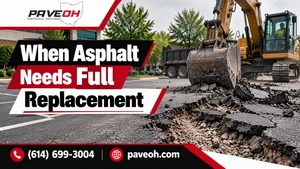
If the project is a replacement or overlay preparation, the next step is removing old, damaged, or unstable pavement. This makes room for a cleaner and stronger new surface. Pave OH offers driveway replacement, blacktop replacement, asphalt resurfacing, and repair services for projects that need more than a simple patch.
- Broken pavement is taken out first.
Old asphalt or concrete that has cracked, sunk, or weakened can interfere with the new surface if it is left in place. Removal allows the contractor to start with a better foundation. - The underlying base becomes visible.
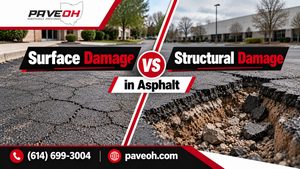
Once the old pavement is removed, the crew can inspect what is happening underneath. This is important because surface damage often points to deeper issues below the top layer.
3. Grading and base preparation
This is one of the most important steps in the entire asphalt installation steps Ohio process. Grading shapes the site so water flows away from the pavement, while the base layer provides the strength needed to support traffic. Pave OH specifically says it focuses on strong foundations, proper grading, and excellent drainage as part of its work.
- The ground is shaped for runoff.
Proper slope prevents water from sitting on the pavement or soaking into weak areas. Drainage gradient is essential because standing water increases the risk of damage below the surface. - The base material is added and compacted.
A strong base distributes the weight of vehicles so the asphalt surface does not carry all the stress itself. In pavement design, the base course sits below the wearing surface and helps support the whole system. - Compaction improves stability.
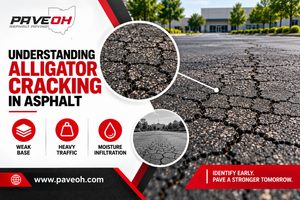
Compacting the base reduces future settling and helps the pavement keep its shape under traffic. Weak or poorly compacted support layers are a common reason pavement deforms early.
4. Asphalt mix delivery and placement
Once the site is ready, hot-mix asphalt is delivered and placed. Asphalt must be laid while it is still hot enough to work with, which is why crews move quickly and efficiently during this stage. Pave OH says it uses premium materials and modern equipment to deliver smooth, durable surfaces built for Ohio conditions.
- The mix is spread evenly across the prepared surface.
Even placement helps the final pavement stay level and consistent. If the thickness varies too much, weak spots can appear later. - The paving machine shapes the surface.
A paver lays the asphalt flat and gives it minor compaction before the rollers finish the job. That step helps the crew maintain a smooth overall profile.
5. Rolling and final compaction
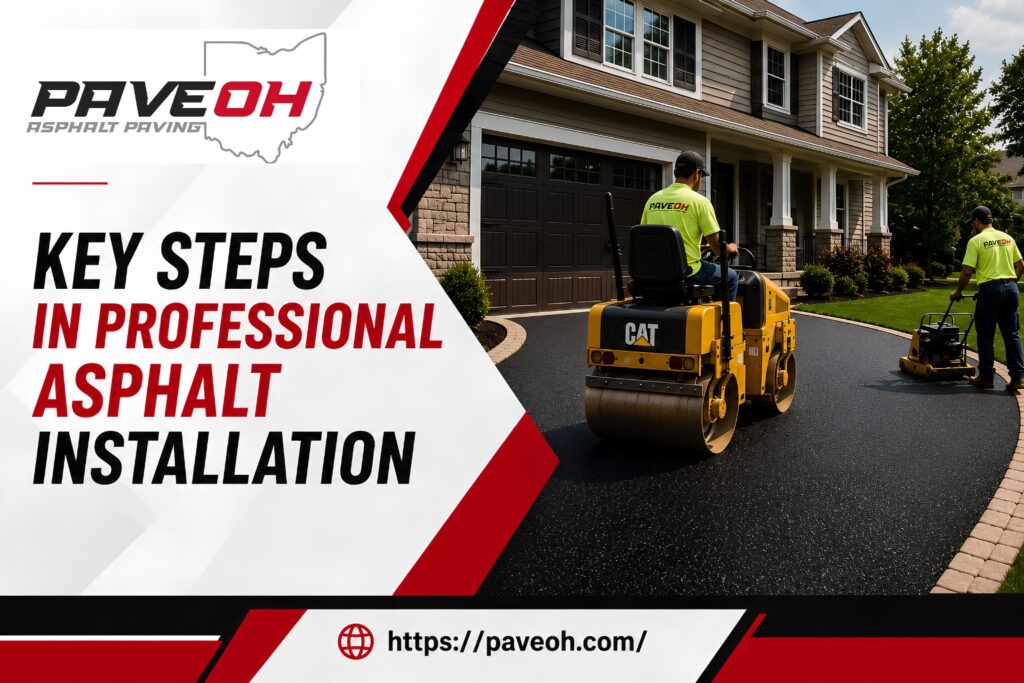
After the asphalt is placed, rollers compress it to create a dense and durable surface. This is a critical part of the process because compacted asphalt performs better under traffic and resists early wear. The asphalt must still be hot enough during compaction, which is why proper timing matters so much.
- Compaction strengthens the pavement.
Rolling removes excess air voids and helps the asphalt bind together more tightly. That improves performance and surface life. - It creates a smoother finish.
Final rolling helps eliminate bumps and minor irregularities, which improves both appearance and drivability.
6. Edging, finishing, and cleanup
Professional paving does not end when the asphalt is down. The edges, transitions, and surrounding site also need attention. Pave OH says it prioritizes precision, safety, and minimal disruption throughout the project, and its services include commercial parking lots, resurfacing, sealcoating, and line striping when the project calls for a full finish.
- Clean edges improve durability.
Well-finished edges help reduce crumbling and make the pavement look complete. - The site is cleaned up before completion.
A professional crew leaves the area ready for normal use once the asphalt has had time to set properly.
7. Curing and first use
Even after the project looks finished, the pavement still needs time to stabilize. Hot-mix asphalt performs best when it is allowed to cool and settle properly before full traffic use. That is why contractors give clear instructions about when the surface can safely be used.
- Traffic may need to stay off the surface briefly.
Using the pavement too soon can affect the finish and reduce quality. - Weather still matters after installation.
Ohio’s seasonal conditions make proper timing and follow-up important, especially for pavement that needs to handle freeze-thaw cycles and frequent moisture.
Why professional installation matters
A professionally installed asphalt surface is usually more durable because each step supports the next one: evaluation, grading, base prep, placement, compaction, and finishing. Pave OH says it uses experienced crews, premium materials, and a detailed process designed to deliver long-lasting results for Columbus and Central Ohio properties.
Our asphalt services in Columbus
Pave OH provides residential and commercial asphalt paving, driveway replacement, driveway repair, driveway sealing, asphalt resurfacing, blacktop repair, parking lot construction, milling, grading, and striping services across Columbus and nearby Central Ohio communities. The company says it is licensed and insured, has more than 25 years of experience, and focuses on durable paving built for Ohio weather.
Final thoughts
Professional asphalt installation is a process, not a shortcut. The best results come from careful evaluation, strong base preparation, correct paving temperature, solid compaction, and proper finishing. When each step is done well, the pavement is far more likely to stay smooth, safe, and long-lasting. That is why understanding the asphalt installation steps Ohio property owners should expect is so important before any project begins.