
Asphalt surfaces are engineered for durability, but in Columbus, Ohio, the relentless cycle of extreme weather puts even the highest-quality pavement to the test. From brutal freeze-thaw winters to scorching summer heat and heavy seasonal rains, Central Ohio’s climate directly influences asphalt durability in Columbus Ohio. At Pave OH, with over 25 years of local paving experience, we’ve seen firsthand how weather accelerates wear—and how strategic design, materials, and maintenance can extend pavement life well beyond 20 years. This in-depth guide explores exactly how Columbus weather affects asphalt longevity, backed by science, local data, and proven solutions from Pave OH.
Whether you manage a residential driveway, commercial parking lot, or private road, understanding the battle beneath your tires in Ohio’s changing climate is the first step to protecting your investment. Let’s break down the seasonal impacts, degradation mechanisms, and expert strategies to maximize asphalt durability Columbus Ohio.
The Columbus Climate: A Perfect Storm for Asphalt Stress
Columbus sits in a humid continental climate zone (Köppen Dfa), characterized by four distinct seasons with high temperature variability and significant precipitation year-round. Here’s the data:
| Weather Factor | Columbus Annual Average |
|---|---|
| Temperature Range | -10°F to 95°F |
| Freeze-Thaw Cycles | 40–60 per year |
| Annual Precipitation | 39–42 inches |
| Snowfall | 25–30 inches |
| UV Index (Peak Summer) | 8–9 (Very High) |
These conditions create a triple threat: thermal stress, moisture infiltration, and physical wear—all of which erode asphalt durability in Columbus Ohio faster than in milder climates.
Winter: Freeze-Thaw Cycles – The #1 Enemy of Asphalt Longevity
How It Damages Asphalt
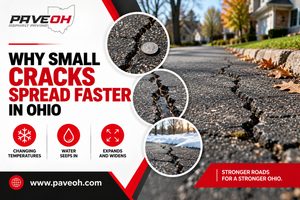
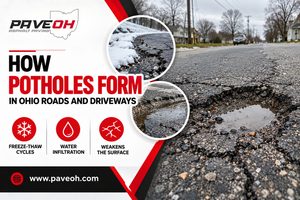
- Water enters micro-cracks or porous asphalt.
- Freezes at night (below 32°F), expands 9% in volume.
- Thaws during the day, contracts, and pulls asphalt apart.
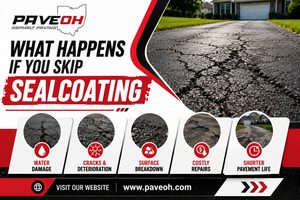
- Repeats 40–60 times per winter → crack propagation, heaving, potholes.
Columbus-Specific Impact
- January–March: Most cycles occur as temperatures hover around freezing.
- Road salt (used heavily on Columbus streets) seeps into cracks, accelerating binder breakdown.
- Snowplow blades scrape weakened surfaces, gouging ruts and exposing aggregate.
Result: Without intervention, winter alone can reduce asphalt durability in Columbus Ohio by 3–5 years per decade.
Pave OH Solution
- Use polymer-modified asphalt for flexibility in cold temps.
- Install deep, compacted gravel base (8–12 inches) to minimize frost heave.
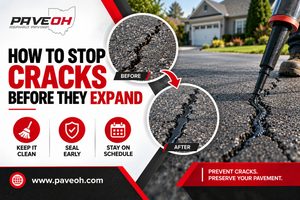
- Apply rubberized crack sealant in fall to block water entry.
Spring: Heavy Rain & Poor Drainage = Erosion and Softening
How It Damages Asphalt
- 42 inches of annual rain = 700+ gallons per 100 sq ft of driveway.
- Water pools in low spots → hydrostatic pressure under pavement.
- Washes away fines in the base → subsidence and sinkholes.
Columbus-Specific Impact
- April–May: Peak rainfall (4–5 inches/month).
- Clay-rich soils in Central Ohio swell when wet, shrink when dry → differential settling.
- Poorly graded driveways trap water against foundations and edges.
Result: Standing water for >30 minutes after rain = red flag for reduced asphalt durability in Columbus Ohio.
Pave OH Solution
- Crown or slope driveway 1–2% for positive drainage.
- Install French drains or catch basins in problem areas.
- Resurface with open-graded asphalt in flood-prone zones for better permeability.
Summer: UV Oxidation & Heat Softening
How It Damages Asphalt
- UV rays break carbon bonds in asphalt binder → oxidation.
- Surface turns gray, brittle, and prone to raveling (loose stones).
- Temps >85°F soften asphalt → rutting under vehicle weight.
Columbus-Specific Impact
- July–August: 15–20 days above 90°F.
- High UV index (8–9) accelerates binder aging.
- Oil and gas leaks from parked cars dissolve softened asphalt.
Result: Unprotected asphalt loses 50% of its flexibility in 5–7 years, slashing asphalt durability in Columbus Ohio.
Pave OH Solution
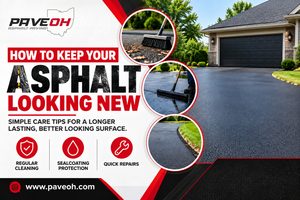
- Apply sealcoating every 2–3 years (coal-tar or acrylic-based).
- Use refined tar sealers with UV blockers.
- Avoid sealing in direct sun—Pave OH schedules early morning applications.
Fall: Debris, Temperature Swings & Pre-Winter Prep
How It Damages Asphalt
- Wet leaves trap moisture → staining and mold growth.
- Temperature drops from 70°F to 30°F in hours → thermal cracking.
- Twigs and acorns act like mini jackhammers under tires.
Columbus-Specific Impact
- October–November: Rapid cool-downs and first frosts.
- Heavy leaf fall from oak and maple trees is common in Columbus suburbs.
Result: Fall neglect sets the stage for winter failure.
Pave OH Solution
- Sweep weekly with a soft-bristle push broom.
- Fill cracks >¼ inch with hot-pour rubberized sealant.
- Trim overhanging branches to reduce debris and ice loading.
Year-Round Threats to Asphalt Durability in Columbus Ohio
| Threat | Mechanism | Prevention |
|---|---|---|
| Tree Roots | Uplift and cracking | Root barriers, proper setbacks |
| Oil/Gas Leaks | Binder dissolution | Immediate cleanup, sealcoating |
| Heavy Vehicles | Rutting, compression | Thicker asphalt (3–4 inches), strong base |
| Poor Installation | Premature failure | Hire licensed, insured contractors (like Pave OH) |
How Pave OH Maximizes Asphalt Durability in Columbus Ohio
We don’t just pave—we engineer for longevity. Here’s what sets us apart:
1. Climate-Optimized Materials
- Premium PG 64-22 asphalt (standard) or PG 70-22 (high-traffic).
- Polymer additives for freeze-thaw resistance.
- High-quality aggregates from local Ohio quarries.
2. Precision Installation
- Laser-guided grading for perfect drainage.
- 8–12 inch compacted base (gravel + stone).
- Full-depth asphalt (3–4 inches residential, 5–6 inches commercial).
3. Proactive Maintenance Plans
- Annual inspections (free with service history).
- Sealcoating packages every 2–3 years.
- Crack filling before winter.
Paving the Future of Columbus with Innovation
Columbus’s Changing Climate:
- The city has warmed by 2.3°F since 1951, with increased average low temperatures.
- Projections indicate a 3-5°F rise by mid-century, with increased precipitation and more frequent extreme weather events.
- More rain on semi-frozen ground will likely exacerbate pavement damage.
Game-Changing Technologies:
- Self-Healing Asphalt: Incorporates microcapsules or induction-heated steel fibers to repair minor cracks, potentially doubling pavement lifespan (40 to 80 years) and reducing maintenance.
- Porous Asphalt: Allows water drainage, reducing flood risk, minimizing de-icing chemical use (by up to 75%), and reducing noise pollution. Projected lifespans of 35-40 years.
- Smarter Asphalt Mixes: Advanced polymer-modified binders for enhanced flexibility, nano-engineered additives for superior strength, and eco-friendly bio-based binders (e.g., from soybean oil).
- Perpetual Pavements: Designed for indefinite lifespans, requiring only periodic surface rehabilitation, offering long-term cost efficiency.
- Rubberized Asphalt: Improved formulations enhance flexibility, durability, and noise reduction.
- Warm Mix Asphalt (WMA): Allows extended paving seasons, reduced energy consumption, and lower emissions.
Advanced Construction and Maintenance Methods:
- Intelligent Compaction (IC): Real-time monitoring for uniform pavement density.
- Automated Paving Systems: Enhance precision and efficiency.
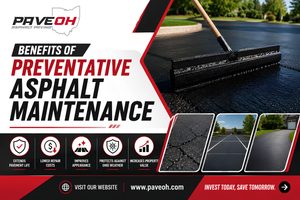
- Preventive Maintenance Programs: Proactive crack sealing, sealcoating, and prompt repairs are cost-effective for long-term preservation.
- Advanced Pavement Design: Tailoring structural layering and asphalt mixes to specific local conditions and traffic loads.
Your Columbus Asphalt Longevity Checklist
| Season | Action | Frequency |
|---|---|---|
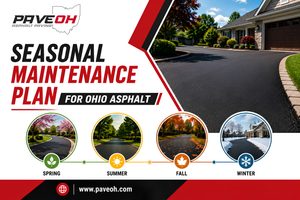
| Spring | Inspect, clean, repair cracks/potholes | Annually |
| Summer | Sealcoat, clean spills | Every 2–3 yrs |
| Fall | Fill cracks, remove debris | Annually |
| Winter | Use plastic shovels, limit salt | As needed |
When to Call Pave OH
Columbus’s weather poses significant challenges to roadways. However, by combining historical understanding, cutting-edge innovation, and diligent maintenance, the city can achieve smoother, safer, and more resilient roads. High-quality installation, smart material choices, and consistent, proactive maintenance are key to durable, long-lasting asphalt in Columbus. Don’t wait for failure. Contact us if you notice:
- Cracks wider than a credit card
- Water pooling after rain
- Faded, gray, or raveling surface
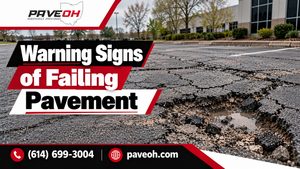
- Potholes or edge crumbling
Weather Wins—Unless You Fight Back
Columbus weather is tough on asphalt—but it doesn’t have to win. With the right materials, installation, and maintenance, your pavement can defy freeze-thaw cycles, UV rays, and heavy rain for decades.
Columbus’s weather poses significant challenges to roadways. However, by combining historical understanding, cutting-edge innovation, and diligent maintenance, the city can achieve smoother, safer, and more resilient roads. High-quality installation, smart material choices, and consistent, proactive maintenance are key to durable, long-lasting asphalt in Columbus. Maximize asphalt durability in Columbus Ohio with Pave OH’s proven, local approach. From new installations to seasonal care, we deliver surfaces built to last.