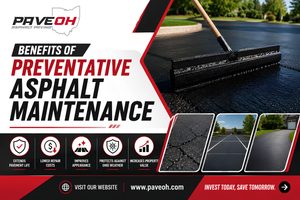

Why does weather matter so much when sealcoating asphalt in Columbus, Ohio? Sealcoating is one of the most effective methods for protecting asphalt surfaces, but its performance depends heavily on environmental conditions. In Central Ohio, temperature fluctuations, humidity, and seasonal weather patterns directly influence how well sealcoating bonds, cures, and holds up over time. For property owners researching sealcoating in Columbus, Ohio, understanding these local climate factors can mean the difference between long-lasting protection and premature surface failure.
Columbus experiences a wide range of weather conditions throughout the year—from hot, humid summers to freezing winters and unpredictable spring rainfall. Each of these factors directly influences sealcoat application, curing time, adhesion, and durability.
Why Weather Conditions Matter for Sealcoating
Before breaking down specific weather elements, it’s important to understand why sealcoating is sensitive to environmental conditions. Sealcoat is a liquid-applied protective layer that must properly bond to the asphalt surface and cure evenly.
Temperature, moisture, and air conditions all affect:
- Drying time
- Adhesion strength
- Surface uniformity
- Long-term durability
Improper weather conditions during or after application can compromise results, even when high-quality materials are used.
Temperature Fluctuations in Columbus
Columbus’s weather is known for its rapid temperature changes, especially during spring and fall. Sealcoating materials require a stable temperature range to cure properly.
Ideal sealcoating temperatures generally range between 50°F and 90°F. When temperatures drop too low, the sealcoat may not cure evenly. When temperatures rise too high, it can dry too quickly, leading to surface cracking or weak bonding.
Temperature-related risks include:
- Incomplete curing in cool weather
- Soft or tacky surfaces during extreme heat
- Reduced lifespan from improper bonding
This is why timing sealcoating projects carefully is critical in Columbus.
Impact of Rain and Moisture
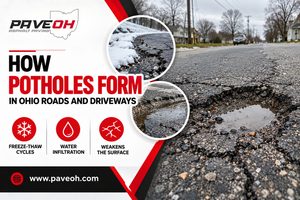
Rain is one of the biggest threats to successful sealcoating. Columbus receives consistent rainfall throughout spring and early summer, which can interrupt curing.
Sealcoating must remain dry for a specific period after application. Even light rain or heavy dew can:
- Wash away uncured sealcoat
- Create streaks or thin spots
- Reduce adhesion to asphalt
Moisture-related challenges:
- Unexpected showers delaying projects
- High overnight humidity slowing drying
- Water trapped in surface pores
Professional scheduling accounts for weather forecasts to minimize these risks.
Humidity Levels and Cure Time
Humidity is often overlooked, but it plays a major role in sealcoating results. Columbus summers can be humid, especially after storms.
High humidity slows evaporation, which:
- Extends cure time
- Increases the risk of tracking
- Delays reopening to traffic
Low humidity, on the other hand, can cause sealcoat to dry too quickly on the surface while remaining soft underneath.
Balancing humidity levels is essential for a strong, uniform finish.
Freeze-Thaw Cycles and Sealcoat Durability
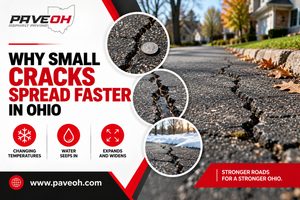
Columbus winters bring frequent freeze-thaw cycles that stress asphalt surfaces. Sealcoating applied too late in the season may not fully cure before temperatures drop.
When sealcoat freezes before curing:
- Adhesion weakens
- Surface protection is compromised
- Premature cracking may occur
For this reason, sealcoating is typically avoided during late fall and winter months in Central Ohio.
Wind Conditions and Surface Consistency
Wind affects sealcoating more than many property owners realize. Strong winds can accelerate drying unevenly or blow debris onto freshly applied sealcoat.
Wind-related issues include:
- Uneven curing
- Debris embedding in the surface
- Inconsistent texture
Controlled application conditions help maintain surface quality.
Seasonal Sealcoating Windows in Columbus
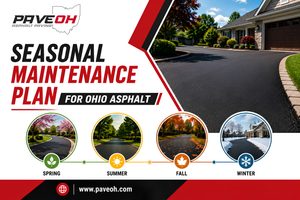
Due to weather variability, sealcoating is most successful during specific times of the year in Columbus.
Best seasons for sealcoating:
- Late spring (after consistent warm weather begins)
- Summer (with careful humidity monitoring)
- Early fall (before temperatures drop below 50°F)
Winter and early spring are generally unsuitable due to cold temperatures and excess moisture.
How Weather Impacts Sealcoating Lifespan
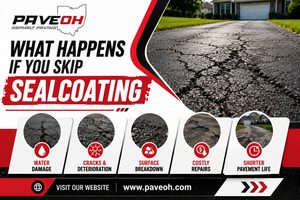
Weather doesn’t just affect application—it also influences how long sealcoating lasts. Properly applied sealcoat can last 2–3 years, but weather exposure can shorten or extend that lifespan.
Factors affecting longevity include:
- UV exposure during summer
- Snow and ice treatment chemicals
- Water penetration from rainfall
Routine maintenance helps mitigate weather-related wear.
Sealcoating vs. Weather Damage: What Sealcoat Protects Against
| Weather Factor | Potential Damage Without Sealcoat | Sealcoat Protection |
|---|---|---|
| UV Radiation | Oxidation and fading | Slows oxidation |
| Rainfall | Water penetration | Seals surface pores |
| Freeze-Thaw | Cracking and expansion | Adds flexibility |
| Heat | Softening and wear | Reduces surface damage |
| Snow/Ice | Chemical deterioration | Acts as a barrier |
Why Professional Timing Matters
Because Columbus’s weather is unpredictable, sealcoating should never be rushed or scheduled without proper planning. Professional contractors monitor forecasts, surface conditions, and humidity to ensure optimal results.
Professional scheduling ensures:
- Proper curing time
- Maximum durability
- Reduced risk of failure
Weather-aware planning protects your investment.
Maintenance Planning Around Columbus Weather
Sealcoating is most effective when part of a larger asphalt maintenance plan. Crack sealing, drainage management, and routine inspections help surfaces withstand Columbus weather year-round.
A proactive plan reduces:
- Weather-related deterioration
- Costly emergency repairs
- Premature pavement replacement
Final Thoughts
Columbus weather directly affects the success, durability, and value of asphalt sealcoating. From temperature swings and rainfall to humidity and freeze-thaw cycles, local climate conditions must be carefully considered before scheduling sealcoating projects. Local weather patterns in Columbus play a critical role in determining when sealcoating can be applied successfully and how long it will perform. Fluctuating temperatures, seasonal rainfall, humidity levels, and repeated freeze-thaw cycles all influence curing, adhesion, and overall durability. Our team carefully evaluates these conditions before scheduling sealcoating to ensure the product bonds properly and delivers lasting protection.
By aligning sealcoating projects with the right weather windows and proven application methods, property owners can maximize the value of their investment. Professional timing and execution are essential for achieving long-term results, making climate awareness a key factor for anyone planning sealcoating in Columbus, Ohio.