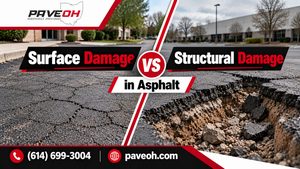
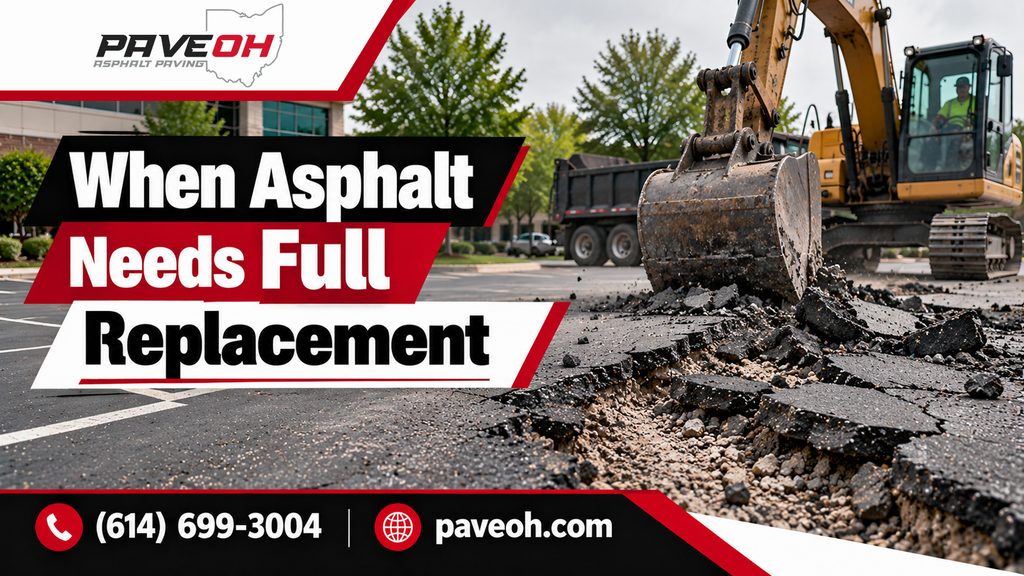
When should you consider full asphalt replacement in Ohio? The clearest asphalt replacement signs Ohio property owners should watch for include widespread alligator cracking, recurring potholes, sinking pavement, severe drainage problems, crumbling edges, and damage that extends into the base layer. Although small cracks and isolated surface defects can often be repaired, extensive structural deterioration may require removing the old pavement and rebuilding the affected area.
Pave OH helps homeowners, commercial property owners, and property managers understand their pavement options throughout Columbus and Central Ohio. Recognizing serious damage early can help you plan repairs before the problems become more extensive. The right solution depends on the pavement’s condition, the stability of its foundation, drainage performance, traffic demands, and the extent of deterioration. A professional assessment helps determine whether targeted repairs, resurfacing, or complete replacement is the most appropriate long-term option.
1. Widespread Alligator Cracking Across the Surface
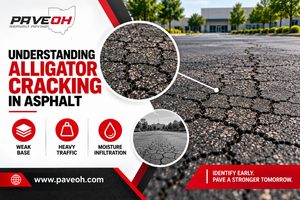
One of the most important asphalt replacement signs Ohio property owners should recognize is alligator cracking. This damage appears as a network of interconnected cracks that resembles an alligator’s skin. It often develops in areas exposed to repeated vehicle loads, especially when the pavement has inadequate structural support.
Unlike a single narrow crack, alligator cracking can indicate that the pavement is flexing excessively under traffic. A weakened base, water-saturated supporting materials, inadequate pavement thickness, or years of repeated loading may contribute to the problem.
When these interconnected cracks cover large sections of a driveway or parking area, filling the cracks alone will not correct the underlying weakness. The surface may continue breaking apart, allowing water to penetrate deeper and accelerate deterioration.
The appropriate treatment depends on how much of the pavement is affected and whether the supporting layers remain stable. Localized damage may be suitable for full-depth patching, but widespread structural failure can make complete replacement the more reliable option. The Federal Highway Administration identifies extensive alligator cracking and related structural deterioration as conditions that may require reconstruction and substantial base repair.
2. Potholes Keep Returning After Repairs
An occasional pothole does not automatically mean an entire driveway needs replacement. However, repeated potholes in several locations can indicate a more serious problem.
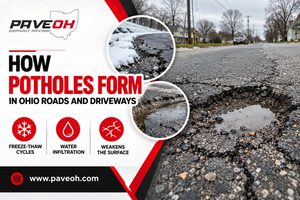
Potholes often develop when moisture enters cracks or weak areas, the pavement loses support, and traffic dislodges pieces of asphalt. Ohio’s changing weather can intensify this deterioration as water enters the pavement and temperature changes contribute to further damage.
Pay attention to how frequently the same areas fail. If potholes reopen shortly after patching, or new ones continue forming across the driveway, the underlying problem may not have been addressed. Repeated patching can restore individual areas temporarily without correcting widespread base failure or poor drainage.
Look for additional warning signs, including loose asphalt fragments, deep depressions, surrounding cracks, and soft or uneven areas. When these problems appear across much of the surface, a more comprehensive evaluation is worthwhile.
When Is Patching No Longer Enough?
Patching is generally more appropriate when damage is isolated and the surrounding pavement remains structurally sound. Replacement becomes more relevant when damage is extensive, the foundation is unstable, and the same areas repeatedly fail despite appropriate repairs.
The decision should be based on the condition of the entire pavement system—not simply the number of potholes visible on the surface.
3. The Asphalt Is Sinking or Developing Deep Depressions
A driveway should provide a reasonably smooth, stable surface. When certain areas begin sinking, settling, or forming deep depressions, the cause may extend below the asphalt itself.
Settlement can occur when supporting soil moves, base materials become unstable, or moisture affects the foundation. Poor compaction during the original installation can also contribute to uneven settlement over time.
These depressions are more than cosmetic problems. They can collect water, create uneven driving conditions, and place additional stress on neighboring pavement. As vehicles repeatedly cross the affected area, existing cracks may widen and the surface may deteriorate further.
Small surface irregularities may be correctable without rebuilding the entire driveway. However, extensive sinking or movement across multiple sections can indicate that the underlying support needs substantial correction before new asphalt is installed.
Before deciding on replacement, an evaluation should identify what is causing the settlement. Installing new asphalt over an unstable foundation may simply lead to similar problems returning.
4. Water Pools on the Pavement After Rain
Drainage problems are another significant sign that asphalt may need more than surface repairs.
A properly designed pavement surface should direct water away rather than allow it to remain in low spots. When puddles repeatedly form in the same areas, the problem may involve incorrect grading, settlement, blocked drainage routes, or changes in the surrounding ground.
Water can enter small cracks and reach the layers beneath the pavement. If the base or supporting soil becomes weakened, traffic can cause additional movement and cracking. The resulting damage can spread beyond the original puddle.
Ohio property owners should pay particular attention to drainage problems that remain unresolved after previous repairs. Filling a crack or covering a depression may not solve the issue if water continues collecting in the same place.
An inspection should consider the pavement slope, surrounding landscaping, driveway edges, and the routes water takes during heavy rain. If the pavement and supporting layers have deteriorated extensively, replacement with appropriate grading and drainage correction may be necessary.
5. The Surface Is Crumbling, Breaking Apart, or Losing Aggregate
Asphalt naturally experiences wear as it ages. Over time, sunlight, weather, moisture, and repeated traffic can contribute to the breakdown of the pavement surface.
Early deterioration may appear as a dry, faded finish or the loss of small aggregate particles. More advanced damage can produce loose stones, rough patches, crumbling edges, and areas where the asphalt is breaking apart.
Surface deterioration does not always require complete replacement. If the underlying pavement remains stable, maintenance or resurfacing may improve the surface condition. However, widespread crumbling combined with deep cracks, potholes, or unstable areas may indicate that the pavement has deteriorated beyond a surface-level problem.
Consider the distribution of the damage. A small worn section may need localized attention, while widespread disintegration across a driveway or parking area deserves a more thorough assessment.
The goal is to establish whether the damage is limited to the top layer or reflects a more serious loss of pavement integrity.
6. The Pavement Is Old and Has Extensive Wear
Age is an important consideration when evaluating asphalt, but it should not be the only reason to replace it.
An older driveway may still perform adequately if it has a stable foundation, effective drainage, and a history of appropriate maintenance. In contrast, a younger surface may deteriorate prematurely because of poor installation, heavy traffic, inadequate thickness, or persistent moisture problems.
As asphalt ages, it can become less flexible and more susceptible to cracking. The number and severity of defects matter more than the installation date alone.
| Pavement condition | What it may indicate | Possible next step |
|---|---|---|
| A few narrow cracks | Localized surface deterioration | Inspect and repair cracks |
| Faded, dry surface with minor wear | Surface aging | Consider suitable maintenance |
| Widespread interconnected cracking | Possible structural weakness | Assess the base and extent of damage |
| Recurring potholes in several areas | Persistent deterioration or loss of support | Investigate underlying causes |
| Deep depressions or widespread sinking | Settlement or foundation problems | Evaluate grading and base stability |
| Extensive crumbling with failed edges | Advanced surface or structural deterioration | Compare major repairs with replacement |
| Persistent water pooling and widespread damage | Possible drainage and support problems | Assess drainage and pavement structure |
This table is a practical guide, not a substitute for an on-site evaluation. The appropriate treatment depends on the severity and extent of damage.
7. Previous Repairs Are Becoming More Frequent
A repaired driveway should not require constant attention to the same underlying problems. When cracks, patches, and potholes continue returning, it may be time to evaluate whether repeated spot repairs remain practical.
Several issues can explain why repairs do not last. The original damage may have extended deeper than expected, water may continue entering the pavement, or the base may lack sufficient support. Traffic and weather can further expose weaknesses in already deteriorated areas.
Keep track of which sections have been repaired and how they perform over time. A growing number of failed patches can indicate that deterioration is no longer limited to isolated locations.
However, frequent repairs do not automatically mean the whole surface must be removed. A professional assessment can help distinguish between a collection of localized defects and widespread pavement failure.
Asphalt driveway repair in Columbus Ohio is relevant when cracks, potholes, or damaged sections can be addressed without replacing the entire pavement. The right repair method should account for the source of the damage and the condition of the surrounding asphalt.
When much of the driveway is deteriorated or the foundation is failing, a full replacement assessment can help determine whether additional spot repairs are likely to provide meaningful long-term performance.
8. The Edges Are Breaking Down
Pavement edges can deteriorate faster than the central driving area because they may receive less lateral support and can be more exposed to water or erosion.
Look for edges that are crumbling, splitting, sinking, or separating from the surrounding ground. These symptoms may result from insufficient support, drainage problems, repeated vehicle loading near the edge, or long-term weather exposure.
If the damage is confined to a small area and the rest of the foundation remains sound, targeted repairs may be enough. If edge deterioration is widespread and accompanied by deep cracking or settlement, the underlying support may require more extensive work.
Edges also influence how well water moves away from the pavement. Correcting the underlying grading and support issues is important so that new or repaired asphalt does not face the same conditions again.
9. How to Choose Between Repair, Sealing, Resurfacing, and Replacement
Not every damaged asphalt surface needs to be rebuilt. Selecting the right treatment means matching the solution to the actual condition of the pavement.
Repair for localized damage
When damage is limited to certain cracks, potholes, or small deteriorated sections, a suitable repair can restore the affected area. The surrounding pavement should be inspected to ensure that the damage is not part of a wider structural problem.
Sealing for suitable surface conditions
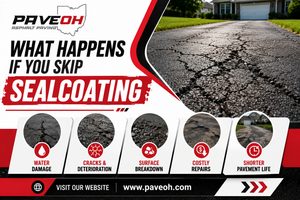
Sealcoating can help protect suitable asphalt surfaces from moisture and weather exposure while improving their appearance. It is a maintenance treatment, not a structural repair. It cannot correct a failed base, deep settlement, or widespread alligator cracking.
Driveway sealing in Columbus Ohio is worth considering when the asphalt remains structurally sound but shows surface aging and needs preventive maintenance. Existing defects should be evaluated and addressed appropriately before a sealer is applied.
Resurfacing when the foundation remains sound
Resurfacing adds a new asphalt layer over an existing pavement when the underlying structure is suitable. It can improve the surface appearance and address certain types of surface deterioration, but it is not a cure for extensive base failure.
Asphalt resurfacing in Columbus Ohio may be appropriate when the pavement has surface-level wear but still has a stable foundation and manageable drainage. The surface must be assessed to determine whether resurfacing is a suitable option.
Full replacement when deterioration is extensive
Full replacement typically involves removing the damaged asphalt, examining and correcting the underlying foundation as needed, restoring appropriate grading, and installing new pavement.
It may be the more suitable option when extensive cracking, recurring potholes, settlement, drainage-related deterioration, or widespread surface failure cannot be reliably addressed with a limited treatment.
Driveway replacement in Columbus Ohio is an option for property owners whose asphalt has deteriorated beyond effective repair. The replacement plan should address the condition of the base, drainage, grading, and expected vehicle use—not just install a fresh layer over the existing problems.
10. What Happens During Full Asphalt Replacement?
A successful replacement project involves more than laying fresh asphalt over a damaged surface. Proper evaluation and preparation help the new pavement perform as intended.
Step 1: Inspect the existing pavement
The contractor examines the location, severity, and pattern of cracks, potholes, depressions, edge damage, and water pooling. The assessment should determine whether deterioration is limited to the surface or extends into the foundation.
Step 2: Remove the failed asphalt
When complete replacement is appropriate, the deteriorated asphalt is removed to expose the supporting layers. The removal depth depends on the pavement condition and the project requirements.
Step 3: Evaluate and prepare the base
The exposed area is checked for weak, unstable, or moisture-affected materials. Any necessary corrections should be completed before new asphalt is installed. Rebuilding a surface without addressing an unstable foundation can allow the same problems to return.
Step 4: Correct grading and drainage
The replacement surface should be designed to direct water away effectively. Depending on the site, this may involve adjusting slopes, correcting low areas, or improving the way runoff moves across or away from the pavement.
Step 5: Install and compact new asphalt
The asphalt mix, layer thickness, and compaction method should suit the project and expected traffic. Appropriate preparation and compaction help create a stable surface with consistent support.
Step 6: Check edges and transitions
Driveway entrances, sidewalks, curbs, and adjoining pavement should be considered during installation. Proper transitions help the new surface function smoothly and reduce problems at the boundaries.
11. Residential and Commercial Properties May Need Different Solutions
The signs of asphalt failure may look similar across properties, but the amount of traffic and the purpose of the surface can influence which treatment is suitable.
Residential driveways typically experience regular vehicle traffic, turning movements, and seasonal weather exposure. Heavy delivery vehicles or frequent parking in the same places can add to the load.
Residential asphalt paving in Columbus Ohio is relevant when a homeowner needs a new or reconstructed asphalt surface. The design and preparation should reflect the property’s layout, drainage conditions, soil support, and expected use.
Commercial parking areas may have more frequent traffic, delivery vehicles, heavier loads, and turning movements. Deterioration in high-use areas can affect access, parking availability, and the condition of adjacent pavement.
Commercial asphalt paving in Columbus Ohio can be considered when a business or property manager needs a new asphalt surface designed for the site’s traffic and functional requirements. Where an existing commercial pavement is failing extensively, the evaluation should determine the appropriate repair or replacement scope.
In either setting, the condition of the base and the management of water are central considerations. A new surface alone will not solve recurring problems if the underlying causes remain unaddressed.
12. Common Mistakes to Avoid When Asphalt Shows Serious Damage
When asphalt begins deteriorating, choosing a quick treatment without understanding the cause can lead to repeated work.
Mistake 1: Treating every crack the same way. A narrow surface crack and widespread alligator cracking can represent very different conditions. The treatment should match the severity and likely cause.
Mistake 2: Covering over an unstable foundation. New asphalt placed over a weak or moving base may crack, settle, or develop potholes again. The foundation should be evaluated first.
Mistake 3: Ignoring standing water. Puddles can signal grading or drainage problems. These should be investigated rather than hidden under a cosmetic treatment.
Mistake 4: Choosing a treatment based only on appearance. A smooth-looking top layer does not necessarily mean the pavement beneath it is stable. Surface and structural conditions both matter.
Mistake 5: Assuming age alone determines replacement. Pavement condition, maintenance history, traffic, drainage, and foundation stability are also important.
Mistake 6: Delaying an assessment when damage spreads. Small defects can be easier to address than extensive deterioration. A timely inspection helps property owners understand the available options before conditions worsen.
13. How Ohio Weather Can Affect Asphalt Deterioration
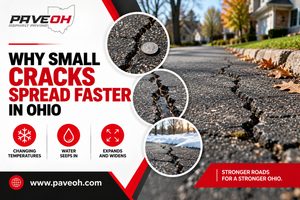
Ohio pavement must withstand changing temperatures, rain, and seasonal freeze-thaw conditions. These changes can contribute to deterioration when water enters cracks or the supporting layers are not stable.
During colder weather, moisture within pavement openings or supporting materials can freeze and expand. As temperatures fluctuate, repeated cycles of freezing and thawing can contribute to the worsening of existing defects. Spring rainfall can also reveal low areas or drainage issues that were less obvious during dry periods.
Weather is not the only cause of asphalt failure. Installation quality, the condition of the subgrade, pavement thickness, vehicle loads, and maintenance history also influence durability.
For this reason, replacement planning should account for local site conditions and the purpose of the surface. Proper drainage, suitable base preparation, and appropriate installation methods can help reduce avoidable weaknesses in the new pavement.
Frequently Asked Questions About Asphalt Replacement in Ohio
How do I know when asphalt needs full replacement?
Look for widespread alligator cracking, recurring potholes, deep sinking, extensive crumbling, and persistent drainage problems. These signs become more concerning when they occur across large areas or continue after repairs. An inspection can determine whether the damage is structural or limited to the surface.
Can cracked asphalt be repaired instead of replaced?
Yes. Isolated cracks and localized damage can often be repaired when the surrounding asphalt and supporting base remain stable. Extensive interconnected cracking or recurring defects may indicate that more substantial work is necessary.
Is resurfacing the same as full asphalt replacement?
No. Resurfacing adds a new layer to existing pavement that is suitable to remain in place. Full replacement removes the damaged asphalt and allows the contractor to address underlying problems when necessary. Resurfacing may not be appropriate if the base is unstable or the pavement has widespread structural failure.
Does an old driveway always need to be replaced?
No. Age alone is not enough to determine whether replacement is needed. An older driveway may continue performing adequately if its structure is stable and it has been maintained properly. The extent of damage and the condition of the base are more useful indicators.
Why do potholes return after repairs?
Recurring potholes may be linked to unresolved water intrusion, weak base materials, unstable soil, repeated traffic loading, or incomplete repairs. The underlying cause must be identified to determine whether patching remains appropriate or a more extensive solution is needed.
Will full replacement fix drainage problems?
It can address drainage problems when the replacement work includes correcting the relevant grading, slope, or supporting conditions. Simply installing new asphalt without correcting the source of standing water may allow the issue to return.
How long does asphalt replacement take?
The schedule depends on the area’s size, the extent of damage, base repairs, weather, material requirements, and site access. A contractor can provide a more accurate timeline after evaluating the property and defining the work.
How can I maintain asphalt after replacement?
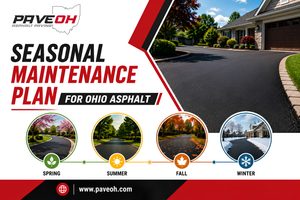
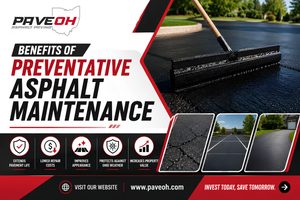
Keep drainage paths clear, pay attention to new cracks or depressions, avoid allowing water to collect repeatedly in low areas, and arrange appropriate maintenance as the pavement ages. Addressing minor defects early can help prevent avoidable deterioration.
Conclusion: Recognize the Signs Before the Damage Spreads
The most important asphalt replacement signs Ohio property owners should watch for are widespread alligator cracking, repeated potholes, sinking areas, persistent standing water, crumbling edges, and damage that continues despite repairs. These conditions do not all require complete replacement, but they deserve a closer look when they are extensive or point to an unstable foundation.
The best solution depends on the pavement’s actual condition. Localized defects may need repairs, structurally sound but worn surfaces may be suitable for maintenance or resurfacing, and extensive deterioration may call for full replacement. Identifying the cause of the damage is essential to choosing the right approach.
Pave OH helps homeowners, businesses, and property managers in Columbus and Central Ohio evaluate their asphalt needs and understand their paving options. When pavement has reached the point where repeated repairs are no longer effective, contact Pave OH to discuss your property and request an estimate.