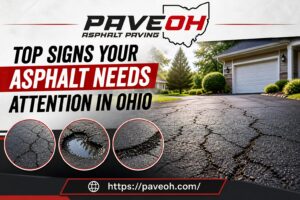
Are drainage problems slowly damaging your asphalt pavement? Proper drainage is one of the most important and most overlooked parts of any successful paving project. Whether it is a residential driveway, commercial parking lot, roadway, or industrial pavement surface, effective water management plays a major role in long-term pavement durability, structural stability, and overall performance. Understanding the importance of pavement drainage ohio. Between heavy rainfall, melting snow, ice, and repeated freeze–thaw cycles, water can quickly weaken asphalt if drainage systems are poorly designed or neglected. Without proper drainage planning, even newly installed pavement may develop cracking, potholes, rutting, erosion, standing water, and foundation instability much sooner than expected.
In Central Ohio, water infiltration is one of the leading causes of premature pavement failure. When water remains trapped on or beneath asphalt surfaces, it gradually weakens the base layers and surrounding soil structure. During winter, trapped moisture freezes and expands, creating additional pressure that accelerates cracking and surface deterioration. Poor grading, clogged drains, insufficient slope design, and improper runoff management can all contribute to long-term drainage problems that reduce pavement lifespan and increase repair costs.
Why Drainage Matters in Ohio Paving Projects
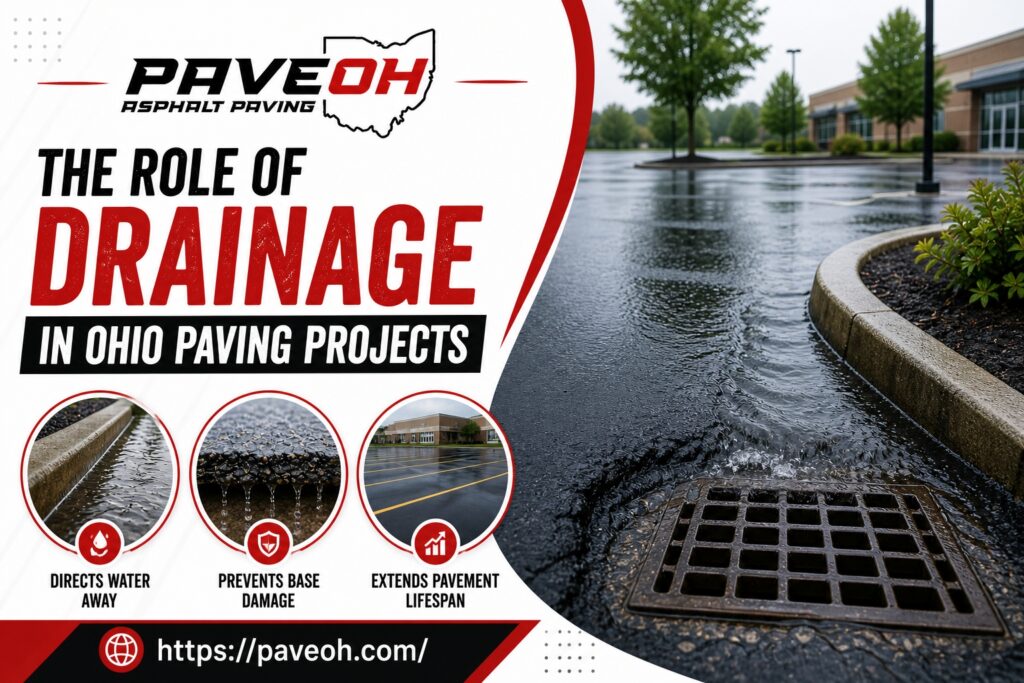
Water is one of asphalt pavement’s greatest enemies. When water is not properly directed away from paved surfaces, it can infiltrate the asphalt structure and weaken the layers beneath.
Poor drainage can lead to:
- Surface cracking
- Potholes
- Base erosion
- Pavement shifting
- Surface depressions
- Ice formation
- Premature pavement failure
Ohio’s weather conditions make drainage especially critical because moisture repeatedly freezes and expands during winter months, causing extensive structural stress.
Understanding Ohio’s Climate Challenges
Ohio pavement surfaces are exposed to a variety of environmental conditions throughout the year.
Common challenges include:
- Heavy rainfall
- Snow accumulation
- Freeze-thaw cycles
- Ice buildup
- Soil saturation
- Seasonal temperature fluctuations
When water is allowed to remain on or beneath asphalt surfaces, these environmental conditions can rapidly accelerate pavement deterioration.
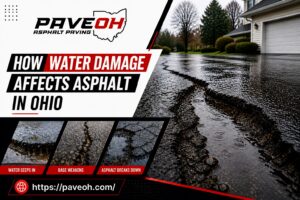
How Water Damages Asphalt Pavement
Water damage often begins gradually before developing into major structural issues.
Common ways moisture damages pavement include:
1. Surface Penetration
Small cracks allow water to enter the asphalt structure.
2. Base Weakening
Water softens the sub-base and reduces structural support.
3. Freeze Expansion
Water freezes during winter, expands, and widens cracks.
4. Soil Movement
Saturated soil shifts beneath pavement surfaces.
5. Erosion
Flowing water can remove supporting material around pavement edges.
Without proper drainage systems, pavement damage can spread quickly.
Signs of Poor Pavement Drainage Ohio Property Owners Should Watch For
Early identification of drainage problems helps prevent larger issues.
Warning signs include:
- Standing water
- Surface puddles
- Uneven pavement
- Cracking
- Potholes
- Soft spots
- Edge erosion
- Water runoff issues
Even small drainage problems can eventually compromise the structural integrity of asphalt surfaces.
The Importance of Proper Grading
Grading plays a major role in directing water away from paved surfaces.
Proper grading helps:
- Prevent water pooling
- Improve runoff flow
- Reduce moisture penetration
- Protect pavement foundations
- Improve surface safety
Improper grading is one of the most common causes of drainage-related pavement failures in Ohio.
Drainage Systems Used in Ohio Paving Projects
Professional paving contractors incorporate several drainage solutions depending on the property layout and water exposure risks.
Common drainage solutions include:
Surface Sloping
Creates controlled runoff direction.
Catch Basins
Collect and redirect excess water.
Drainage Swales
Channel water safely away from pavement areas.
French Drains
Help manage subsurface moisture buildup.
Edge Drainage Systems
Protect pavement borders from erosion and water infiltration.
Each project requires customized drainage planning based on:
- Property elevation
- Soil conditions
- Rainfall exposure
- Pavement size
- Traffic demands
How Drainage Impacts Pavement Lifespan
Proper water management significantly improves asphalt durability.
Benefits of effective drainage include:
- Reduced cracking
- Improved structural stability
- Fewer potholes
- Better freeze-thaw resistance
- Longer pavement lifespan
- Lower long-term maintenance needs
Without drainage protection, pavement deterioration can occur much faster, especially in Ohio’s climate.
Residential Drainage Considerations
Homeowners often underestimate the importance of driveway drainage.
Common residential drainage problems include:
- Water pooling near garages
- Soil erosion
- Sidewalk flooding
- Driveway edge deterioration
Residential paving projects should always include:
- Proper slope calculations
- Runoff planning
- Water diversion systems
- Foundation protection
This helps preserve both pavement performance and surrounding landscaping.
Commercial Pavement Drainage Challenges
Commercial paving projects face additional water management concerns due to:
- Larger surface areas
- Higher traffic loads
- Stormwater runoff requirements
- Heavy vehicle exposure
Poor drainage in commercial lots can create:
- Safety hazards
- Liability risks
- Accelerated pavement wear
- Traffic disruptions
For businesses seeking asphalt paving in Columbus Ohio, proper drainage engineering is a critical part of successful long-term pavement performance.
The Role of Professional Expertise in Drainage Design
Drainage planning requires technical knowledge and site-specific analysis.
Working with professional paving experts in Columbus Ohio helps ensure:
- Accurate grading
- Proper runoff calculations
- Effective drainage placement
- Structural stability
- Long-term pavement durability
Experienced paving contractors understand how Ohio weather impacts asphalt systems and can develop customized drainage solutions for both residential and commercial projects.
Common Drainage Installation Mistakes
Several installation errors can compromise pavement drainage performance.
Common mistakes include:
- Insufficient slope
- Poor grading
- Inadequate drainage capacity
- Improper water flow direction
- Blocked runoff channels
- Weak edge protection
Even high-quality asphalt can fail prematurely if drainage systems are poorly designed.
Preventative Maintenance for Pavement Drainage Systems
Drainage systems require regular maintenance to remain effective.
Important maintenance tasks include:
- Cleaning drains
- Removing debris
- Inspecting catch basins
- Monitoring water flow
- Repairing erosion
- Evaluating grading performance
Routine inspections help identify minor drainage issues before they cause major pavement damage.
Pavement Drainage Warning Signs Comparison Table
| Drainage Problem | Common Symptoms | Potential Risk |
|---|---|---|
| Standing Water | Puddles after rain | Surface weakening |
| Poor Grading | Uneven runoff | Foundation erosion |
| Clogged Drains | Overflowing water | Flooding damage |
| Edge Erosion | Crumbling pavement sides | Structural instability |
| Subsurface Moisture | Soft pavement areas | Base failure |
| Freeze-Thaw Damage | Expanding cracks | Severe pavement deterioration |
Why Local Ohio Experience Matters
Ohio paving projects require climate-specific knowledge.
Local professionals understand:
- Freeze-thaw behavior
- Seasonal rainfall patterns
- Soil movement
- Winter drainage risks
- Pavement material performance
At PaveOH, paving systems are designed specifically for Ohio’s environmental conditions to improve durability and long-term pavement reliability.
Long-Term Benefits of Proper Pavement Drainage
Effective drainage systems help property owners achieve:
- Better pavement performance
- Reduced structural damage
- Improved safety
- Lower maintenance frequency
- Enhanced surface longevity
- Greater property value protection
Drainage planning is not simply an added feature—it is one of the most important foundations of successful paving construction.
Final Thoughts
Drainage is not simply an added feature in paving projects — it is a critical part of protecting asphalt against long-term structural damage in Ohio’s demanding climate. Effective drainage systems help move water away from pavement surfaces, reduce moisture infiltration, minimize freeze–thaw damage, and preserve the integrity of the pavement foundation. Understanding the role of pavement drainage Ohio paving projects require can help property owners avoid costly repairs and extend the lifespan of driveways, parking lots, and commercial paved surfaces.
For residential properties, proper drainage helps prevent standing water, edge erosion, frost heave, and premature driveway cracking. For commercial and industrial properties, well-designed drainage systems improve pavement safety, traffic flow, and long-term structural performance while reducing maintenance expenses. Services such as proper grading, drainage correction, catch basin installation, and pavement slope design all contribute to stronger and more durable asphalt surfaces.
If you are planning a new paving project or experiencing drainage-related pavement problems, PaveOH can help evaluate site conditions and provide professionally engineered paving and drainage solutions designed specifically for Ohio’s climate and soil conditions.