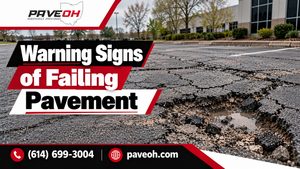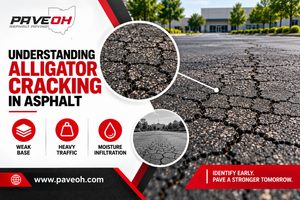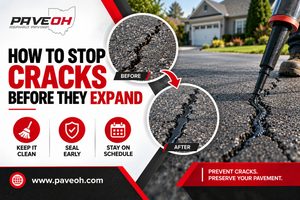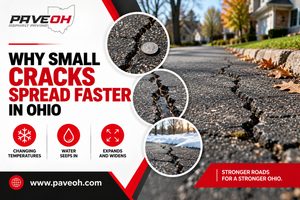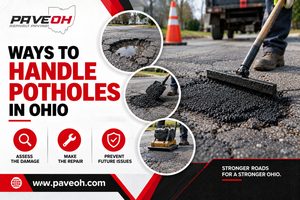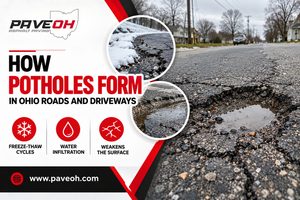
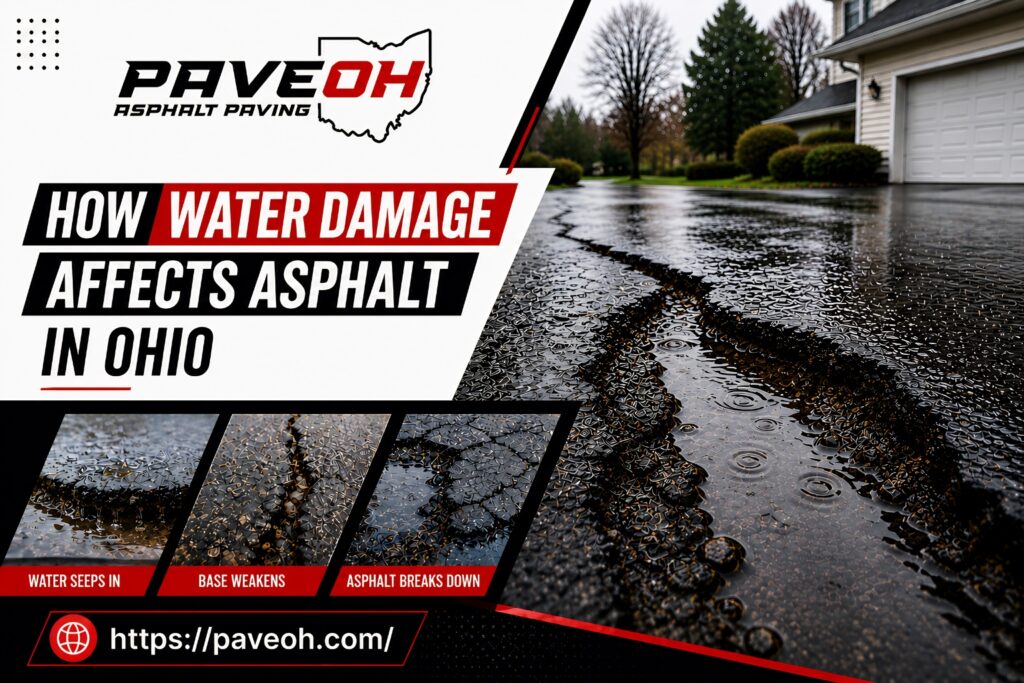
Are you noticing cracks or potholes after heavy rain or winter snow? Water is one of the most damaging forces affecting asphalt pavement in Ohio. Between heavy rainfall, melting snow, freeze–thaw cycles, and poor drainage, moisture can quickly weaken asphalt surfaces and the foundations beneath them. Understanding how water damage affects asphalt in Ohio is important for homeowners and commercial property owners trying to prevent costly pavement repairs and premature failure. When water penetrates small cracks in asphalt, it reaches the base and subgrade layers underneath the surface. During Ohio winters, that trapped moisture freezes, expands, and creates internal pressure that gradually breaks apart the pavement structure. Over time, this process leads to common asphalt problems such as potholes, alligator cracking, rutting, edge deterioration, and surface erosion.
Columbus Ohio’s clay-rich soils and fluctuating temperatures make water-related asphalt damage even more severe. Poor drainage, standing water, clogged gutters, or improper pavement grading can allow moisture to remain trapped around the asphalt for extended periods. As the pavement weakens, traffic loads place additional stress on the compromised surface, accelerating structural deterioration. What may begin as a small crack or puddle can quickly turn into widespread pavement failure if moisture intrusion is not addressed early.
Understanding how asphalt water damage Ohio property owners commonly face develops can help homeowners and businesses protect their driveways and parking lots before severe deterioration occurs.
In areas like Columbus, where freeze-thaw cycles, heavy rain, and snow are common, water damage can spread rapidly if pavement maintenance is neglected.
Why Water Is Dangerous for Asphalt
Although asphalt surfaces appear solid, they are slightly porous. Over time, small openings and cracks naturally develop due to traffic pressure, temperature changes, and aging materials.
Once water enters those cracks, the real damage begins.
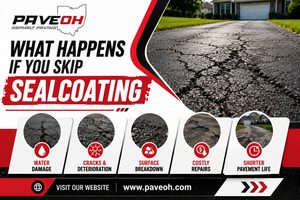
Moisture gradually weakens the asphalt binder and the stone foundation underneath the pavement. As the base loses strength, the asphalt surface begins to crack, sink, and eventually collapse.
This process is one of the leading causes of long-term asphalt water damage Ohio property owners experience every year.
How Water Enters Asphalt Pavement
Water infiltration can happen in several ways.
Surface Cracks
Small cracks are often the first entry point for moisture. Rainwater seeps into these openings and reaches the lower pavement layers.

Poor Drainage
If water cannot properly drain away from the pavement, it begins pooling on the surface. Standing water increases moisture penetration and weakens the asphalt much faster.
Pavement Edges
Unprotected pavement edges allow water to enter from the sides, especially when soil erosion occurs around the driveway or parking lot.
Damaged Sealcoating
Sealcoating acts as a protective barrier against moisture. When the sealcoat wears away, asphalt becomes more vulnerable to water penetration.
The Freeze-Thaw Cycle in Ohio
Ohio weather creates unique challenges for asphalt pavement because of constant freeze-thaw cycles during winter.
When water enters asphalt cracks and temperatures drop below freezing, the trapped moisture expands. This expansion forces cracks to widen.
As temperatures rise again, the ice melts and allows even more water to penetrate deeper into the pavement structure.

This repeated freezing and thawing rapidly accelerates pavement deterioration throughout Central Ohio.
Common Signs of Asphalt Water Damage
Water damage does not always appear immediately. In many cases, pavement problems develop slowly over time.
1. Cracks
Cracking is usually the earliest sign of moisture-related pavement damage. Small cracks can quickly expand when exposed to rain, snow, and ice.
2. Potholes
Potholes form after water weakens the pavement foundation. Once the base loses stability, vehicle pressure causes sections of asphalt to break apart.
3. Standing Water
Puddles that remain after rainfall often indicate drainage problems or pavement depressions.
4. Surface Fading and Weakness
Excess moisture combined with UV exposure can weaken asphalt binders, causing the surface to fade and become brittle.
5. Edge Deterioration
Water often attacks pavement edges first because these areas usually have less structural support.
How Water Damages the Asphalt Foundation
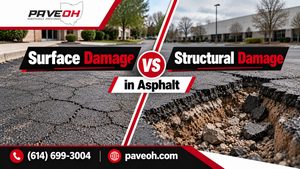
The surface damage is only part of the problem. The most serious issues usually happen underneath the asphalt layer.
When water reaches the sub-base, it softens the soil and reduces the pavement’s ability to support weight. Over time, this causes:
- Surface sinking
- Structural cracking
- Uneven pavement
- Base failure
- Large potholes
Once the foundation becomes unstable, repairs become significantly more expensive.
The Importance of Proper Drainage
Drainage plays a critical role in protecting asphalt pavement from water damage.
A properly designed asphalt surface should direct water away efficiently instead of allowing it to collect.
Common Drainage Problems
- Improper pavement slope
- Clogged drains
- Low spots in pavement
- Inadequate grading
- Poor gutter systems
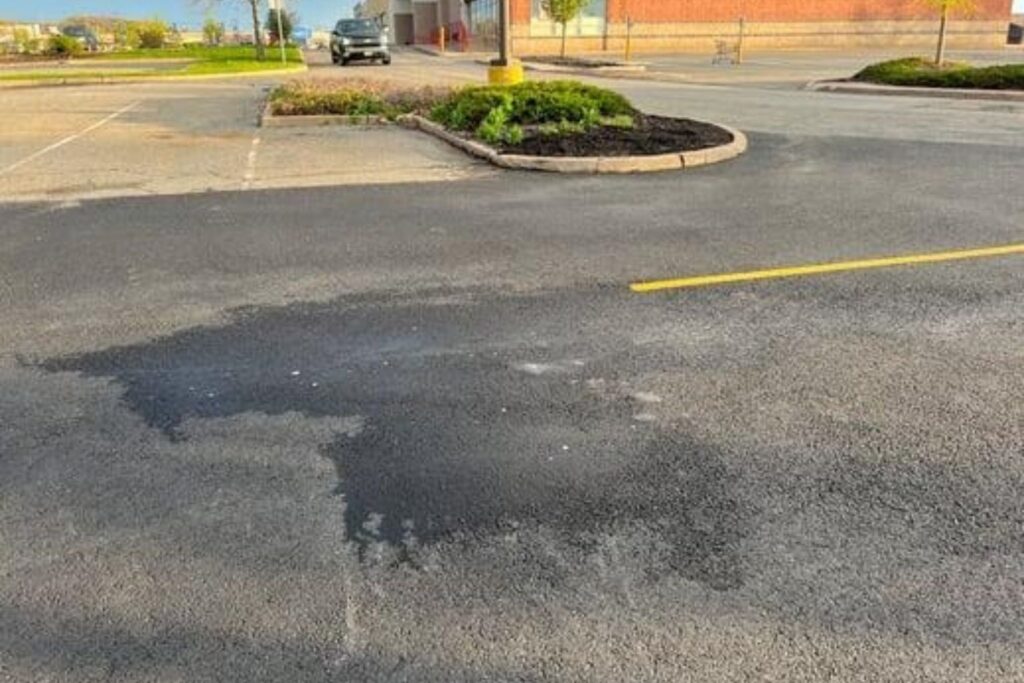
Professional pavement contractors often evaluate drainage systems before beginning major asphalt repairs or installation projects.
How Sealcoating Protects Asphalt from Water Damage
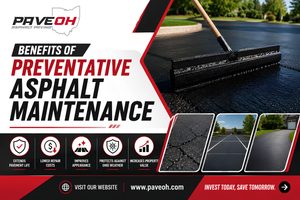
Sealcoating is one of the most effective preventative maintenance solutions for asphalt pavement.
A quality sealcoat creates a protective barrier that helps block:
- Moisture penetration
- UV exposure
- Oil spills
- Chemical damage
- Oxidation
Routine sealcoating significantly reduces the risk of severe asphalt water damage Ohio homeowners commonly face during harsh weather conditions.
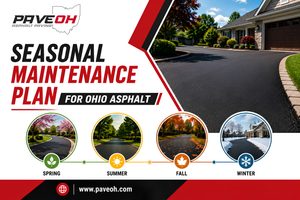
Most asphalt surfaces in Ohio benefit from resealing every 2–3 years depending on traffic and weather exposure.
Preventing Water Damage to Asphalt
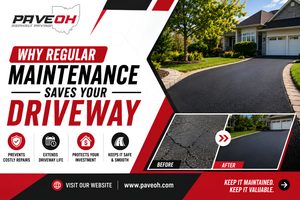
Preventative maintenance is far more affordable than major pavement reconstruction.
Recommended Maintenance Tips
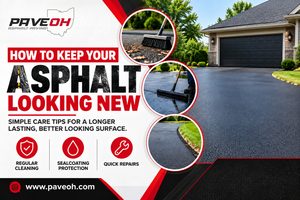
- Repair cracks immediately
- Maintain proper drainage
- Apply sealcoating regularly
- Clean debris from drains
- Address standing water quickly
- Schedule professional pavement inspections
Property owners who follow regular maintenance schedules usually extend pavement lifespan substantially.
Why Professional Asphalt Installation Matters
Proper installation is one of the most important factors in preventing future water damage.
Experienced contractors understand how to:
- Build strong pavement foundations
- Ensure correct grading
- Improve drainage flow
- Use high-quality asphalt materials
- Minimize future cracking risks
For long-lasting results, many property owners rely on specialists in asphalt paving in Columbus Ohio who understand local climate conditions and pavement challenges.
Working with professional paving experts in Columbus Ohio also helps ensure proper installation techniques are used from the beginning, reducing the risk of early structural failure.
When Asphalt Water Damage Requires Professional Repair
Some water damage problems can quickly become severe if ignored.
Professional repair may be necessary when you notice:
- Large potholes
- Extensive cracking
- Sinking pavement
- Drainage failure
- Widespread surface deterioration
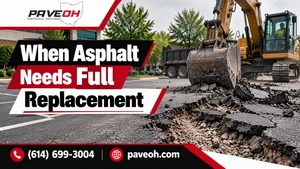
In some cases, resurfacing may solve the problem. In more advanced situations, full pavement replacement may be required if the base has completely failed.
Final Thoughts
Moisture damage is often one of the leading causes of premature asphalt deterioration throughout Ohio. Rainwater, snowmelt, and freeze–thaw cycles continuously attack pavement surfaces, especially when cracks, drainage problems, or weakened areas already exist. Understanding how water damage affects asphalt in Ohio helps property owners recognize early warning signs and take preventative action before repair costs become significantly more expensive.
For residential driveways, proper drainage and routine maintenance help prevent cracks, potholes, and base erosion caused by water infiltration. For commercial parking lots and paved surfaces, managing standing water and repairing damaged areas early can improve safety, reduce liability risks, and extend pavement lifespan. Services such as crack sealing, sealcoating, drainage correction, and asphalt patching are all important for protecting asphalt against long-term moisture damage in Ohio’s challenging climate.
If your driveway or parking lot is showing signs of water-related deterioration, Pave OH can help inspect your pavement condition and provide professional asphalt repair and maintenance solutions designed specifically for Ohio’s weather and drainage challenges.