Are your Ohio driveways cracking sooner than you expect? With frequent freeze–thaw cycles, heavy rains, and variable soils, Ohio’s climate puts severe stress on asphalt and concrete surfaces. Every freezing winter night followed by a thawing day forces water in tiny cracks to expand and contract, making those cracks grow. Add seasonal rains, de-icing salts, and unstable clay soils, and it’s no wonder local driveways age quickly. In this guide, we examine why driveway cracks Ohio climate faster, covering all the major culprits and how to prevent or repair damage effectively.
Even a well-built driveway needs the right design for Ohio’s weather. For example, asphalt paving in Columbus, Ohio, experts emphasize the need for a strong base layer, good drainage, and weather-resistant materials. Pave OH and other professional paving experts in Columbus, Ohio, agree: material strength and drainage are critical so surfaces can withstand Ohio’s freeze–thaw cycles. Below, we’ll break down the causes, signs of damage, best materials, and maintenance tips specific to Ohio.
Ohio’s Climate, Soil, and Seasonal Stresses
Ohio’s four-season climate means wide temperature swings and ample precipitation, both of which accelerate pavement damage.
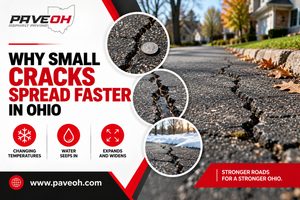
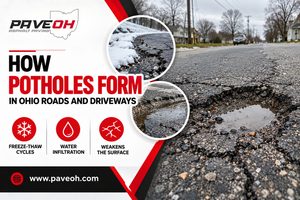
- Freeze–Thaw Cycles: Ohio winters routinely dip below 0 °C (32 °F) at night and rise above freezing during the day. In central Ohio (Columbus, Cleveland, etc.), such freeze–thaw cycles happen dozens of times each winter. Every time trapped water freezes inside a crack or under a slab, it expands and pries the pavement apart. The next thaw lets the crack loosen further. Repeated over months, even tiny cracks widen into large fissures.
- Snow and Rainfall: Ohio averages about 42 inches (1060 mm) of total precipitation per year. Much of this comes in rain, but central Ohio also sees around 28 inches (72 cm) of snow annually. Every rain or snowmelt that pools on a driveway can seep through cracks into the base. Persistent moisture softens the underlying soil and aggregate, inviting more freeze–thaw damage and washouts. Puddles that linger signal trouble: standing water accelerates base erosion and cracking.
- Clay and Loamy Soils: Large parts of Ohio – especially northwest and northeast regions – sit on clay-rich glacial deposits. Clay soils hold water and swell, then shrink as they dry. This constant movement (frost heave) exerts lateral pressure on pavements. As Adelio’s foundation experts note, “Cleveland’s dense glacial clay…expands when wet, then shrinks and contracts as it dries out,” causing inches of soil shift each winter. For driveways, it means the ground underneath is literally moving. A flexible pavement or well-compacted base is needed to absorb that soil motion.
- Seasonal Temperature Swings: Even outside winter, Ohio sees big temperature changes. Summers can reach 30 °C+ and winters can drop well below –20 °C in parts of the state. Asphalt and concrete both expand in heat and contract in cold; without proper joints and designs, they crack. UV radiation also causes asphalt binder to oxidize and become brittle over time.
- De-icing Salts and Chemicals: In winter, road crews and homeowners use salts (like NaCl, CaCl2) to melt ice. These chlorides not only draw moisture into cracks, but they also chemically attack pavement. Salts break down asphalt binder and concrete cement, weakening the surface. According to local paving pros, de-icing salt “speeds up wear and tear” on Ohio pavement.
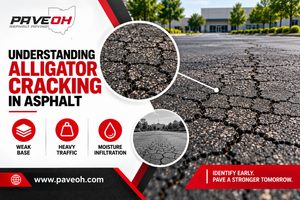
- Traffic Loads: Heavy vehicles or frequent traffic accelerate fatigue. A driveway that only saw car traffic might handle conditions longer, but trucks or snowplows add stress. Repeated loading flexes the pavement; combined with a wet or weak base, it leads to classic alligator (fatigue) cracking.
Figure: Typical freeze–thaw damage on an asphalt surface. A road like this shows cracks that have widened as ice repeatedly formed and thawed under the pavement. (Image: cracked rural road) Caption: Cracks in asphalt expand each winter freeze–thaw cycle. Water gets in, freezes (expands), then thaws, gradually opening cracks and creating potholes (image: Roads and Travel/Getty).
Key Causes of Driveway Cracking
- Freeze–Thaw Cycles: As noted, freezing water inside pavement is a primary culprit. SmartLevel Concrete explains that “water seeps into small pores or cracks in concrete, freezes… and expands. When that ice melts and refreezes repeatedly, it puts stress on the structure. Over time, this expansion and contraction cause surface cracking, scaling, and separation beneath the slab”. The same applies to asphalt: every night you freeze adds to next day’s crack width.
- Moisture and Poor Drainage: Any crack or low spot lets water infiltrate to the subbase. A saturated base can no longer support the pavement, leading to sinkage, potholes, or edge crumbling. Even permeable materials can trap mud underneath if drains are clogged. Ohio’s heavy spring rains and snowmelt highlight the need for slope and drainage. Without it, driveways suffer continual water attack.
- Weak Base/Subgrade: A common installation mistake is a thin or poorly compacted base. In Ohio’s environment, an adequate base (usually crushed stone) is critical. A thin base can quickly wash away or settle, causing cracks. According to Ohio’s paving standards, thin asphalt layers (<50 mm) combined with subgrade issues are prime candidates for failure under freeze–thaw.
- Salts and Chemicals: As above, road salts compound damage. Even magnesium chloride or calcium chloride (used on roads and driveways) attracts moisture and corrodes pavement. Salt lowers the freezing point of water, meaning pavements spend more time at damaging temperatures. Over the years, salt reduces the binder in asphalt, making it brittle and more prone to cracking.
- Tree Roots and Vegetation: Mature trees near a driveway can be a hidden source of cracks. Roots grow under the pavement searching for moisture. Over time, they heave and crack the surface from beneath. Small cracks allow weeds and grass to grow (shown right), which further pry pavements apart. Keeping large-rooted trees at a distance or installing root barriers prevents this common issue.
- Overloading: Parking heavy trucks, recreational vehicles, or storing heavy equipment on a driveway exceeds its design load. The concentrated weight can cause pavement fatigue (alligator cracking) or sudden failure at weak spots.
- Installation Errors: Poor mix design or cold weather installation can lock in problems. For example, paving late in the season with an incorrect asphalt binder grade might cure poorly, resulting in early cracking. Missing joints in concrete or failing to tack between layers of asphalt also create inherent weak points.
- Material Limitations: Not all materials behave the same under Ohio weather. For instance, a typical asphalt mix is flexible, which helps it resist cracking from mild ground movement. In contrast, conventional concrete is rigid and more susceptible to sudden cracks if the soil shifts. Choosing the wrong material for the site (e.g., non-frost-resistant concrete) sets up premature failure.
Common Crack Types & Failure Modes: In Ohio driveways, you’ll often see:
- Alligator (Fatigue) Cracks: Network of interconnected cracks (like a reptile’s back). Caused by repeated flexing (traffic) on a weak base or thin asphalt. It looks like alligator scales.
- Edge Cracks: Often vertical cracks along the driveway edge. They appear when edges aren’t well compacted or supported. They widen as water undermines the shoulder.
- Linear (Thermal) Cracks: Straight cracks perpendicular to traffic often appear in concrete due to temperature contraction, or in asphalt from underlying stress lines.
- Potholes: Bowl-shaped holes from base failure. Freeze–thaw causes a pothole to form when waterlogged subbase gives way under traffic. Ohio news sites note potholes surge each freeze–thaw season.
- Spiderweb Cracks: Fine branching cracks often around a focal point (like a heavy load). Usually, early fatigue or a sign to repave.
Ohio Weather Data: What Drives Damage
To understand the problem’s scale, consider typical Ohio weather:
- Temperature Ranges: Columbus’s average winter daytime highs hover in the low 0s °C, with nighttime lows often –6 °C or colder. Summers reach mid-20s to 30 °C. These swings put stress on pavements twice a year (freeze cold, bake hot). Over a decade, that’s hundreds of cycles.
- Precipitation: Central Ohio gets roughly 40–45 inches (1000–1150 mm) of combined rain and melted snow each year. Most months see frequent rain, while winter drops snow (Columbus ~28 in/year). Each rain and thaw means more water ingress.
- Freeze–Thaw Frequency: Ohio State climatologists note that Columbus and Cleveland see dozens of freeze–thaw days each winter. That’s when pavement damage progresses most.
Regional differences exist: Northeast Ohio (Cleveland) can have even more freeze–thaw events and heavier lake-effect snow, while southern Ohio may see slightly milder winters. However, the basic challenge remains statewide: multiple moist freezes each season.
Prevention and Best Practices
Given these factors, here’s how to build and maintain durable Ohio driveways:
- Proper Base Construction: Begin with a well-prepared base. Clear organic soil, lay at least 150–200 mm of compacted crushed stone (for asphalt) or granular fill. A deep, stable base resists frost heave and supports loads. ODOT guidelines stress that an insufficient base leads to early failure.
- Adequate Drainage: Ensure the driveway has a slight slope (about 1–2%), so water runs off. Install French drains or swales if needed. Prevent water from pooling next to or under the pavement. As HAM Landscaping notes for permeable systems, a deep gravel layer allows water to be “naturally cleaned and slowly released”, essentially preventing freeze-thaw damage. For impervious driveways, good site grading is a must.
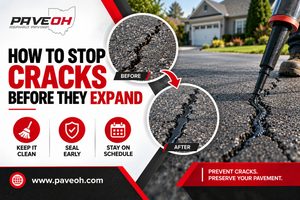
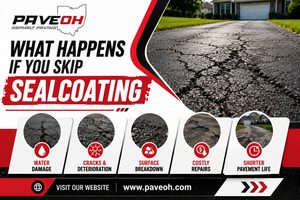
- Seal Cracks Promptly: As soon as any crack appears, seal it with appropriate filler or sealant. This stops water entry. The Pave OH experts emphasise: “small cracks [unchecked] allow water to penetrate, softening the base and accelerating damage”. Regular crack-sealing (and annual sealcoating for asphalt) interrupts the freeze–thaw attack cycle.
- Use Quality Materials: Choose asphalt mixes and concrete mixes rated for freeze-thaw. In Ohio, asphalt is often a polymer-modified binder (e.g., PG 64-22) that remains flexible down to –22 °C. For concrete, air-entrainment and low-permeability mixes are key to resisting frost damage. Pavers are especially popular: their individual units can shift slightly instead of cracking, and the joints allow drainage. Unilock notes that permeable pavers “eliminate the need to tear out [rigid pavement], which occurs with asphalt and concrete” under freeze–thaw.
- Preventative Maintenance: Sweep off debris, avoid excessive oil spillage (oil can soften asphalt binder), and refrain from harsh de-icers (use sand or kitty litter if possible). Trim back trees or install root guards to block root invasion.
- Choose the Right Material for the Use Case: For heavy-duty needs, thick concrete may be best; for flexible, easy repairs, asphalt; for aesthetics and drainage, pavers; for rural, low-cost solutions, gravel. (See the comparison table below for how each material handles Ohio’s conditions.)
Comparison: Driveway Material Pros & Cons
| Material | Freeze–Thaw Resistance | Drainage | Maintenance | Typical Lifespan (Ohio) | Best Use Case |
|---|---|---|---|---|---|
| Asphalt | Moderate–High (flexible surface resists cracking) | Moderate (impermeable; needs slope/drains) | Moderate (sealcoat ~every 3–5 yrs; crack fill) | 15–20 years | Residential, light commercial driveways |
| Concrete | Moderate (rigid; need air-entrainment; can crack under movement) | Low (impermeable; careful grading needed) | Low (rarely reseals; clean once yearly) | 25–35 years (if good mix & base) | High-load areas, long-term driveways |
| Pavers | High (each unit can move; joints absorb stress) | Excellent (jointed; allows infiltration) | Moderate (weeds, joint sand refill) | 30–50+ years (replace blocks easily) | Premium homes, high-traffic, decorative designs |
| Gravel | Moderate (permeable but base issues remain) | Excellent (water passes through) | High (frequent regrading, adding gravel) | Indefinite if maintained (often 20+ yrs) | Rural, low-traffic driveways, farm use |
| Permeable Paving Systems | Very High (water dispersal prevents freeze pressure) | Excellent (designed for infiltration) | Moderate (must keep pores clean) | 20–30 years (with maintenance) | Stormwater-sensitive areas, modern homes |
Pre-Installation Site Checklist
| Pre-Installation Task | Why It Matters |
|---|---|
| Subgrade Evaluation: Test soil type and compaction. | Identify clay or wet areas. Ensure proper compaction to avoid settling and heaving. |
| Site Grading & Drainage Plan: Check slopes (driveway and surrounding land). | Ensure water flows away from the driveway. Prevents pooling that causes base erosion. |
| Vegetation and Trees: Remove stumps/roots near pavement path. | Eliminates future root damage and ensures a stable base. |
| Permits and Local Codes: Verify zoning and permit requirements. | Avoid fines or required removal later by meeting local regulations. |
| Material & Design Review: Select appropriate material (asphalt, concrete, pavers, etc.) and thickness for usage and climate. | Matches material properties to site demands (frost depth, traffic load) for durability. |
| Utility Location: Identify underground lines (water, gas, electric). | Prevents utility damage during excavation. |
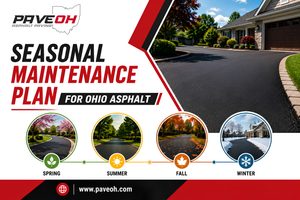
Seasonal Maintenance Checklist
| Season | Maintenance Task | Purpose |
|---|---|---|
| Spring | Clean debris off the surface. Inspect and fill small cracks with patching or sealant. | Remove ice/salt damage from winter. Catch cracks early to prevent water ingress. |
| Summer | Wash surface (remove oil/grease), inspect for potholes or depressions. Schedule sealcoating before winter. | Keeps asphalt binder refreshed. Repairs potholes before they worsen in freeze. |
| Autumn | Apply sealcoat or surface treatment. Trim overhanging trees/foliage. Check drainage again. | Protects pavement from winter moisture. Ensures water runoff remains effective. |
| After Snow/Ice | Clear snow promptly (use plastic shovel/blade). Apply sand instead of salt when possible. | Prevents excess moisture & salt sitting on pavement. Protects from freeze damage. |
Best Materials and Practices for Ohio
Using the right materials and methods is key. Here are some recommendations:
- Asphalt Pavements: Most Ohio driveways use asphalt. It’s flexible and performs well if built right. Use a full-depth asphalt design (e.g. 150–200 mm base course under the wearing course) with a winter-grade binder (PG 64-22 or similar). Always compact thoroughly. Plan for sealcoating every few years to block moisture.
- Concrete Driveways: High-strength, air-entrained concrete resists freeze damage when properly cured. Include control joints every 3–4 m to manage cracking. Ensure a gravel subbase and good compaction. Concrete needs edge support (curb or compacted shoulder) to prevent edge cracking.
- Paver/Interlocking Systems: Pavers (especially permeable pavers) excel in Ohio. Their joints allow drainage, and the units can move slightly under frost without cracking. Install on a compacted open-graded gravel base (often 200–300 mm deep) which absorbs frost heave. Manufacturers like Unilock offer pavers rated for freeze-thaw. As HAM Landscaping notes, a gravel base “will also help eliminate the freeze-thaw cycle which would normally cause asphalt and concrete to buckle and crack”.
- Gravel Driveways: Gravel or crushed stone is very forgiving with freeze-thaw since water drains through. The downside is maintenance: expect to regrade and add gravel periodically. Gravel shoulders or borders keep stones in place. Good drainage is inherent in gravel, but protect against washouts with edging.
- Permeable Pavements: These engineered systems (permeable asphalt or concrete, paver grids) are designed for runoff. By letting water percolate through, they avoid most freeze damage. They do require regular vacuum maintenance to keep pores clear. When properly installed, they effectively negate the freeze–thaw pressure on the surface.
In all cases, professional installation is critical. Poor compaction, thickness, or mix will doom even the best material. As Pave OH stresses, success depends on materials and drainage suited to Ohio’s climate. Working with experienced contractors ensures quality base prep, correct materials, and compliance with local standards.
Pre-installation, Maintenance, and Inspection Tables
Pre-Installation Site Checklist: Before paving, verify these conditions to ensure longevity.
| Consideration | Recommended Action |
|---|---|
| Soil and Subgrade: High clay or wet soils | Perform soil tests; amend or replace problematic subsoil. Build extra-deep crushed aggregate base to resist frost heave. |
| Drainage & Slope: Flat or poor drainage areas | Grade site for runoff; install drains or swales. Aim for at least 1–2% slope from garage to road. |
| Vegetation Control: Existing trees/shrubs close by | Remove or root-barrier large roots. Prevent future root growth under pavement. |
| Driveway Layout: Slope towards sidewalks/road | Ensure water sheds to safe areas (not onto neighbouring property). Protect low spots with grates or channels. |
| Driveway Materials: Choose per site use | Select asphalt, concrete, or pavers with freeze/thaw durability. Plan for heavier reinforcement under high loads. |
| Regulations: Local permit requirements | Check city/county paving regulations and utility line locations. Obtain permits to avoid delays or rework. |
Seasonal Maintenance Checklist: Regular upkeep can double your driveway life.
| Season | Tasks |
|---|---|
| Spring | Sweep off debris and remaining sand/salt. Inspect for new cracks or settled areas. Clean out joints. Fill small cracks with hot rubber sealant or cold patch. |
| Summer | Clean oil stains. Repair any potholes or depressions (cut out damaged area, patch). Apply sealcoat on asphalt (late summer is ideal). Check and clear adjacent drains. |
| Autumn | Trim encroaching vegetation. Apply final sealcoat on warm days (if not done in summer). Re-compact gravel driveways if needed. Rake out leaves to prevent organic decay spots. |
| Winter | Shovel snow promptly using plastic tools (avoid metal scraping). Use sand or pet-safe de-icers instead of rock salt when possible. Remove ice buildup early to protect the surface. |
Inspection Checklist: Regular inspections (biannually, after big storms, and after winter) spot issues early.
| What to Inspect | Signs to Look For | Action if Present |
|---|---|---|
| Crack Network: Alligator or spider cracks | Widening or interconnecting cracks >5 mm | Schedule crack sealing or resurfacing. Catch early to avoid potholes. |
| Potholes/Depressions: Sunken or missing areas | Localised holes, loose material | Fill potholes with patch; investigate base issue if many form. |
| Standing Water: After rain/snow | Ponding areas, eroded edges | Improve slope/drainage. Temporarily patch holes. |
| Surface Texture: Flaking or aggregate loss | Raveling surface, binders washed out | Apply new sealcoat or asphalt overlay soon. |
| Edges and Transitions: Shoulder crumbling or gap | Undercutting at sides, cracks parallel to edge | Re-support edges with fill/side material. Re-seal edge cracks. |
| Drainage and Joints: Blocked drains or open joints | Overflowing gutters, open concrete joints | Clean joints. Fill or install new joint seals. Ensure drainage stays clear. |
Repair vs. Replace: Making the Call
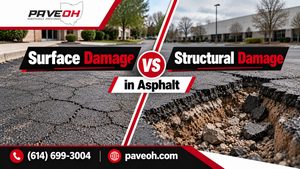
When cracks appear, decide: is repair enough, or is it time for replacement? Minor, isolated damage can usually be fixed (crack-filling, patching, sealing). But widespread failure (extensive alligator cracking, large potholes, sinking) often means the base is failing – in which case a full repave may be more cost-effective. The flowchart above outlines this process. As a rule of thumb, If more than 20–30% of the pavement is badly broken, or patches keep recurring year after year, replacement is likely needed.
Always consult professionals for a proper inspection. Our Columbus-area paving experts offer honest assessments to guide your decision. Often a resurfacing (mill-and-fill or overlay) can extend life if the base is still sound; otherwise, a complete tear-out with new base and asphalt is the best long-term solution.
Final Thoughts
At Pave OH, our professional paving experts in Columbus, Ohio specialise in building and restoring driveways for our challenging climate. We start with a thorough site evaluation – testing soil, checking drainage patterns, and identifying any trouble spots. Based on that, we recommend the best solution: whether that’s installing a heavy-duty asphalt driveway with a multi-layer base, laying frost-resistant permeable pavers, or repairing an existing surface.
Our services include full asphalt paving in Columbus, Ohio (residential or commercial), plus repairs like crack sealing, patching potholes, and regrading. We use top-grade materials (air-entrained concrete, polymer-modified asphalt, quality aggregates) chosen for Ohio’s freeze–thaw conditions. After installation, we offer preventative maintenance plans: sealcoating, cleaning, and routine check-ups to catch small issues before they become big problems. We engineer every driveway for long-term performance in Ohio’s climate. Ready to protect your investment? Contact our Columbus paving team for a free site inspection. We’ll devise a customised plan – whether it’s reconstructing a failing driveway or maintaining a newer one – to ensure your surface stays smooth, safe, and crack-free for years.