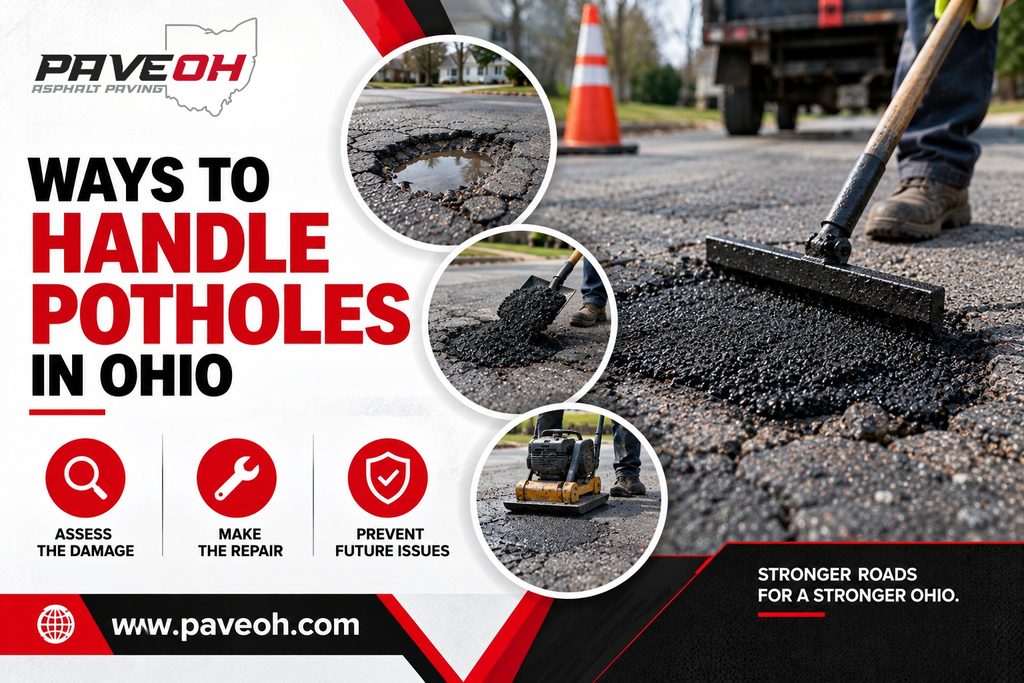
What Are the Best Ways to Handle Potholes in Ohio? How should you respond when a pothole appears on an Ohio driveway, parking lot, or paved surface? The right pothole solutions Ohio property owners choose depend on the pothole’s size, depth, surrounding pavement condition, drainage, and underlying base.
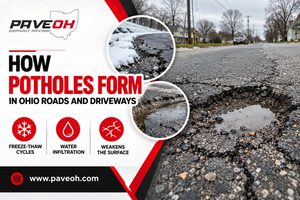
Potholes commonly develop when water enters pavement, seasonal freezing and thawing weakens the surrounding structure, and vehicle traffic repeatedly loads the damaged area. Pave OH identifies freeze-thaw cycles, heavy traffic, and drainage problems as common contributors to potholes in Central Ohio.
A small isolated pothole may be suitable for localized patching, while repeated or widespread potholes may indicate deeper pavement or drainage problems. In those situations, simply filling the visible hole may not provide a lasting solution.
1. Inspect the Pothole Before Choosing a Repair
The first step is determining what caused the damage.
A professional assessment should consider:
- Pothole size and depth
- Condition of surrounding asphalt
- Nearby cracks
- Drainage
- Base and subbase conditions
- Traffic loads
- Previous repairs
- Whether similar potholes are developing nearby
Pave OH’s pothole repair process begins with inspection and assessment to identify the extent of damage and potential underlying issues.
This matters because two potholes that look similar on the surface may require completely different repair approaches.
2. Repair Small Potholes Early
A small pothole is easier to address when the surrounding pavement remains stable.
Leaving it untreated allows traffic, water, and changing temperatures to continue affecting the damaged area.
Pave OH explains that timely pothole repairs can prevent small pavement problems from becoming larger repairs and can help extend pavement life.
Early repair can also restore a smoother surface and reduce hazards for vehicles and pedestrians.
3. Use Hot-Mix Asphalt for Suitable Long-Term Repairs
Hot-mix asphalt is one of the repair methods used for potholes in suitable conditions.
Pave OH identifies hot-mix asphalt patching as a long-term repair option, particularly for commercial lots and roadways exposed to heavier traffic.
A typical professional repair may involve:
- Inspecting the damaged area
- Removing loose material
- Preparing the repair area
- Installing appropriate asphalt material
- Compacting the repair
- Checking the finished surface
Proper preparation and compaction are important for creating a stable repair.
4. Consider Infrared Repair for Certain Damaged Areas
Infrared technology provides another repair option for appropriate asphalt damage.
Pave OH uses infrared thermal repair to heat existing asphalt and integrate repair material with the surrounding pavement. The company identifies this method as useful for certain high-visibility areas where a seamless appearance is important.
The suitability of infrared repair depends on the specific pavement condition and project requirements.
5. Use Cold Patching When Conditions Require It
Winter can make conventional hot-mix repair more difficult.
Pave OH lists cold patch applications as a temporary winter-weather repair option for emergencies.
Cold patching can provide a practical way to address urgent damage when conditions aren’t suitable for permanent warm-weather asphalt work.
However, a temporary repair shouldn’t automatically be considered the final solution. The pavement should be reassessed when proper conditions allow for more permanent work.
6. Address the Drainage Problem
One of the most important pothole solutions Ohio property owners should consider is correcting water-related problems.
If water repeatedly collects in the same location, repairing the visible pothole without addressing drainage may allow the problem to return.
Pave OH specifically recommends evaluating drainage and underlying conditions when repairing potholes.
Look for:
- Standing water
- Low pavement areas
- Blocked drainage
- Water flowing toward the pavement
- Erosion around pavement edges
- Repeated potholes in the same location
Solving the water problem can be just as important as repairing the asphalt surface.
7. Repair Cracks Before They Become Potholes
Pothole prevention begins before a pothole exists.
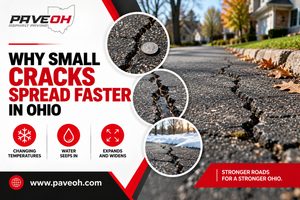
Cracks can allow water to enter pavement. During Ohio’s freeze-thaw cycles, moisture-related deterioration can become more significant.
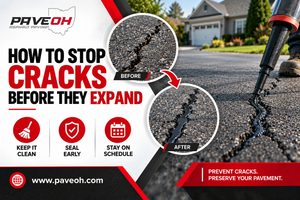
Pave OH recommends crack sealing as part of preventative asphalt maintenance and notes that addressing cracks can help keep moisture out of the pavement.
Regular inspections can help property owners identify cracks while they are still manageable.
8. Improve Pavement Drainage and Grading
Drainage problems sometimes originate from grading.
If pavement does not provide a suitable path for water to move away, standing water may develop repeatedly.
Pave OH considers grading and drainage when evaluating asphalt projects and identifies these factors as important to pavement performance in Central Ohio.
For recurring potholes, a professional should determine whether the problem is isolated or connected to broader drainage or grading conditions.
9. Consider Asphalt Patching for Localized Damage
Not every damaged pavement area requires complete resurfacing.
Patching can focus on specific damaged sections while leaving sound pavement in place.
Pave OH describes asphalt patching as a method for addressing localized damage such as potholes, depressions, cracks, and eroded areas.
Patching may be useful when:
- Damage is localized
- Surrounding asphalt remains stable
- The base can support the repair
- The pavement does not have widespread deterioration
A professional assessment can determine whether patching is appropriate.
10. Consider Resurfacing When Damage Is Widespread
Sometimes potholes are only one symptom of a deteriorating pavement surface.
If a driveway or parking lot has widespread surface damage but the underlying structure remains sufficiently stable, asphalt resurfacing may be an option.
Pave OH explains that resurfacing places a new asphalt layer over properly prepared existing pavement and can restore surface smoothness and appearance.
Resurfacing may be considered when:
- Surface deterioration is widespread
- Localized repairs are becoming frequent
- The pavement remains structurally suitable
- The surface is rough or uneven
- Cracking and wear affect larger areas
Resurfacing is not appropriate for every pothole-damaged surface. The existing pavement needs to be evaluated first.
11. Know When Replacement Is Necessary
Some pavement has deteriorated beyond the point where patching or resurfacing will provide an appropriate long-term solution.
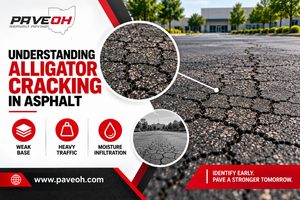
Pave OH identifies widespread alligator cracking, multiple deep potholes, base failure, severe drainage problems, and extensive deterioration among conditions that may require full replacement.
Replacement generally involves removing the failed pavement, correcting underlying conditions, rebuilding the supporting layers as necessary, and installing new asphalt.
The goal is to address the pavement structure rather than repeatedly treating surface symptoms.
Pothole Repair Options at a Glance
| Situation | Possible Solution |
|---|---|
| Small isolated pothole | Localized patching |
| Winter emergency | Cold patch |
| Suitable commercial pothole | Hot-mix asphalt patching |
| Certain high-visibility repairs | Infrared repair |
| Repeated potholes from water | Drainage evaluation and repair |
| Widespread surface deterioration | Resurfacing evaluation |
| Failed base or extensive structural damage | Full replacement |
The correct solution depends on actual pavement conditions rather than pothole size alone.
12. Make Compaction Part of the Repair
Filling a pothole isn’t enough.
The repaired material needs to be properly compacted to create a stable, level surface.
Pave OH includes compaction as a specific stage of its pothole repair process and states that proper compaction helps produce a smooth, durable finish.
Poor preparation or inadequate compaction can contribute to premature repair failure.
13. Inspect the Area After Repair
A repaired pothole should be monitored.
Watch for:
- New cracking
- Settlement
- Water pooling
- Edge separation
- Recurring potholes
- Differences in pavement height
If the same location fails repeatedly, the underlying cause should be reassessed.
Pave OH’s approach focuses on identifying the root cause of potholes rather than simply covering surface damage.
14. Prevent Future Potholes With Regular Maintenance
The best pothole strategy isn’t only repairing existing damage.
Preventative maintenance can reduce the conditions that contribute to new potholes.
A practical maintenance program can include:
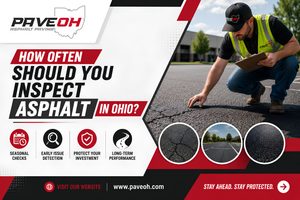
Regular inspections
Look for cracks, potholes, drainage problems, and surface deterioration.
Crack sealing
Address appropriate cracks before moisture can continue entering the pavement.
Drainage maintenance
Keep water moving away from paved areas.
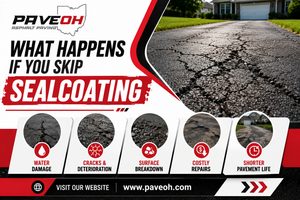
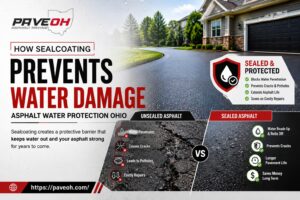
Sealcoating
Use sealcoating when the pavement is structurally sound and suitable for the treatment.
Prompt repairs
Don’t allow localized damage to remain untreated indefinitely.
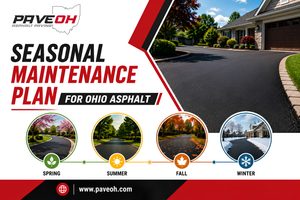
Pave OH recommends spring inspections, crack sealing, drainage checks, and periodic sealcoating as part of its preventative approach.
15. Pay Special Attention After Winter
Spring is an important time to inspect Ohio pavement.
Winter can reveal weaknesses that were less noticeable before freezing temperatures arrived.
After winter, check for:
- New potholes
- Enlarged cracks
- Edge deterioration
- Depressions
- Standing water
- Failed patches
Pave OH recommends seasonal inspection and maintenance because freeze-thaw cycles can accelerate asphalt deterioration in Ohio.
Addressing problems during the spring can help prevent additional damage during the warmer months.
Common Pothole Repair Mistakes
Ignoring a Small Pothole
Small damage can become larger when exposed to continued traffic and moisture.
Filling Without Cleaning
Loose debris and water can interfere with proper bonding.
Pave OH’s repair process includes cleaning and preparation before asphalt placement.
Ignoring Drainage
If water continues entering the area, the pothole may return.
Using the Wrong Repair Method
A temporary winter repair may not be appropriate as a permanent solution.
Skipping Compaction
Proper compaction is essential to achieving a stable repair.
Resurfacing Structurally Failed Pavement
A new surface layer cannot automatically correct a failed base.
When Should You Call an Asphalt Professional?
Professional evaluation is particularly useful when potholes are:
- Deep
- Widespread
- Repeated
- Surrounded by extensive cracking
- Associated with standing water
- Located in heavily trafficked areas
- Returning after previous repairs
Pave OH begins its pothole repair process with a site assessment that considers damage severity, drainage, base conditions, and traffic loads.
This allows the repair method to be selected according to the actual pavement problem.
Final Thoughts
The most effective pothole solutions Ohio property owners use depend on understanding why the pothole formed in the first place. Localized damage may be handled through patching, while hot-mix asphalt, infrared repair, or temporary cold patching can be appropriate in different circumstances. When potholes repeatedly appear because of drainage or base problems, those underlying conditions need to be considered rather than repeatedly treating the visible hole.
For widespread pavement deterioration, resurfacing may provide a way to renew the surface when the existing pavement remains structurally suitable. If the base has failed or deterioration is extensive, replacement may be more appropriate. Pave OH‘s services include pothole repair, asphalt patching, resurfacing, and replacement, allowing the repair approach to be matched to pavement condition.
For Ohio property owners, the most practical approach is to inspect pavement regularly, maintain drainage, address cracks early, repair potholes promptly, and evaluate recurring failures professionally. These steps can help keep driveways, parking lots, and other asphalt surfaces safer, smoother, and more functional through Ohio’s changing seasons.