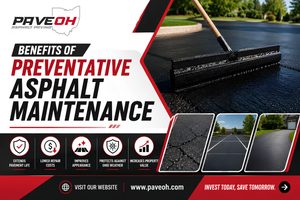
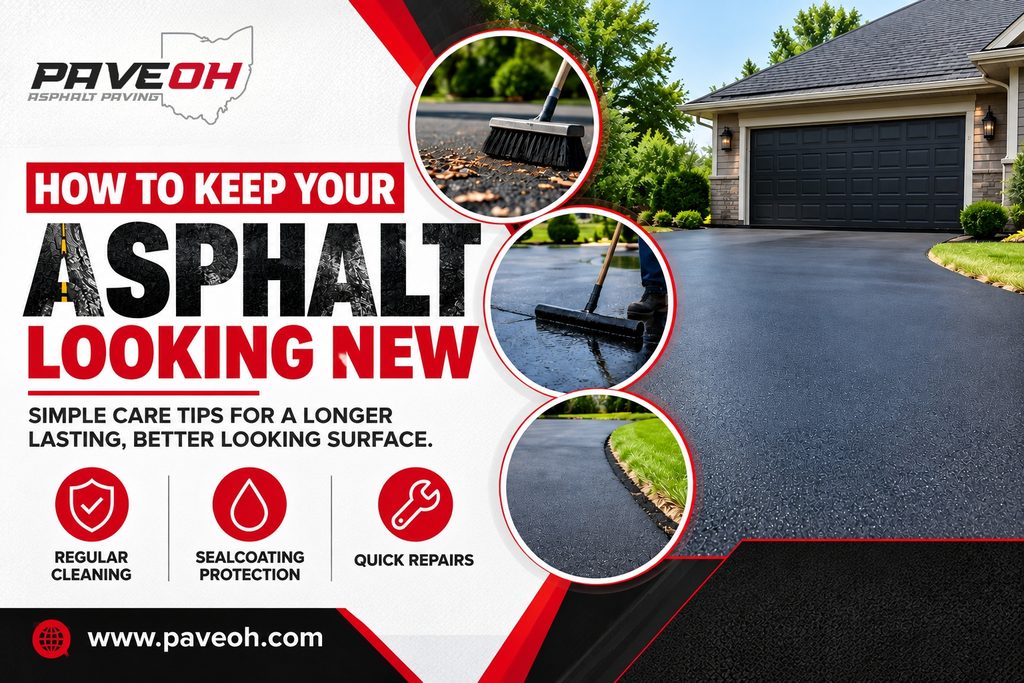
How Can You Keep Asphalt Looking New? How can an asphalt driveway or parking area continue looking clean and well-maintained years after installation? The answer is consistent asphalt appearance maintenance. Asphalt naturally changes because of sunlight, moisture, traffic, temperature fluctuations, and everyday use, but regular care can help preserve its appearance and surface performance.
Pave OH explains that proper maintenance can help preserve the strength, appearance, and value of residential asphalt. Recommended care includes cleaning spills, maintaining drainage, filling small cracks, and applying sealcoating when appropriate.
For pavement that has become noticeably worn but remains structurally sound, asphalt resurfacing can provide a new surface layer that improves both appearance and performance. Pave OH describes resurfacing as a solution for aging pavement where the existing base remains suitable for an overlay.
1. Keep the Asphalt Surface Clean
One of the easiest ways to maintain asphalt’s appearance is regular cleaning.
Leaves, dirt, mud, grass clippings, and other debris can accumulate on pavement. Oil and chemical spills can also leave noticeable stains.
Pave OH recommends regularly cleaning asphalt and removing oil, gas, and chemical spills promptly.
A simple cleaning routine can help you:
- Remove surface debris
- Identify new cracks
- Spot potholes early
- Prevent stains from becoming more noticeable
- Maintain a cleaner overall appearance
Keeping the pavement clean also makes it easier to recognize changes that may require professional attention.
2. Address Cracks Before They Become More Noticeable
Small cracks can quickly make otherwise attractive asphalt look aged.
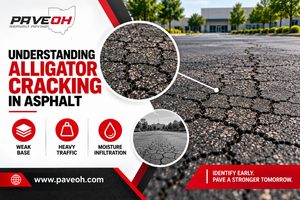
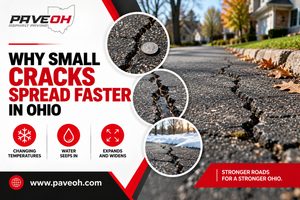
More importantly, cracks shouldn’t be treated as purely cosmetic. They can allow water to reach vulnerable areas of the pavement.
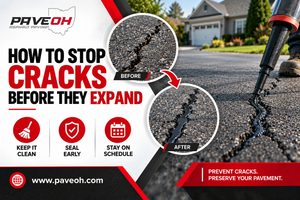
Pave OH recommends filling small cracks promptly to prevent them from expanding.
Regular crack maintenance can help maintain a more uniform appearance while also supporting the long-term condition of the pavement.
Watch for:
- Hairline cracks
- Long longitudinal cracks
- Transverse cracks
- Cracks around pavement edges
- Cracks around repaired areas
If cracking becomes widespread, the pavement should be evaluated rather than simply covered with a cosmetic treatment.
3. Use Sealcoating to Refresh Suitable Asphalt
Sealcoating is one of the most recognizable ways to improve the appearance of aging asphalt.
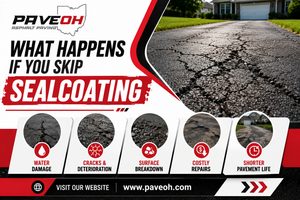
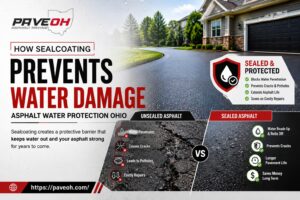
Pave OH explains that driveway sealing can restore the dark appearance of asphalt while providing protection against moisture, oxidation, weather exposure, and everyday traffic.
A properly maintained sealcoated surface can provide:
- A darker appearance
- More uniform surface color
- Protection from environmental exposure
- Reduced surface wear
- Improved curb appeal
However, sealcoating is a maintenance treatment—not a replacement for structural repairs.
If the pavement has extensive structural damage, resurfacing or another repair method may be more appropriate.
4. Maintain Proper Drainage
Water is one of the biggest concerns for asphalt pavement.
Standing water can leave stains and contribute to deterioration over time. Pave OH recommends ensuring that water runoff flows away from the driveway and that pooling is prevented.
Check your asphalt after heavy rainfall.
If water consistently collects in the same area, investigate the cause.
Possible concerns include:
- Low spots
- Poor grading
- Blocked drainage
- Edge problems
- Settlement
Fixing drainage problems can help protect both the appearance and performance of the pavement.
5. Clean Oil and Chemical Spills Quickly
Vehicle fluids can create some of the most noticeable stains on asphalt.
Oil, gasoline, and other chemicals should not be allowed to remain on the surface unnecessarily.
Pave OH specifically recommends cleaning oil, gas, and chemical spills promptly as part of residential asphalt maintenance.
This is particularly important around:
- Driveways
- Parking spaces
- Garages
- Commercial parking lots
- Loading areas
Regularly checking areas where vehicles park or turn can help you identify spills before they become persistent stains.
6. Avoid Unnecessary Damage to the Surface
Everyday vehicle use naturally contributes to asphalt wear, but certain habits can accelerate visible deterioration.
Avoid unnecessary:
- Sharp turns while stationary
- Excessive heavy loading
- Parking directly on weak edges
- Leaving heavy equipment in one location for extended periods
Pave OH notes that asphalt surfaces need to withstand daily traffic and changing weather conditions, making proper use and maintenance important to long-term performance.
For newer asphalt, following recommended curing and usage requirements is particularly important.
7. Pay Attention to Pavement Edges
The edges of a driveway or parking lot can sometimes deteriorate faster than the main driving surface.
Edge deterioration can make otherwise attractive pavement look unfinished or neglected.
Check for:
- Crumbling edges
- Cracks
- Vegetation growth
- Soil erosion
- Water flowing along the pavement edge
Keeping edges clean and addressing drainage issues can help maintain a more finished appearance.
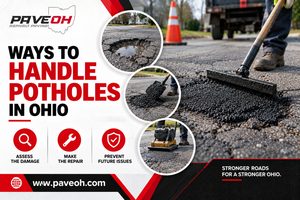
8. Repair Potholes Promptly
A pothole can dramatically change the appearance of an otherwise well-maintained driveway or parking area.
More importantly, potholes can become larger if the underlying cause isn’t addressed.
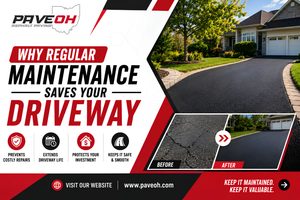
Pave OH explains that timely asphalt repairs can extend pavement life, improve safety, enhance appearance, and prevent minor problems from developing into more significant damage.
If a pothole appears, don’t simply focus on filling the visible hole. The surrounding pavement and underlying conditions should also be considered.
9. Consider Resurfacing When the Surface Looks Worn
Sometimes routine maintenance is no longer enough to restore the appearance of aging pavement.
If asphalt has widespread surface wear but the underlying pavement remains structurally sound, resurfacing may be an option.
Pave OH describes asphalt resurfacing as the application of a new asphalt layer over a properly prepared existing pavement surface. It can restore smoothness, improve appearance, and extend pavement service life without completely replacing the existing structure.
Resurfacing may be appropriate when:
- Surface wear is widespread
- The asphalt looks significantly aged
- Minor surface imperfections are numerous
- The foundation remains stable
- The pavement needs a renewed surface
A professional evaluation should determine whether resurfacing is appropriate.
10. Understand the Difference Between Maintenance and Resurfacing
Not every worn-looking driveway needs resurfacing.
A basic maintenance treatment may be enough when the pavement remains in good condition.
| Pavement Condition | Possible Approach |
|---|---|
| Clean, sound asphalt | Routine maintenance |
| Small cracks | Crack filling/sealing |
| Faded but sound surface | Sealcoating |
| Localized potholes | Asphalt repair |
| Widespread surface wear | Resurfacing evaluation |
| Major structural failure | Deeper repair or replacement |
Pave OH explains that resurfacing is most suitable when the existing pavement has sufficient structural integrity to support a new asphalt layer.
11. Maintain Asphalt After Resurfacing
A newly resurfaced pavement still needs regular care.
Resurfacing creates a renewed surface, but it doesn’t eliminate the need for maintenance.
Pave OH recommends routine maintenance such as sealcoating to help protect resurfaced asphalt and maintain its durability over time.
After resurfacing, property owners should continue to:
- Keep the surface clean
- Monitor cracks
- Maintain drainage
- Remove spills promptly
- Inspect for potholes
- Follow recommended curing requirements
- Schedule appropriate preventative treatments
Good maintenance helps preserve the appearance of the new surface.
12. Protect Asphalt From Ohio Weather
Columbus asphalt experiences changing weather throughout the year.
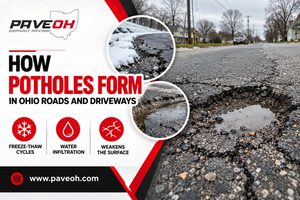
Rain, snow, freezing temperatures, thawing conditions, sunlight, and temperature changes can all affect pavement.
Pave OH explains that Columbus asphalt surfaces are exposed to seasonal temperature changes, moisture, and consistent traffic.
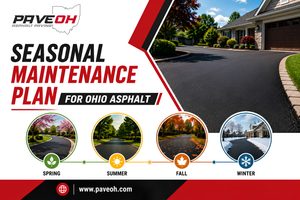
A maintenance plan should therefore include inspections before and after demanding seasonal conditions.
Spring
Check for winter-related cracks and potholes.
Summer
Monitor surface wear and consider appropriate sealcoating.
Fall
Address suitable cracks and drainage problems before winter.
Winter
Monitor potholes, standing water, and other developing damage.
13. Keep Pavement Markings and Edges Looking Clean
For commercial properties, asphalt appearance isn’t only about the pavement itself.
Parking lines, accessible parking markings, directional arrows, and other markings contribute to the overall appearance of a parking area.
When pavement is resurfaced, new markings can help create a clean and organized finished appearance.
Pave OH notes that resurfacing can improve the appearance of parking areas while maintaining safe and efficient traffic flow.
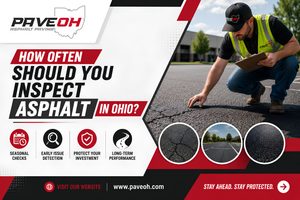
14. Inspect Asphalt Regularly
The best appearance-maintenance strategy is not waiting until the pavement looks severely damaged.
Regular inspections can reveal problems while they are still relatively small.
During an inspection, look for:
- Fading
- Cracks
- Potholes
- Oil stains
- Raveling
- Standing water
- Edge deterioration
- Uneven areas
- Damaged patches
Pave OH recommends regular inspections and early attention to minor pavement problems as part of its asphalt maintenance guidance.
15. Know When Appearance Problems Indicate Something More Serious
A faded surface is not necessarily a structural problem.
However, appearance changes accompanied by cracking, potholes, rutting, settlement, or widespread deterioration may indicate that the pavement needs more than cosmetic maintenance.
For example, resurfacing is intended for pavement that has surface deterioration while maintaining adequate structural integrity.
A professional assessment can help determine whether the right approach is:
Maintenance → Repair → Resurfacing → Replacement
rather than automatically selecting the most extensive option.
Simple Asphalt Appearance Maintenance Checklist
| Maintenance Task | Purpose |
|---|---|
| Sweep regularly | Removes dirt and debris |
| Clean spills | Helps prevent staining and deterioration |
| Inspect cracks | Identifies problems early |
| Fill appropriate cracks | Limits moisture entry |
| Maintain drainage | Reduces standing water |
| Repair potholes | Restores smoothness and appearance |
| Sealcoat suitable asphalt | Protects and refreshes the surface |
| Inspect after winter | Identifies seasonal damage |
| Consider resurfacing when needed | Renews worn but structurally sound pavement |
When Is Asphalt Resurfacing a Better Choice?
If the pavement is simply faded, sealcoating may be enough.
But if the surface has become extensively worn, rough, or uneven while the underlying structure remains sound, resurfacing may provide a more substantial visual and functional improvement.
Pave OH’s resurfacing process includes inspection, surface preparation, potential milling and leveling, repair of damaged areas, application of a new asphalt layer, and compaction.
This process is designed to create a smooth, uniform surface rather than simply covering visible imperfections.
Final Thoughts
Keeping asphalt looking new requires more than making the surface darker or repairing visible defects. Effective asphalt appearance maintenance combines regular cleaning, crack care, spill removal, drainage management, inspections, sealcoating when appropriate, and timely repairs.
For pavement that remains structurally sound but has developed widespread surface wear, asphalt resurfacing can provide a new surface layer that improves both appearance and performance. Pave OH explains that resurfacing can restore smoothness, enhance aesthetics, improve durability, and extend pavement life without requiring complete pavement replacement.
For asphalt resurfacing in Columbus Ohio, Pave OH evaluates the existing pavement before recommending resurfacing. The company considers factors such as pavement condition, surface wear, base stability, drainage, and intended use to determine whether resurfacing is appropriate.
The simplest approach is to keep asphalt clean, address small problems early, maintain drainage, protect suitable surfaces, and consider resurfacing when ordinary maintenance can no longer restore the desired appearance and performance.