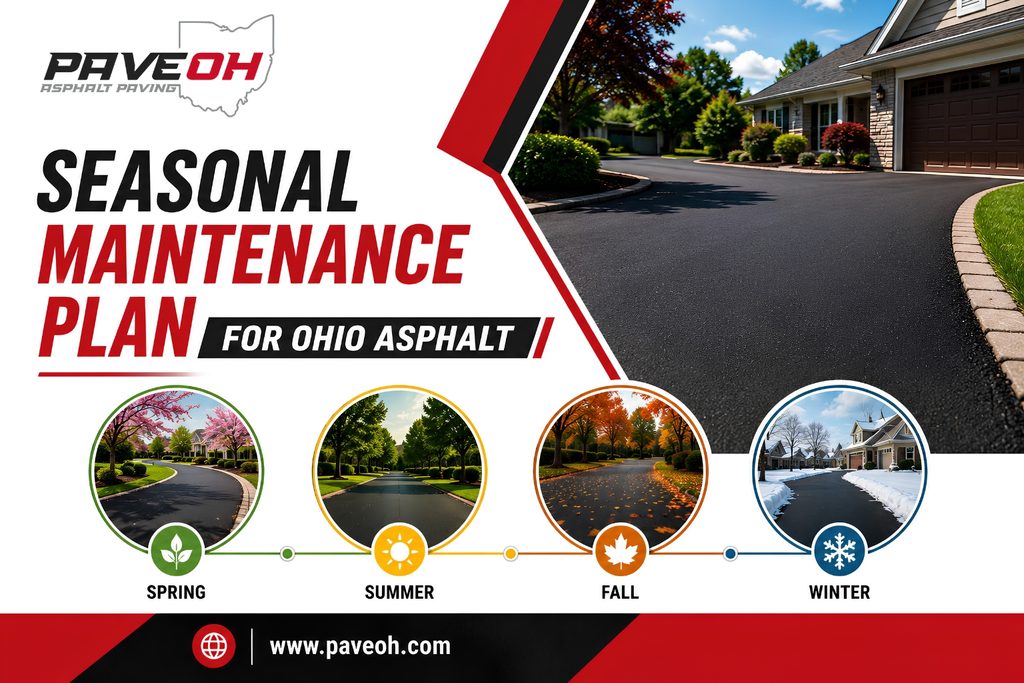
How Can a Seasonal Maintenance Plan Protect Ohio Asphalt? How can Ohio property owners keep asphalt in good condition through changing weather? A consistent seasonal asphalt care Ohio plan can help identify problems early, protect pavement from moisture, and keep minor deterioration from developing into larger repairs.
Ohio asphalt experiences very different conditions throughout the year. Winter brings freezing temperatures, snow, ice, and freeze-thaw cycles, while summer can expose pavement to heat, sunlight, and heavy traffic. ODOT identifies thermal cracking, potholes, rutting, edge cracking, and moisture-related deterioration among pavement distresses that can affect asphalt.
Pave OH also recommends proactive driveway care, including cleaning spills, maintaining drainage, filling small cracks, and sealcoating approximately every two to three years when appropriate.
A seasonal plan doesn’t mean every pavement needs the same treatment. Instead, it provides a practical framework for checking pavement condition and addressing problems at the appropriate time.
Why Seasonal Asphalt Maintenance Matters in Ohio
Ohio’s changing seasons place different stresses on asphalt.
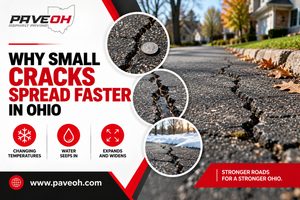
During winter, moisture can enter cracks and freeze. ODOT identifies freeze-thaw action as a contributing factor in several pavement problems, including certain potholes and pavement failures.
Summer presents different challenges. Higher temperatures can affect asphalt behavior, while sunlight and oxidation contribute to aging. Heavy vehicle traffic can also accelerate surface wear.
Because the causes of deterioration change throughout the year, maintenance should change with them.
A simple yearly cycle is:
Spring inspection → Summer protection → Fall preparation → Winter monitoring
Spring Asphalt Maintenance
Spring is one of the most important times to inspect Ohio asphalt.
Winter conditions can reveal cracks, potholes, drainage problems, and areas of pavement weakness that were not obvious before freezing temperatures arrived.
1. Inspect the Entire Pavement
Walk or visually survey the driveway, parking lot, or pavement area and look for:
- New cracks
- Enlarged cracks
- Potholes
- Depressed areas
- Raveling
- Edge deterioration
- Standing-water locations
- Damaged patches
ODOT recommends reviewing pavement distress and examining drainage conditions when evaluating pavement problems.
Don’t only inspect areas that already had problems. Winter damage can develop in previously unaffected sections.
2. Repair Winter Potholes
Potholes should be evaluated after winter, particularly when they appear larger or deeper than minor surface imperfections.
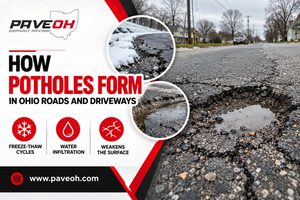
ODOT identifies poor drainage, weak pavement or base conditions, and repeated freeze-thaw cycles as factors that can contribute to localized structural potholes.
A proper repair should address the actual cause where necessary rather than simply filling the visible hole.
Pave OH also recommends proactive seasonal care to help prevent potholes and identifies spring inspections and crack sealing as useful maintenance measures.
3. Check Drainage After Winter
Spring rain can reveal drainage problems.
Look for:
- Standing water
- Low areas
- Eroded edges
- Blocked drainage paths
- Water flowing across pavement
- Repeated puddling
ODOT specifically recommends reviewing drainage systems and checking for surface water pooling, inadequate drainage, blocked outlets, and subsurface water infiltration when evaluating pavement condition.
If water consistently collects in the same location, the issue may involve grading or drainage rather than the asphalt surface alone.
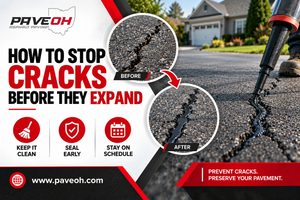
4. Address Cracks Early
Spring is a useful time to identify cracks that developed or expanded during winter.
Not every crack requires the same treatment. ODOT’s pavement guidance differentiates repair strategies according to the type and severity of cracking.
For suitable cracks, timely sealing can help limit moisture entry and slow further deterioration.
Pave OH similarly recommends filling small cracks before they expand.
Summer Asphalt Maintenance
Summer is a good time to focus on surface protection and monitoring.
Ohio asphalt can experience higher pavement temperatures, intense sunlight, and continued traffic during the warmer months.
5. Keep the Surface Clean
Regularly remove:
- Leaves
- Dirt
- Mud
- Debris
- Grass clippings
- Other loose material
Pave OH recommends keeping residential asphalt clean and removing oil, gas, and chemical spills promptly.
Cleaning also makes it easier to see new cracks, stains, and surface deterioration.
6. Remove Oil and Chemical Spills Promptly
Oil and other vehicle-related fluids can affect asphalt surfaces.
If spills are left untreated, they can create stains and potentially contribute to surface deterioration.
A simple summer maintenance routine should include checking areas where vehicles frequently park or stop.
Pave OH specifically recommends prompt cleaning of oil, gas, and chemical spills as part of residential asphalt care.
7. Consider Sealcoating When Appropriate
Sealcoating can be part of a preventative maintenance program when pavement is in suitable condition.
Pave OH recommends sealcoating residential asphalt approximately every two to three years to help protect against UV exposure and weather.
Its driveway sealing guidance notes that late spring through early fall can provide suitable conditions for sealcoating when temperatures remain consistently above 50°F during both day and night, allowing the material to cure properly.
Sealcoating is not a substitute for repairing major structural damage. Cracks, potholes, and underlying pavement failures should be evaluated before applying a surface treatment.
8. Monitor Heavy-Traffic Areas
Summer is also a good time to monitor areas that experience repeated vehicle loading.
Pay particular attention to:
- Driveway entrances
- Parking spaces
- Turning areas
- Loading zones
- Commercial entrances
- Areas used by heavier vehicles
Look for rutting, depressions, surface deformation, or cracking.
ODOT defines rutting as longitudinal surface depressions in vehicle wheel paths caused by permanent deformation of pavement layers or the subgrade.
If a problem repeatedly appears in a high-traffic area, it may require professional evaluation.
Fall Asphalt Maintenance
Fall is the preparation season.
The goal is to identify vulnerabilities before winter introduces freezing temperatures, snow, and ice.
9. Perform a Pre-Winter Inspection
Before temperatures drop significantly, inspect the entire pavement again.
Check:
- Cracks
- Potholes
- Drainage
- Edges
- Low areas
- Previous repair locations
- Surface deterioration
This gives property owners an opportunity to address appropriate problems before winter.
10. Make Sure Water Can Drain Away
Fall is an ideal time to check drainage before snow and freezing conditions arrive.
Clear leaves and debris from drainage paths and make sure water can move away from the pavement.
This is particularly important because water infiltration and poor drainage can contribute to pavement deterioration and freeze-thaw-related damage.
11. Seal Appropriate Cracks Before Winter
Cracks that remain open before winter may provide pathways for moisture.
ODOT identifies crack sealing as a corrective strategy for certain types of asphalt cracking, including some thermal and block cracking conditions.
A professional should determine whether crack sealing is appropriate based on crack type and severity.
The goal is to prevent manageable surface problems from becoming more vulnerable during winter.
12. Check Pavement Edges
Edges deserve special attention before winter.
ODOT notes that edge cracking can be associated with inadequate pavement structure, poor drainage, frost heave, and vehicles traveling close to pavement edges.
Look for:
- Crumbling edges
- Edge cracks
- Erosion
- Grass or soil encroachment
- Water flowing along the edge
Addressing drainage and edge problems can be an important part of preparing pavement for winter.
Winter Asphalt Maintenance
Winter requires a different approach.
Rather than performing extensive routine surface treatments, the focus should generally shift toward monitoring and protecting the pavement from additional damage.
13. Monitor Snow and Ice Conditions
Snow removal can place physical stress on pavement, particularly where equipment repeatedly contacts damaged edges or existing defects.
After significant winter weather, inspect the pavement when conditions allow.
Look for:
- Newly exposed potholes
- Enlarged cracks
- Damaged edges
- New depressions
- Areas where water may collect and refreeze
14. Watch for Freeze-Thaw Damage
Freeze-thaw cycles are one of the major reasons winter matters for Ohio asphalt.
ODOT explains that cold temperatures can create thermal stresses as asphalt contracts, contributing to thermal cracking. It also identifies freeze-thaw action as a contributing factor in certain potholes and pavement failures.
A useful winter strategy is therefore to monitor existing pavement weaknesses rather than waiting until spring to discover them.
15. Address Urgent Damage When Necessary
Some pavement problems cannot wait until spring.
A deep pothole, major pavement failure, or serious drainage problem may require attention during winter depending on its severity and the available repair method.
ODOT construction documents distinguish between repairs performed when asphalt plants are operating during the construction season and winter repairs using cold-patch materials when plants are closed.
This illustrates why winter pavement repair can differ from warm-weather asphalt work.
Seasonal Ohio Asphalt Maintenance Checklist
| Season | Main Focus | What to Check |
|---|---|---|
| Spring | Winter damage | Cracks, potholes, drainage, edges |
| Summer | Protection | Surface condition, spills, traffic wear, sealcoating |
| Fall | Winter preparation | Cracks, drainage, pavement edges |
| Winter | Monitoring | Freeze-thaw damage, potholes, water and ice |
This schedule is a general framework. The appropriate maintenance frequency depends on pavement age, traffic, drainage, construction quality, and existing condition.
How Often Should You Inspect Ohio Asphalt?
A practical approach is to inspect asphalt at least twice each year, with additional checks after severe weather.
Spring
Look for winter-related damage.
Summer
Monitor surface wear and maintenance treatments.
Fall
Prepare the pavement for winter.
Winter
Monitor significant problems and respond to urgent deterioration when appropriate.
Pave OH’s own maintenance guidance emphasizes proactive care, including regular inspections, crack filling, drainage management, and periodic sealcoating.
Common Seasonal Asphalt Mistakes
Ignoring Small Cracks
Small cracks can become larger when exposed to moisture and repeated temperature changes.
Waiting Until Spring to Think About Winter
Fall is the time to identify drainage and crack problems before freezing conditions arrive.
Applying Sealcoat at the Wrong Time
Sealcoating requires appropriate weather and curing conditions. Pave OH recommends late spring through early fall when temperatures remain suitable.
Ignoring Drainage
Water pooling can contribute to pavement deterioration and should be investigated.
Treating Structural Problems as Surface Problems
Sealcoating or crack filling cannot correct every underlying pavement failure. ODOT notes that visible surface distress can sometimes mask deeper problems in the base or subgrade.
When Should You Call a Professional?
Homeowners and property managers can perform basic visual inspections, but professional evaluation is useful when the pavement shows significant deterioration.
Consider professional assistance when you notice:
- Widespread cracking
- Repeated potholes
- Deep depressions
- Severe rutting
- Significant edge failure
- Persistent standing water
- Repairs that repeatedly fail
- Large areas of pavement deterioration
A professional can determine whether the pavement needs localized maintenance, resurfacing, milling, or deeper reconstruction.
Pave OH provides asphalt paving, repair, driveway sealing, resurfacing, and related pavement services throughout Central Ohio. Its maintenance information emphasizes evaluating pavement condition and addressing problems proactively.
A Simple Year-Round Asphalt Care Plan
The entire strategy can be reduced to four stages:
Spring: Inspect and Repair
Identify winter damage, check drainage, and address appropriate cracks and potholes.
Summer: Protect and Monitor
Keep the pavement clean, remove spills, monitor traffic wear, and consider sealcoating when conditions are suitable.
Fall: Prepare
Inspect again, clear drainage paths, and address suitable cracks and other vulnerabilities before winter.
Winter: Monitor
Watch for freeze-thaw damage, potholes, and drainage problems, and address urgent issues when necessary.
This approach keeps pavement maintenance organized rather than reactive.
Final Thoughts
A successful seasonal asphalt care Ohio plan is less about performing the same maintenance every few months and more about responding to the specific challenges each season creates. Spring is primarily a time to identify winter damage. Summer is useful for cleaning, monitoring, and appropriate surface protection. Fall provides an opportunity to prepare pavement for freezing conditions, while winter requires careful monitoring of freeze-thaw-related problems.
Ohio’s pavement guidance shows why this seasonal approach matters: freeze-thaw action, thermal stresses, poor drainage, moisture infiltration, rutting, cracking, and potholes can all affect asphalt performance.
For homeowners, one of the simplest strategies is to inspect in spring and fall, maintain drainage, address cracks appropriately, clean spills, and use sealcoating when the pavement and weather conditions are suitable. Pave OH similarly recommends regular driveway care, including crack filling, drainage management, cleaning, and periodic sealcoating.
With consistent seasonal attention, Ohio property owners can better understand how their pavement is changing and address suitable maintenance needs before deterioration becomes more extensive. For asphalt paving, repair, resurfacing, and driveway maintenance in Central Ohio, Pave OH offers services designed around the condition and needs of the existing pavement.