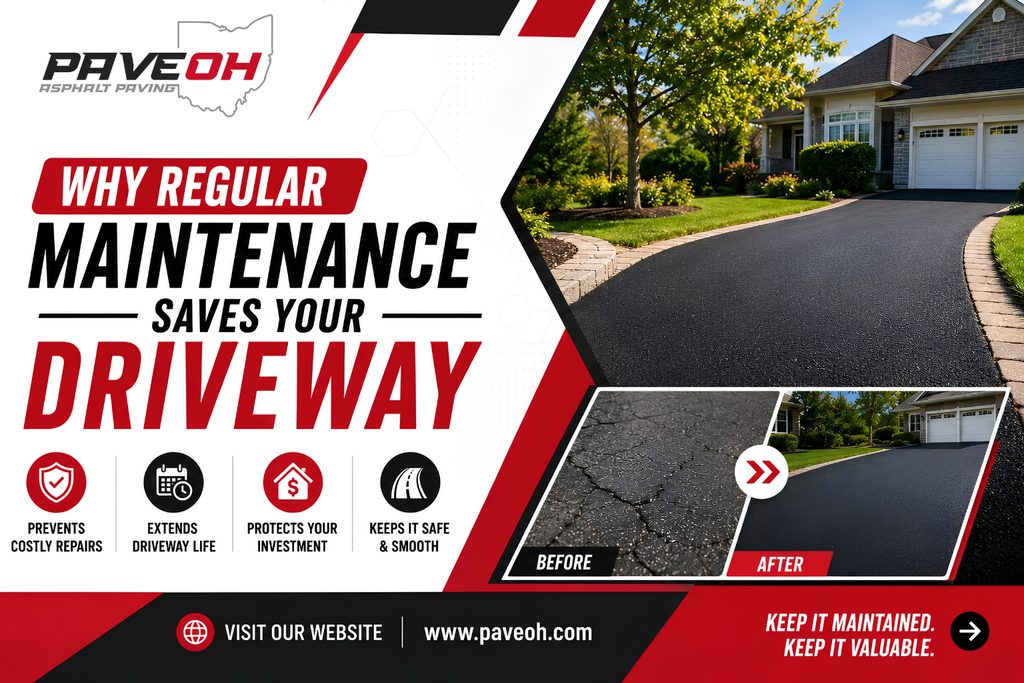
Why Does Regular Asphalt Maintenance Matter for Ohio Driveways? Can regular maintenance really save an asphalt driveway from expensive problems? Yes. Understanding the asphalt maintenance benefits Ohio homeowners can gain starts with one simple principle: small pavement problems are generally easier to address than advanced deterioration.
Ohio driveways face changing weather, moisture, freezing temperatures, summer sunlight, and everyday vehicle traffic. Pave OH notes that routine maintenance such as sealcoating and crack repair can help keep residential asphalt attractive and functional for years.
Regular maintenance does not mean repairing every minor mark immediately. Instead, it means inspecting the driveway, identifying developing problems, and choosing an appropriate treatment before manageable deterioration becomes a larger pavement issue.
What Happens When a Driveway Is Not Maintained?
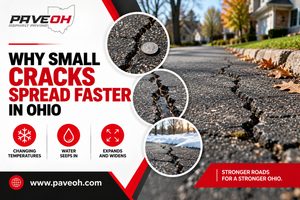
Asphalt gradually changes as it ages. Sunlight can contribute to oxidation, while water can enter cracks and vulnerable areas. Vehicle traffic and seasonal temperature changes add additional stress.
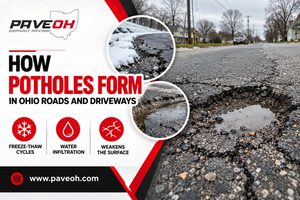
Pave OH identifies water infiltration, UV exposure, freeze-thaw cycles, traffic, and lack of maintenance among common contributors to asphalt deterioration.
A neglected driveway may gradually progress from:
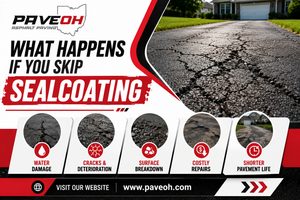
Minor cracks → larger cracks → potholes → wider deterioration → more extensive repairs
Regular maintenance aims to interrupt that progression.
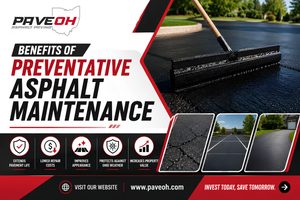
1. Regular Maintenance Can Extend Driveway Life
One of the most important benefits of maintaining asphalt is preserving the pavement for longer.
Pave OH states that a properly built residential asphalt driveway can last more than 20 years with appropriate maintenance. Its driveway replacement guidance also indicates that correctly installed asphalt can last approximately 20–30 years with proper care.
Maintenance cannot make an asphalt driveway last indefinitely, but it can help protect the investment by addressing conditions that contribute to premature deterioration.
2. Crack Filling Can Prevent Problems From Spreading
Small cracks may appear relatively harmless, but they can provide pathways for moisture.
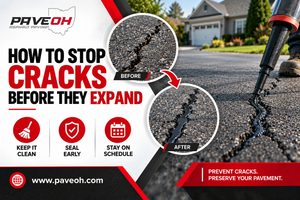
Pave OH recommends filling small cracks promptly rather than allowing them to expand. Its residential driveway guidance specifically lists crack filling as part of routine maintenance.
Regular crack maintenance can help:
- Reduce moisture entry
- Limit crack expansion
- Protect surrounding pavement
- Maintain a cleaner appearance
- Reduce the likelihood of more extensive deterioration
The appropriate repair depends on the crack’s size, pattern, and underlying cause.
3. Sealcoating Helps Protect the Surface
Sealcoating is another important maintenance treatment for suitable asphalt.
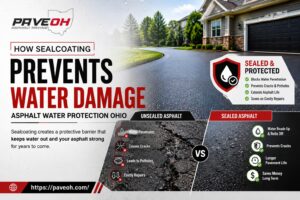
Pave OH explains that driveway sealing helps protect asphalt from moisture, oxidation, weather exposure, and daily vehicle use.
A properly applied sealcoat creates a protective layer over the pavement.
It can help protect against:
- Sunlight
- Moisture
- Oil and chemicals
- Surface wear
- Weather exposure
Pave OH recommends sealcoating approximately every 2–3 years for residential driveways, although the appropriate schedule depends on pavement condition and other factors.
4. Maintenance Can Reduce Repair Costs
One of the practical asphalt maintenance benefits Ohio homeowners may notice is better control over repair needs.
Pave OH states that early asphalt repairs can help prevent more extensive and costly damage.
For example, addressing an isolated crack is fundamentally different from repairing an area where cracking has progressed into widespread pavement failure.
This doesn’t mean every small defect will inevitably become a major repair. Rather, regular maintenance gives homeowners an opportunity to identify problems before deciding what action is appropriate.
5. Proper Drainage Protects the Driveway
Water management is one of the most important parts of driveway maintenance.
Pave OH emphasizes proper grading and drainage during driveway construction and explains that pooling water can contribute to cracking, potholes, erosion, and other pavement problems.
Homeowners should watch for:
- Standing water after rainfall
- Low spots
- Water flowing toward the driveway
- Eroded edges
- Blocked drainage paths
If water repeatedly collects in one location, simply applying a surface treatment may not solve the underlying issue. The drainage or grading condition should be evaluated.
6. Regular Cleaning Protects the Surface
Driveways collect leaves, dirt, mud, oil, and other contaminants.
Routine cleaning helps maintain the appearance of the pavement and makes it easier to spot changes.
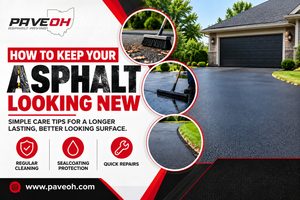
Pave OH recommends sweeping away debris and cleaning oil, fuel, and chemical spills promptly as part of driveway care.
A clean driveway also makes cracks, stains, potholes, and drainage problems easier to identify during routine inspections.
7. Maintenance Helps Preserve Curb Appeal
Your driveway is one of the most visible parts of a residential property.
Faded asphalt, weeds around edges, cracks, stains, and potholes can make an otherwise well-maintained property look neglected.
Pave OH describes residential asphalt driveways as contributing to both everyday functionality and curb appeal.
Regular maintenance can help preserve:
- A darker pavement appearance
- Cleaner edges
- Smoother surfaces
- Fewer visible cracks
- A more consistent overall appearance
Sealcoating can also restore a darker finish when the pavement is suitable for treatment.
8. Preventative Care Helps With Ohio Weather
Ohio weather creates several challenges for asphalt.
Driveways experience:
- Freezing temperatures
- Thawing conditions
- Rain
- Snow
- Sunlight
- Temperature fluctuations
Pave OH specifically designs residential driveway installations around Central Ohio’s seasonal conditions and emphasizes proper drainage, base preparation, and maintenance.
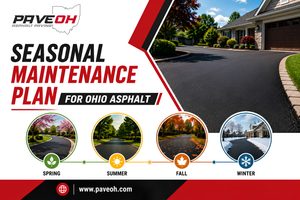
Maintenance before and after winter is particularly useful because seasonal changes can reveal cracks, potholes, drainage problems, and other weaknesses.
9. Regular Inspections Help Find Problems Earlier
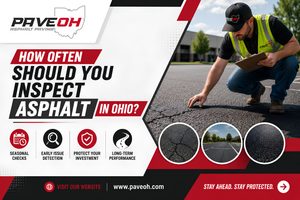
Maintenance starts with inspection.
Homeowners don’t need specialized equipment to perform a basic visual check. Walk around the driveway periodically and look for changes.
Check for:
Cracks: Are existing cracks getting wider?
Potholes: Have small damaged areas developed into holes?
Drainage: Does water remain after rain?
Edges: Are the pavement edges crumbling?
Surface: Is the asphalt becoming unusually rough or faded?
Stains: Are oil or chemical spills becoming common?
Pave OH recommends regular inspections and early attention to minor problems as part of residential asphalt care.
10. Timely Repairs Can Improve Safety
Damaged pavement isn’t only an appearance issue.
Potholes, uneven areas, and deteriorated sections can create hazards for vehicles and pedestrians.
Pave OH identifies improved safety as one benefit of addressing asphalt repairs promptly.
Keeping the driveway relatively smooth and free of significant pavement hazards helps make everyday access easier for homeowners, visitors, and service vehicles.
11. Maintenance Helps Protect Your Asphalt Investment
A new asphalt driveway represents an investment in the property.
Proper installation is important, but maintenance afterward also matters.
Pave OH’s driveway installation information emphasizes site preparation, grading, drainage, compaction, and appropriate asphalt installation. It then recommends ongoing maintenance such as sealcoating and crack repair to keep the driveway attractive and functional.
The basic idea is:
Good installation + regular maintenance = better long-term pavement care
Maintenance cannot correct poor construction or major structural problems, but it can help preserve properly constructed pavement.
12. Maintenance Can Delay Major Rehabilitation
Eventually, every asphalt driveway reaches the point where maintenance alone is no longer enough.
However, regular care can help homeowners avoid prematurely moving from minor maintenance directly to major rehabilitation.
Pave OH offers several levels of asphalt service, including crack repair, sealcoating, resurfacing, and driveway replacement.
The appropriate solution depends on the pavement’s actual condition.
A driveway may move through stages such as:
Routine maintenance → localized repairs → resurfacing → replacement
Not every driveway will require every stage, and timing varies according to construction quality, drainage, traffic, weather, and maintenance history.
13. Regular Maintenance Makes Problems Easier to Track
A homeowner who checks the driveway regularly can compare its condition over time.
For example, you may notice that:
- A crack has remained stable
- A drainage issue is becoming more frequent
- A pothole is growing
- A repaired area remains stable
- Surface fading is increasing
Keeping simple photographs and dates can make these changes easier to recognize.
This information can also help a paving professional understand how quickly a problem has developed.
14. Heavy Traffic Areas Need Extra Attention
Not every part of a driveway experiences the same amount of stress.
Areas where vehicles repeatedly turn, park, or stop may experience more wear.
Pay particular attention to:
- Garage entrances
- Turning areas
- Frequently used parking locations
- Driveway edges
- Areas where delivery vehicles regularly pass
If deterioration repeatedly appears in the same location, there may be an underlying drainage, base, loading, or installation issue that needs evaluation.
15. Maintenance Should Match the Driveway’s Condition
There is no single maintenance treatment that works for every driveway.
For example:
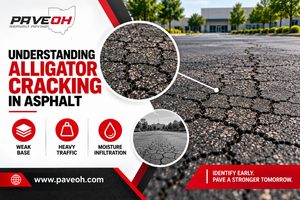
Minor cracks
May require crack filling or sealing.
Faded but structurally sound asphalt
May be a candidate for sealcoating.
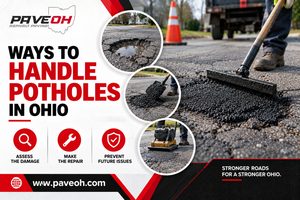
Localized potholes
May require patching.
Widespread surface deterioration
May require resurfacing or another rehabilitation strategy.
Major structural failure
May require deeper repair or replacement.
Pave OH emphasizes evaluating pavement condition, drainage, grading, traffic demands, and intended use when determining an appropriate paving solution.
Simple Asphalt Maintenance Schedule for Ohio Homeowners
| Maintenance Task | Suggested Timing |
|---|---|
| Visual inspection | Regularly |
| Spring damage check | After winter |
| Fall inspection | Before winter |
| Remove debris | As needed |
| Clean oil/chemical spills | Promptly |
| Address small cracks | When identified |
| Check drainage | After heavy rainfall |
| Sealcoating | Often every 2–3 years, depending on condition |
| Professional evaluation | When significant deterioration appears |
These are general guidelines. Actual maintenance timing should be based on the driveway’s condition and exposure.
7 Simple Ways to Protect Your Driveway
1. Keep it clean
Sweep away leaves, dirt, and loose debris.
2. Remove spills quickly
Clean oil, fuel, and chemical spills promptly.
3. Watch for cracks
Don’t ignore newly appearing or expanding cracks.
4. Maintain drainage
Make sure water isn’t repeatedly pooling on the pavement.
5. Consider sealcoating
Use sealcoating when the asphalt is suitable for preventative protection.
6. Repair potholes early
Address localized damage before it expands.
7. Inspect regularly
Look at the driveway throughout the year, especially after winter and severe weather.
Pave OH’s residential driveway guidance recommends many of these same practices, including prompt spill cleanup, crack filling, drainage management, and periodic sealcoating.
When Should You Call a Professional?
Routine visual maintenance can be handled by homeowners, but professional evaluation becomes useful when the condition is difficult to determine.
Consider requesting an assessment if you see:
- Extensive cracking
- Repeated potholes
- Large sunken areas
- Severe rutting
- Persistent standing water
- Significant edge deterioration
- Repairs that repeatedly fail
- Large areas of pavement deterioration
Pave OH evaluates factors such as existing pavement condition, drainage, grading, and base conditions when developing paving recommendations.
Final Thoughts
The asphalt maintenance benefits Ohio homeowners receive are closely connected to timing. Regular inspections, crack repair, cleaning, drainage management, sealcoating, and timely repairs can help preserve a driveway before deterioration becomes more extensive.
Pave OH specifically recommends routine maintenance such as sealcoating and crack repair for residential asphalt and notes that proactive care can help preserve strength, appearance, and value. Its driveway sealing information also explains that maintenance helps protect asphalt against moisture, UV exposure, oxidation, and daily vehicle use.
The key is not to wait until the driveway looks severely damaged. A simple maintenance routine—inspect, clean, protect, repair, and monitor—can help homeowners understand their pavement’s condition and address appropriate problems at the right time.
For Central Ohio homeowners, Pave OH provides residential asphalt paving, driveway sealing, crack repair, resurfacing, replacement, and related pavement services. Its approach considers the property’s existing conditions, drainage, grading, traffic, and intended use when recommending asphalt solutions.