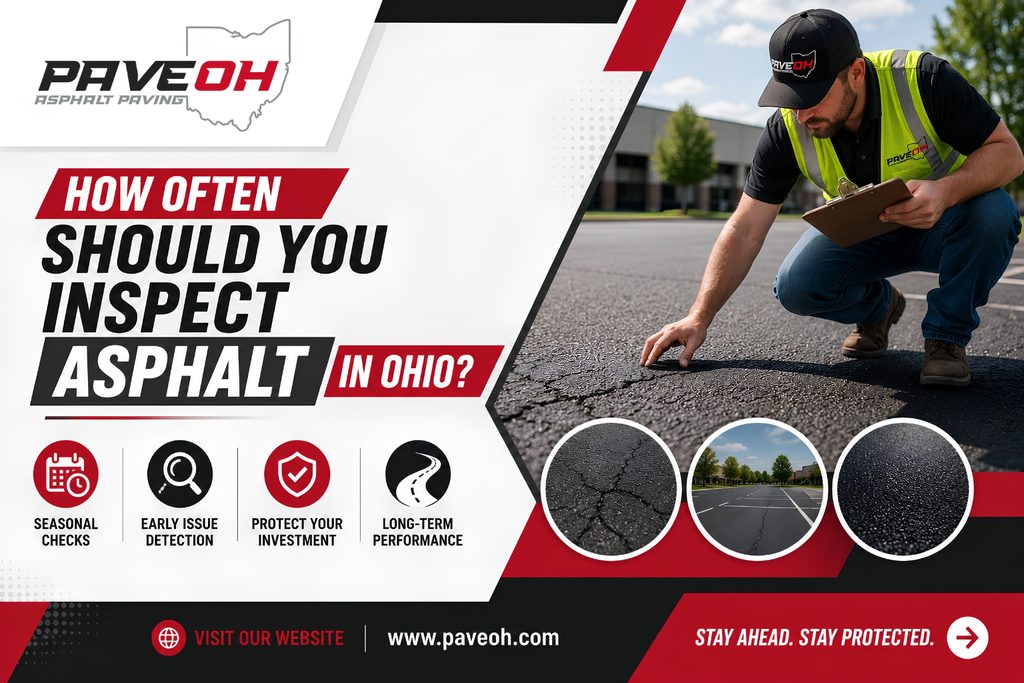
How often should you inspect your asphalt in Ohio? For most property owners, a visual inspection at least twice a year particularly in spring and fall is a practical starting point. Additional checks are worthwhile after severe weather, major temperature changes, or whenever you notice a new pavement problem.
Ohio’s changing weather makes regular inspections especially important. Freeze-thaw cycles can allow water to enter existing cracks and contribute to pavement deterioration. The Ohio Department of Transportation’s pavement repair guidance also recommends systematic inspection, documentation of pavement distress, and conducting inspections under dry conditions so cracks and potholes are easier to identify.
Regular inspections don’t necessarily mean scheduling a professional assessment every few months. Paving Services in Columbus Ohio help property owners can perform basic visual checks themselves and arrange professional evaluations when they identify signs of deterioration.
Why Regular Asphalt Inspections Matter in Ohio
Asphalt rarely fails without warning.
Small cracks, drainage issues, surface wear, and isolated depressions can appear before more extensive deterioration develops. Finding these conditions early gives property owners an opportunity to determine whether simple maintenance or more substantial repairs are appropriate.
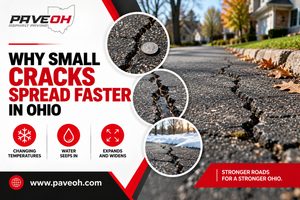
This is particularly relevant in Ohio because pavement can experience repeated transitions between freezing and thawing conditions. Water can enter pavement cracks, freeze, expand, and contribute to widening or deterioration.
A regular inspection helps answer an important question:
Is the pavement still in good condition, or is a developing problem beginning to require attention?
1. Inspect Asphalt at Least Twice a Year
For many residential driveways and commercial parking areas, a spring and fall inspection provides a useful baseline.
Spring inspection
Spring is important because winter conditions may reveal:
- New cracks
- Potholes
- Surface deterioration
- Edge damage
- Drainage problems
- Areas of settlement
ODOT’s pavement guidance specifically recommends pavement distress surveys and notes that inspections should be performed when pavement is dry and visible.
Fall inspection
Fall provides an opportunity to identify problems before another winter.
Look for cracks or low areas that could allow water to enter or collect during the colder months.
2. Check Asphalt After Severe Weather
A twice-yearly schedule should not prevent additional inspections.
Check the pavement after events such as:
- Heavy rainfall
- Severe winter weather
- Significant snow and ice
- Major temperature swings
- Flooding or standing water
- Other unusually damaging conditions
Severe weather can expose weaknesses that weren’t visible during a routine inspection.
If water begins collecting in a previously dry area, for example, that may indicate a developing drainage or grading issue.
3. Pay Special Attention to Cracks
Cracks are among the easiest pavement problems to identify.
During an inspection, look for:
- Hairline cracks
- Long linear cracks
- Cracks at pavement edges
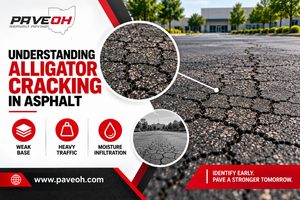
- Interconnected cracking
- Cracks around drainage structures
- Areas where existing cracks have widened
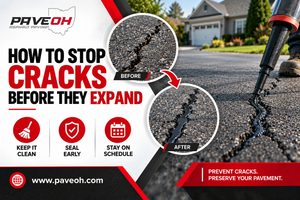
Small cracks do not always require major repairs, but they should be monitored.
In Ohio, this is particularly important because moisture entering cracks can contribute to damage during freeze-thaw cycles.
4. Look for Potholes
Potholes are a more advanced sign of pavement deterioration.
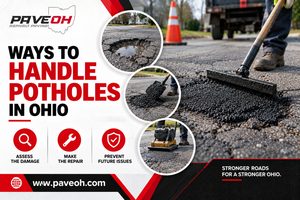
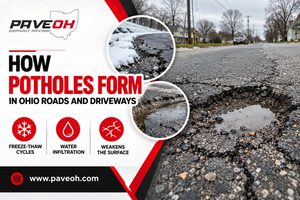
They can develop when water enters pavement and repeated traffic and temperature changes contribute to the breakdown of the affected area.
During spring inspections, pay particular attention to locations that experienced cracking or standing water during the previous season.
If a pothole appears, addressing it promptly can help prevent the damaged area from becoming larger.
5. Inspect for Standing Water
Water management is an important part of pavement maintenance.
After rainfall, observe whether water drains normally or remains in specific areas.
Watch for:
- Persistent puddles
- Low spots
- Water near pavement edges
- Blocked drainage paths
- Water collecting around cracks
ODOT recommends inspecting pavement under dry conditions so pavement distress is visible, but observing the pavement after rainfall can also help identify drainage concerns.
If water repeatedly collects in the same location, the problem may require more than routine surface maintenance.
6. Examine Pavement Edges
Asphalt edges can deteriorate faster than the middle of the pavement.
Check areas where asphalt meets:
- Grass
- Soil
- Concrete
- Curbs
- Driveway entrances
- Drainage areas
Look for crumbling, cracking, erosion, or separation.
Keeping pavement edges maintained can help prevent water and vegetation from contributing to additional deterioration.
7. Watch for Surface Texture Changes
Not every pavement problem starts as a crack.
Changes in surface texture can also provide useful warning signs.
During an inspection, look for:
- Loose aggregate
- Rough areas
- Surface wear
- Faded pavement
- Uneven texture
- Areas that appear significantly different from surrounding asphalt
A change in appearance doesn’t automatically mean the pavement has structural problems, but it is worth documenting and monitoring.
8. Inspect High-Traffic Areas More Frequently
Not every part of a property experiences the same amount of stress.
Areas receiving frequent vehicle traffic may require closer monitoring than lightly used pavement.
For example, commercial properties should pay attention to:
- Main entrances
- Delivery areas
- Turning lanes
- Loading zones
- Frequently used parking spaces
- Areas where heavy vehicles operate
The more heavily a pavement area is used, the more useful regular monitoring becomes.
9. Keep an Inspection Record
For larger parking lots or commercial properties, don’t rely entirely on memory.
ODOT’s pavement repair guidance recommends reviewing pavement history, including previous overlays, pavement age, maintenance history, and progression of distress as part of pavement evaluation.
A simple inspection record can include:
| Item | What to Record |
|---|---|
| Inspection date | When the pavement was checked |
| Weather | Recent conditions |
| Cracks | Location and approximate severity |
| Potholes | Number and location |
| Drainage | Standing water or runoff concerns |
| Surface condition | Roughness, wear, or deterioration |
| Previous repairs | What was repaired and when |
| Recommended action | Monitor, maintain, repair, or evaluate |
Taking photographs from similar positions during each inspection can also make changes easier to recognize over time.
10. Inspect Before and After Winter
Ohio’s winter conditions make seasonal inspection particularly useful.
Before winter, look for cracks, drainage issues, and other vulnerabilities.
After winter, inspect again for new damage.
This creates a simple cycle:
Fall inspection → Winter exposure → Spring inspection → Repair/maintenance → Summer monitoring
Repeated inspection helps property owners understand how their pavement responds to Ohio weather.
11. Don’t Wait Until Asphalt Looks Severely Damaged
One of the biggest mistakes in pavement maintenance is waiting until the problem becomes obvious.
A small crack is easier to monitor and address than widespread cracking. A developing drainage issue is easier to investigate before it contributes to extensive pavement deterioration.
Regular inspections are therefore primarily about early detection.
The goal isn’t to repair every minor imperfection immediately. Instead, it is to understand what is changing and determine when action is appropriate.
12. Know When to Request a Professional Inspection
A visual inspection is useful, but some pavement problems require professional evaluation.
Consider requesting an assessment if you notice:
- Rapidly expanding cracks
- Extensive interconnected cracking
- Repeated potholes
- Significant settlement
- Deep ruts
- Persistent standing water
- Large areas of deterioration
- Problems returning after previous repairs
A professional can help determine whether the issue is primarily surface-related or whether deeper pavement, base, drainage, or subgrade problems may be involved.
13. Inspect Asphalt Before Major Maintenance
Inspection should come before decisions about treatments such as repairs, resurfacing, or replacement.
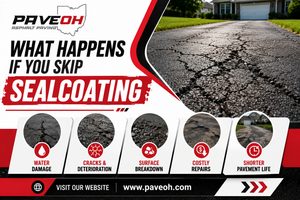
For example, sealcoating may be appropriate for sound pavement with relatively minor surface deterioration, while extensive structural problems may require a different approach.
Similarly, an asphalt overlay may be useful when existing pavement is suitable for rehabilitation, but it isn’t a substitute for correcting serious underlying failures.
Understanding the pavement’s current condition helps property owners choose the appropriate maintenance strategy.
14. Use Professional Documentation for Larger Properties
Commercial parking lots and larger pavement networks can benefit from more structured inspections.
ODOT recommends planning pavement distress surveys in advance, considering the area being surveyed, traffic patterns, safety requirements, and appropriate tools for recording findings.
For larger properties, an inspection program can divide pavement into sections and track conditions over time.
This makes it easier to identify:
- Which areas deteriorate fastest
- Where drainage problems occur
- Which repairs have already been completed
- Whether deterioration is progressing
- Where maintenance should be prioritized
15. Make Spring Your Main Damage-Check Season
Spring is particularly valuable for Ohio pavement inspections.
Winter weather can expose cracks, potholes, drainage problems, and other weaknesses. Recent Ohio paving guidance similarly emphasizes spring inspection because freeze-thaw conditions can reveal new pavement damage.
A spring inspection should include the entire pavement rather than only obvious problem areas.
Walk or visually survey:
- Main pavement areas
- Edges
- Drainage locations
- Parking areas
- Driveway entrances
- High-traffic sections
- Previously repaired locations
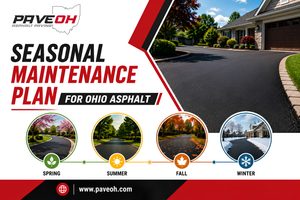
Asphalt Inspection Schedule for Ohio
| Inspection | Recommended Timing | Main Purpose |
|---|---|---|
| Spring | After winter | Identify freeze-thaw damage |
| Summer | As needed | Monitor wear, traffic, and surface condition |
| Fall | Before winter | Identify cracks and drainage concerns |
| After severe weather | As needed | Check for new or accelerated damage |
| Professional evaluation | When problems appear | Determine appropriate repair strategy |
This is a general maintenance framework rather than a mandatory schedule. Pavement age, traffic, construction quality, drainage, and condition can all change how frequently a property should be inspected.
What Should You Look for During an Asphalt Inspection?
A simple inspection can follow a consistent checklist.
Surface
Is the pavement generally smooth and intact?
Cracks
Are cracks appearing, widening, or becoming interconnected?
Potholes
Are there new holes or failed pavement sections?
Drainage
Does water collect in specific areas?
Edges
Are the pavement edges breaking down?
Texture
Are some areas unusually rough or loose?
Settlement
Are there depressions or uneven sections?
Previous repairs
Are repaired areas remaining stable?
Documenting these observations can help you recognize changes between inspections.
How Ohio Weather Influences Inspection Frequency
Weather doesn’t affect every pavement in exactly the same way.
A well-built, well-drained driveway may remain stable for years with routine inspections. A heavily trafficked parking lot with drainage problems may require much closer monitoring.
Ohio’s freeze-thaw conditions are particularly important because water entering pavement cracks can freeze and expand, contributing to crack growth and pavement deterioration.
Therefore, inspection frequency should reflect the property’s exposure and pavement condition rather than relying solely on a fixed calendar.
Final Thoughts
So, how often should you inspect asphalt in Ohio? For many properties, checking pavement at least twice a year once in spring and again in fall is a sensible maintenance routine, with additional inspections after severe weather or whenever new problems appear.
The purpose of an inspection isn’t simply to find damage. It is to identify changes early enough that property owners can make informed maintenance decisions. ODOT’s pavement guidance supports systematic distress identification, documentation, and inspection under conditions where pavement problems can be clearly observed.
Ohio’s freeze-thaw environment makes this especially important. Moisture entering cracks can freeze and expand, gradually worsening pavement weaknesses. Regular inspections can help property owners identify cracks, potholes, drainage problems, surface deterioration, and other warning signs before they become more extensive.
For residential driveways, parking lots, and other asphalt surfaces, a consistent inspection routine combined with timely maintenance and professional evaluation when necessary can help keep pavement in better condition and make long-term asphalt care more predictable.