Are You Waiting Too Long to Sealcoat Your Asphalt? Timing can make the difference between a sealcoating job that lasts for years and one that fails prematurely. Many homeowners and business owners understand that sealcoating protects asphalt, but they often don’t realize that applying it at the wrong time of year—or waiting too long between applications—can reduce its effectiveness. Ohio’s changing seasons create unique challenges for asphalt, including freezing winters, hot summers, heavy rainfall, snow, road salt, and repeated freeze-thaw cycles. Choosing the proper sealcoating timing Ohio helps ensure the sealant cures correctly, bonds to the pavement, and provides maximum protection against weather, moisture, and everyday traffic.
If you’re searching for sealcoating timing Ohio, understanding the right weather conditions and maintenance schedule can significantly extend the life of your driveway or parking lot. At Pave OH, every sealcoating project begins with a thorough inspection of the pavement to determine its condition, age, traffic exposure, and repair needs before recommending the ideal application time. This professional approach helps property owners protect their asphalt investment while reducing future maintenance and repair needs.
Why Timing Matters for Sealcoating
Sealcoating is much more than applying a protective black coating over asphalt. The material must properly bond to the pavement and cure under suitable weather conditions before it can provide long-term protection.
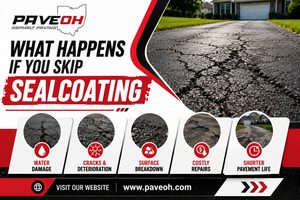
If sealcoating is applied during poor weather conditions, problems may include:
- Slow curing
- Poor adhesion
- Uneven appearance
- Reduced durability
- Premature peeling
- Moisture damage
- Shorter service life
Ohio’s weather changes dramatically throughout the year, making proper scheduling one of the most important factors in successful asphalt maintenance.
Pave OH notes that the best sealcoating results occur when weather conditions allow the coating to cure completely and form a durable protective barrier.
Best Time of Year to Sealcoat in Ohio
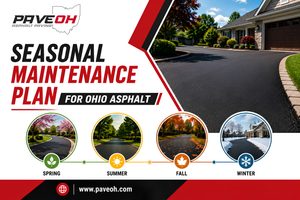
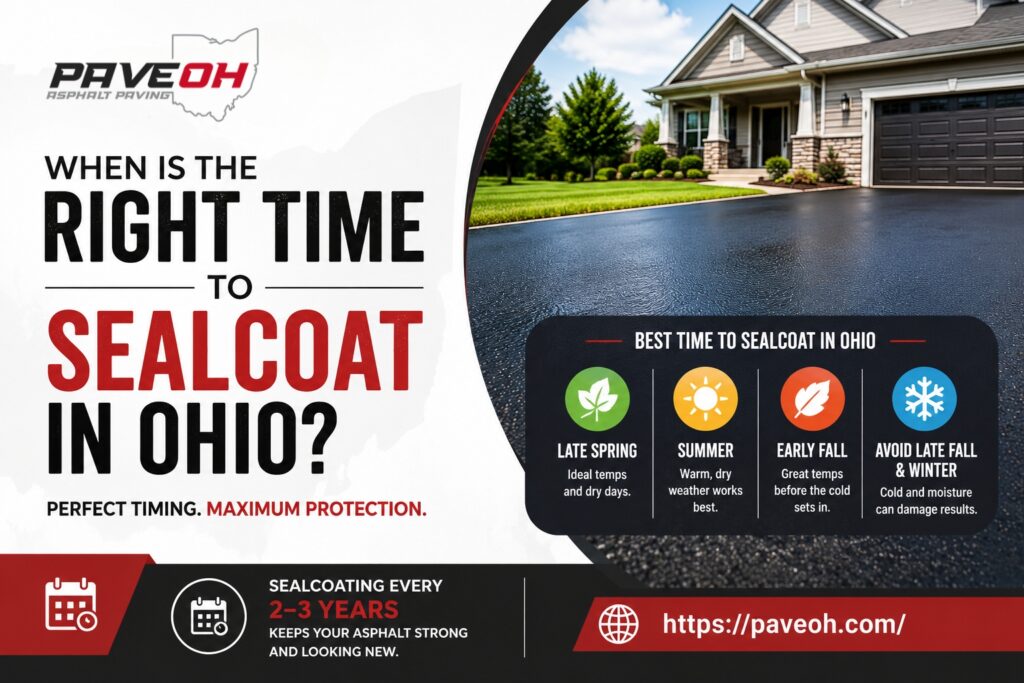
Professional contractors generally recommend scheduling sealcoating between late spring and early fall.
During this period:
- Daytime temperatures remain consistently warm.
- Nighttime temperatures stay above approximately 50°F (10°C).
- Pavement temperatures support proper curing.
- Rainfall can be monitored more effectively.
- The coating dries more uniformly.
These conditions allow the sealant to bond correctly with the asphalt and develop the protective layer needed to resist moisture, oxidation, and traffic wear.
Ohio Sealcoating Season at a Glance
| Season | Recommended? | Reason |
|---|---|---|
| Spring | ✅ Excellent | Warm temperatures and improving weather |
| Summer | ✅ Excellent | Fast curing and ideal application conditions |
| Early Fall | ✅ Very Good | Moderate temperatures before winter |
| Late Fall | ⚠ Limited | Cooler temperatures slow curing |
| Winter | ❌ Not Recommended | Cold weather prevents proper curing |
Scheduling sealcoating before winter helps protect asphalt from snow, moisture, road salt, and freeze-thaw damage.
Ideal Weather Conditions for Sealcoating
Professional contractors monitor weather forecasts carefully before beginning any sealcoating project.
The best conditions generally include:
- Air temperatures above 50°F
- Warm pavement temperatures
- Dry asphalt surface
- No rain expected during curing
- Moderate humidity
- Limited overnight temperature drops
Even if the day appears warm, cool nights or unexpected rainfall can affect how well the sealcoat cures.
According to Pave OH, maintaining proper curing conditions is essential for long-lasting sealcoating performance.
Why Winter Is the Wrong Time
Many property owners wonder if sealcoating can be completed before or during winter.
Unfortunately, cold weather creates several problems.
Low temperatures prevent the sealant from:
- Bonding properly
- Drying evenly
- Reaching full strength
- Creating a durable protective barrier
Snow, frost, and freezing temperatures can also interfere with the curing process.
For these reasons, professional contractors generally avoid sealcoating during winter months.
When Should New Asphalt Be Sealcoated?
One of the most common mistakes is sealcoating brand-new asphalt too soon.
Fresh asphalt contains oils that need time to cure naturally before a protective coating is applied.
Most professionals recommend:
| Asphalt Type | Recommended First Sealcoat |
|---|---|
| New residential driveway | About 6–12 months after installation |
| New commercial parking lot | About 6–12 months after installation |
| Existing pavement | Every 2–3 years depending on condition |
Allowing the pavement to cure first helps ensure better adhesion and longer-lasting protection.
How Often Should Asphalt Be Sealcoated?
Timing is not only about the season—it is also about following a consistent maintenance schedule.
Most Ohio properties benefit from sealcoating every 2–3 years, although several factors may influence the exact interval.
These include:
- Traffic volume
- Sun exposure
- Drainage conditions
- Previous maintenance
- Asphalt age
- Surface condition
Commercial parking lots with heavy traffic may require more frequent maintenance than lightly used residential driveways.
Signs It’s Time to Sealcoat
Rather than relying only on the calendar, property owners should watch for visible signs of wear.
Common indicators include:
- Pavement fading from black to gray
- Small surface cracks
- Dry, rough texture
- Water soaking into the surface instead of beading
- Minor raveling
- Loss of smooth appearance
Scheduling sealcoating before major deterioration develops helps preserve the pavement and reduce repair needs.
Why Proper Surface Preparation Matters
Even perfect weather cannot compensate for poor preparation.
Before sealcoating begins, professional contractors typically:
- Inspect the pavement
- Repair cracks
- Patch damaged areas
- Remove oil stains
- Clean dirt and debris
- Ensure the surface is completely dry
Pave OH explains that surface preparation is a critical step in achieving durable, long-lasting sealcoating results.
Benefits of Sealcoating at the Right Time
| Benefit | Long-Term Result |
|---|---|
| Better curing | Longer-lasting protection |
| Stronger adhesion | Improved durability |
| Moisture resistance | Reduced water damage |
| UV protection | Slower oxidation |
| Improved appearance | Rich black finish |
| Crack prevention | Longer pavement life |
| Easier maintenance | Reduced repair needs |
Proper timing allows property owners to maximize the value of every sealcoating application.
Common Timing Mistakes to Avoid
Many sealcoating problems result from poor scheduling rather than poor materials.
Avoid these common mistakes:
- Applying sealcoat during cold weather
- Scheduling before expected rainfall
- Sealcoating dirty pavement
- Applying over unrepaired cracks
- Sealcoating new asphalt too early
- Waiting too many years between applications
Working with experienced professionals helps avoid these issues while ensuring the pavement receives protection at the appropriate time.
Why Professional Sealcoating Makes a Difference
Professional contractors understand that successful sealcoating depends on much more than simply applying a coating.
Experienced crews carefully evaluate:
- Pavement condition
- Surface preparation
- Weather forecasts
- Pavement temperature
- Traffic requirements
- Curing conditions
This attention to detail helps produce a sealcoating application that protects asphalt for years rather than months.
Pave OH emphasizes that proper preparation, timing, and application are essential for achieving long-term pavement protection.
Why Choose Pave OH?
At Pave OH, we provide professional sealcoating services designed specifically for Ohio’s challenging climate. Our experienced team understands how seasonal weather, freeze-thaw cycles, heavy rainfall, road salt, and daily traffic affect asphalt performance, allowing us to recommend the ideal sealcoating schedule for every property.
Our services include:
- Residential driveway sealcoating
- Commercial parking lot sealcoating
- Asphalt inspections
- Crack filling and sealing
- Asphalt repair
- Parking lot maintenance
- Asphalt resurfacing
- Preventative pavement maintenance
Every project begins with a comprehensive pavement evaluation to determine the best timing, identify existing damage, and ensure the surface is properly prepared before application. Using premium sealcoating materials, proven installation techniques, and years of experience serving Columbus and Central Ohio, our team helps homeowners and businesses extend pavement life, improve curb appeal, and protect their asphalt investment through every season.
Final Thoughts
Choosing the right sealcoating timing Ohio is one of the most effective ways to preserve asphalt and avoid unnecessary repairs. Applying sealcoating during late spring through early fall, after proper surface preparation and under favorable weather conditions, helps create a durable barrier against moisture, UV rays, oxidation, and everyday traffic. Combined with regular inspections and maintenance every 2–3 years, timely sealcoating can significantly extend the life of driveways, parking lots, and commercial pavement.
If you’re unsure whether your asphalt is ready for sealcoating, Pave OH can provide a professional evaluation and recommend the best maintenance schedule for your property. Our experienced paving specialists deliver high-quality sealcoating services that help Ohio property owners protect their pavement, enhance appearance, and maximize long-term performance.