
Why does drainage play such a critical role in the lifespan of asphalt surfaces in Columbus? With frequent rainfall, repeated freeze-thaw cycles, and fluctuating temperatures, moisture poses a constant threat to pavement integrity. Without proper water management, even newly installed asphalt can deteriorate far sooner than expected. For property owners focused on asphalt drainage in Columbus, Ohio, understanding how drainage protects pavement structure is essential for long-term durability and cost control.
Poor drainage doesn’t just cause puddles—it weakens the pavement from below, compromises safety, and accelerates surface failure. When drainage is planned correctly, asphalt surfaces remain stable, flexible, and resistant to cracking even under heavy use and harsh weather conditions. At Pave OH, drainage is treated as a structural requirement rather than an optional feature, because Central Ohio’s weather exposes asphalt to moisture-related damage throughout the year.
Why Drainage Is a Critical Factor in Asphalt Performance
Water is one of the most destructive forces acting on asphalt pavement. While asphalt is designed to handle moisture exposure, it is not designed to remain saturated. In Columbus, where rain, snowmelt, and ice are frequent, drainage plays a direct role in determining how long asphalt surfaces last.
Without proper drainage, water penetrates through surface cracks, joints, and edges, eventually reaching the base layers. Once this happens, the structural integrity of the pavement is compromised, leading to visible damage that often requires costly repairs.
How Water Infiltration Weakens Asphalt Pavement
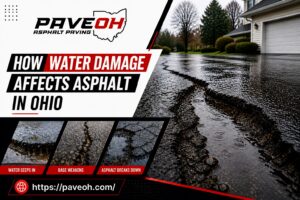
Before discussing specific drainage elements, it’s important to understand how water damages asphalt internally. Pavement failures rarely begin at the surface. Instead, deterioration starts beneath the asphalt layer when moisture disrupts the foundation.
Water infiltration causes:
- Loss of base compaction
- Reduced load-bearing capacity
- Separation of asphalt binder from aggregates
- Increased movement during freeze-thaw cycles
Once the base weakens, surface repairs alone cannot solve the problem. Proper drainage prevents this internal breakdown from occurring in the first place.
Surface Drainage: Keeping Water Moving Away from Asphalt
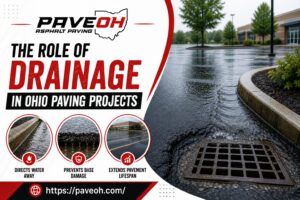
Surface drainage is the first defense against water damage. It controls how rainwater and snowmelt flow across asphalt surfaces rather than allowing it to collect.
Effective surface drainage includes:
- Proper pavement slope
- Smooth transitions without low spots
- Directional flow toward drains or safe runoff areas
Even small areas of standing water can accelerate surface wear and increase slip hazards during colder months.
Subsurface Drainage: Protecting the Pavement Foundation
While surface drainage manages visible water, subsurface drainage removes moisture that penetrates the asphalt layer. This hidden system is critical in Columbus, where moisture can remain trapped beneath pavement for long periods.
Subsurface drainage systems may involve:
- Drainage stone layers
- Filter fabrics
- Perforated drain pipes
These components work together to move water away from the base, preserving structural strength and preventing long-term failure.
The Role of Drainage in Preventing Cracks
Cracks are one of the most common asphalt issues in Columbus, and drainage plays a significant role in their development. When moisture remains under the surface, temperature changes cause expansion and contraction that stress the asphalt layer.
Poor drainage contributes to:
- Longitudinal cracking
- Transverse cracking
- Alligator cracking
By keeping the base dry, proper drainage minimizes internal stress and slows crack formation significantly.
Drainage and Freeze-Thaw Protection in Columbus
Columbus experiences frequent freeze-thaw cycles, making drainage especially important. Water trapped beneath asphalt expands when it freezes, pushing upward and creating surface fractures.
Proper drainage:
- Reduces trapped moisture
- Minimizes frost heave
- Protects asphalt during winter months
Without drainage, even minor surface flaws can quickly turn into major structural damage during cold seasons.
Preventing Potholes Through Drainage Control
Potholes form when water weakens the pavement base and traffic pressure breaks through the surface. In Columbus, potholes often appear after periods of heavy rain followed by freezing temperatures.
Drainage helps prevent potholes by:
- Keeping the base dry and stable
- Reducing internal erosion
- Maintaining consistent pavement support
Pothole prevention starts with controlling water, not just repairing surface damage.
Drainage and Asphalt Load-Bearing Strength
Asphalt is designed to distribute weight across a stable base. When the base becomes saturated, it loses its ability to support traffic loads.
Proper drainage:
- Preserves load distribution
- Prevents rutting and depressions
- Maintains surface smoothness
This is especially important for driveways, parking areas, and access roads exposed to repeated vehicle traffic.
How Drainage Reduces Long-Term Maintenance Costs
Water-related damage is one of the leading causes of premature asphalt repair. Without drainage, property owners face recurring patching, resurfacing, and reconstruction.
Effective drainage:
- Reduces frequency of repairs
- Extends pavement lifespan
- Lowers total cost of ownership
Preventative drainage design is far more cost-effective than reactive maintenance.
Common Drainage Issues Seen in Columbus Asphalt Surfaces
Many asphalt failures can be traced back to avoidable drainage mistakes. These issues often develop slowly but worsen over time.
Common drainage problems include:
- Insufficient slope
- Blocked runoff paths
- Poor edge drainage
- Inadequate base materials
Addressing these issues early helps prevent major pavement failures later.
Safety Benefits of Proper Asphalt Drainage
Standing water creates safety hazards for both vehicles and pedestrians. Poor drainage increases the risk of hydroplaning, slipping, and reduced visibility.
Good drainage:
- Keeps surfaces dry
- Improves traction
- Enhances pedestrian safety
Safety and drainage go hand in hand, particularly in residential and commercial settings.
Drainage Features That Support Long-Lasting Asphalt
| Drainage Feature | Function | Benefit to Asphalt |
|---|---|---|
| Surface Slope | Directs water runoff | Prevents pooling |
| Catch Basins | Collect surface water | Reduces erosion |
| Subsurface Drains | Remove trapped moisture | Protects base layers |
| Permeable Base | Allows controlled drainage | Maintains stability |
| Drainage Outlets | Discharge excess water | Prevents saturation |
Why Drainage Planning Must Happen Early
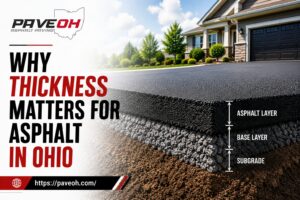
Drainage cannot be added effectively after asphalt is installed. It must be designed as part of the overall paving plan, accounting for soil conditions, elevation, and usage patterns.
Early drainage planning ensures:
- Long-term pavement performance
- Fewer structural issues
- Reduced repair needs
Failing to consider drainage during planning almost always results in higher costs later.
Final Thoughts: Drainage Is the Key to Asphalt Longevity
Asphalt surfaces in Columbus are constantly exposed to moisture and extreme temperatures. Without proper drainage, even high-quality asphalt will fail prematurely. For property owners focused on asphalt drainage Columbus Ohio, prioritizing water management is the smartest way to protect pavement performance and investment. We Pave OH approach asphalt paving in Columbus with a clear focus on managing moisture and temperature-related stress. Frequent rain, snow, and freeze-thaw cycles allow water to infiltrate pavement layers when drainage is inadequate, leading to rapid deterioration even in well-constructed asphalt. Our team assesses site-specific drainage challenges to prevent moisture from compromising pavement structure.
By prioritizing effective water management from the start, we help Columbus property owners safeguard both pavement performance and investment. At Pave OH, drainage is treated as the structural foundation of long-lasting asphalt, ensuring surfaces remain stable, safe, and dependable through Ohio’s changing seasons.