
Have you ever wondered why some asphalt surfaces deteriorate years earlier than expected while others remain strong? In Central Ohio, traffic volume is one of the most decisive factors influencing asphalt lifespan. Constant vehicle movement, weight, and turning stress place ongoing pressure on pavement structures. For roads, driveways, and commercial parking lots, understanding how heavy traffic asphalt Columbus Ohio conditions affect performance is critical for protecting long-term value. With support from Pave OH, property owners can plan asphalt systems that are engineered specifically for Columbus traffic demands and usage patterns.
Repeated Vehicle Loads Cause Structural Fatigue
Every vehicle traveling over asphalt transfers weight through the surface into the base layers. While asphalt is flexible by design, repeated loading gradually causes fatigue. Over time, microscopic stress fractures form beneath the surface and eventually expand into visible cracking.
In Asphalt Paving in Columbus Ohio, traffic fatigue is especially common in areas with frequent stops, starts, and turning movements. Delivery vehicles and service trucks increase pressure exponentially due to heavier axle loads. Without traffic-rated design, asphalt loses structural integrity faster than expected.
Common signs of traffic fatigue include:
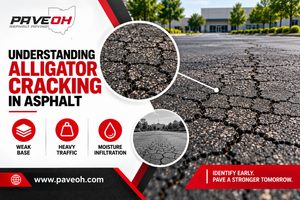
- Alligator cracking in wheel paths
- Surface raveling from material breakdown
- Depressions where vehicles repeatedly stop
- Premature surface roughness
Traffic Volume Determines Required Asphalt Thickness
One of the most overlooked factors in pavement performance is matching asphalt thickness to expected traffic volume. Light-duty residential surfaces require far less structural support than high-traffic areas.
For residential Asphalt Paving in Columbus Ohio, asphalt is typically designed for passenger vehicles and occasional delivery traffic. In contrast, commercial parking lots must support frequent traffic, heavier vehicles, and constant maneuvering. Thicker asphalt layers combined with a well-compacted base distribute loads more effectively and reduce stress concentration.
Traffic-based design considerations include:
- Daily traffic counts
- Vehicle weight classifications
- Load repetition over time
- Stress concentration zones
Failing to design for traffic volume often leads to early cracking and base failure.
High-Traffic Zones Deteriorate Faster Than Open Areas
Not all areas of a paved surface experience the same level of traffic stress. Certain zones consistently receive higher loads and friction, accelerating wear.
High-impact areas include:
- Parking lot entrances and exits
- Loading and unloading zones
- Drive lanes and intersections
- Tight turning radii
In commercial parking lots, these zones deteriorate first if not reinforced properly. Effective heavy traffic asphalt Columbus Ohio solutions account for these stress concentrations by adjusting pavement structure and materials accordingly.
Increased Traffic Requires More Frequent Maintenance
Traffic volume directly affects how often asphalt maintenance is needed. Heavily trafficked surfaces develop cracks earlier, allowing moisture and air to penetrate the pavement structure. Once water enters, deterioration accelerates rapidly.
Regular maintenance for high-traffic asphalt typically includes:
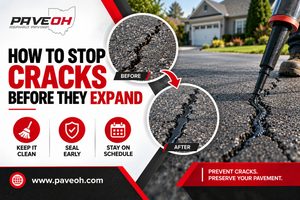
- Early crack sealing to prevent moisture intrusion
- Sealcoating to slow oxidation
- Patching high-stress areas
- Monitoring rutting and surface deformation
Property owners who manage traffic-related wear proactively often extend pavement lifespan by many years compared to reactive repair approaches.
Traffic Stress Amplifies Climate-Related Damage
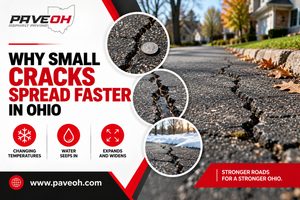
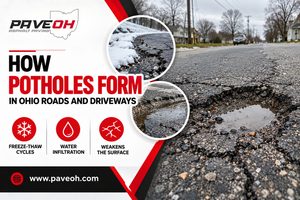
Columbus experiences significant seasonal temperature fluctuations, and traffic stress intensifies climate-related damage. Freeze-thaw cycles exploit traffic-induced cracks, forcing them to expand as moisture freezes and thaws beneath the surface.
During warmer months, asphalt softens slightly, making it more susceptible to rutting under heavy vehicles. When combined with frequent traffic, this leads to uneven surfaces and structural weakness. This interaction makes traffic-aware design essential for long-term durability in Asphalt Paving in Columbus Ohio.
Climate and traffic together can cause:
- Faster crack expansion
- Surface distortion
- Base layer movement
- Reduced pavement service life
Professional Traffic Analysis Improves Pavement Performance
Accurately predicting traffic volume requires experience and technical evaluation. Professional paving experts in Columbus Ohio assess how a site will be used—not just how it looks at installation.
Traffic analysis considers:
- Peak usage times
- Vehicle types and weights
- Turning frequency
- Long-term growth in traffic demand
This level of planning ensures asphalt is engineered for real-world conditions, whether for residential driveways or high-demand commercial applications.
Final Thought
Long-term asphalt performance depends heavily on how well pavement is designed to handle traffic stress. When heavy traffic asphalt Columbus Ohio, are engineered with proper thickness, base support, and maintenance planning, they resist premature failure despite constant use.
At Pave OH, our focus is on delivering asphalt solutions built around actual traffic demand, not assumptions. From residential projects to high-volume commercial parking lots, we help property owners achieve stronger pavement, lower maintenance costs, and longer-lasting results across Columbus’s busiest paved surfaces.