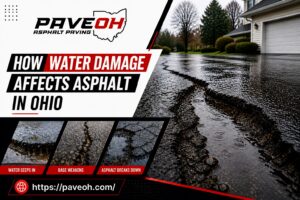

Is poor drainage quietly undermining your pavement? Proper water management is one of the most overlooked yet critical aspects of long-term pavement performance. In Columbus, where rainfall and freeze-thaw cycles are common, ineffective drainage can rapidly compromise even well-installed asphalt. Standing water seeps into surface cracks, saturates the base, and expands during freezing temperatures—accelerating structural failure and pothole formation.
Understanding the right asphalt drainage Columbus Ohio practices helps property owners prevent premature deterioration and costly reconstruction. With expert evaluation and drainage planning from our paving service in Ohio, Columbus property owners can implement grading adjustments, improved runoff systems, and sub-base solutions that keep asphalt surfaces strong, stable, and long-lasting.
1. Design Proper Surface Slope from the Start
The foundation of any effective drainage system begins with correct pavement grading. Asphalt surfaces must be installed with a precise slope that directs water away from the pavement and toward designated drainage points. In Columbus, even slight grading errors can allow water to pool, especially during heavy rain or snowmelt.
A properly sloped surface ensures that water flows naturally instead of sitting on the pavement. This reduces moisture infiltration and minimizes freeze-thaw damage during winter months. Professional grading also helps prevent uneven settling over time.
Key slope considerations:
- Positive drainage away from structures
- Consistent grading across the surface
- Proper crown design for drive lanes
- Smooth transitions to drainage points
2. Install and Maintain Effective Drainage Structures
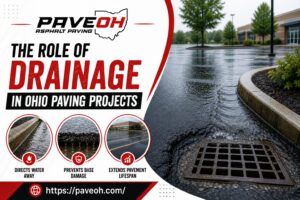
Surface slope alone is not enough functional drainage infrastructure is equally important. Catch basins, trench drains, and stormwater systems must be properly placed and regularly maintained to handle Columbus rainfall and snowmelt.
Clogged or poorly positioned drains allow water to back up onto the pavement surface. Over time, this standing water weakens the asphalt binder and the underlying base. Routine cleaning and inspection of drainage components ensure they continue performing as intended.
Essential drainage components:
- Catch basins
- Trench drains
- Stormwater inlets
- Underground piping systems
3. Protect Pavement Edges from Water Intrusion
Pavement edges are particularly vulnerable to water damage. When water seeps into unprotected edges, it can erode the base layer and cause cracking or crumbling along the perimeter. In Columbus, freeze-thaw cycles make edge protection even more critical.
Proper edge support, grading, and shoulder stabilization help keep water from infiltrating these weak points. Regular inspections should focus on identifying early signs of edge deterioration before structural problems develop.
Edge protection strategies:
- Maintain proper shoulder support
- Seal edge cracks promptly
- Ensure side drainage flow
- Monitor for edge raveling
4. Address Standing Water Immediately
Even small areas of standing water can significantly shorten asphalt lifespan. In Columbus, pooled water freezes during winter, expands, and accelerates surface cracking. During warmer months, standing water softens asphalt and promotes surface breakdown.
Property owners should regularly inspect pavement after storms to identify low spots or drainage failures. Early correction—such as localized leveling or drainage adjustments—prevents more extensive damage later.
Warning signs to watch:
- Persistent puddles after rain
- Depressed pavement areas
- Soft or spongy asphalt spots
- Recurring potholes in the same location
5. Incorporate Routine Maintenance into Your Plan
Even well-designed drainage systems require ongoing maintenance. Over time, debris accumulation, soil movement, and normal wear can reduce drainage efficiency. A proactive maintenance schedule helps ensure water continues to flow properly away from asphalt surfaces.
Routine inspections should include checking slopes, clearing drains, sealing cracks, and evaluating surface condition. Preventive maintenance is far less expensive than repairing water-related structural damage.
Recommended maintenance actions:
- Annual drainage inspections
- Regular drain cleaning
- Prompt crack sealing
- Surface condition monitoring
6. Understand Columbus Weather Challenges
Columbus experiences significant seasonal variation, including heavy rain, snow, and freeze-thaw cycles. These conditions place extra stress on asphalt drainage systems. Designing for local weather patterns is essential for long-term performance.
Drainage systems must be capable of handling rapid snowmelt and sudden storms. Materials and grading should also account for winter expansion and contraction cycles. Local expertise plays a key role in designing systems that perform year-round.
Drainage Strategy Comparison
| Drainage Method | Best Use Case | Key Benefit |
|---|---|---|
| Surface grading | Driveways & lots | Promotes natural runoff |
| Catch basins | Parking lots | Handles heavy rainfall |
| Trench drains | High-flow areas | Controls concentrated water |
| Edge drainage | Pavement borders | Prevents base erosion |
7. Work with Experienced Professionals
Effective drainage design requires technical knowledge, proper equipment, and familiarity with local conditions. Poorly planned systems often lead to recurring water problems and expensive repairs. Professional evaluation ensures the right combination of grading, structures, and materials.
Experienced contractors understand Columbus soil behavior, weather patterns, and traffic demands. Their expertise helps property owners avoid common drainage mistakes and maximize pavement lifespan.
Conclusion
Effective water management is one of the most critical factors in preserving asphalt pavement in Columbus. Without proper grading, functional catch basins, and well-designed drainage pathways, water can infiltrate the pavement structure and accelerate cracking, base failure, and surface deterioration, especially during freeze-thaw cycles. Our team prioritizes drainage planning as a structural safeguard, not just a surface feature.
By integrating proper slope design, drainage infrastructure, and routine maintenance, property owners can significantly reduce moisture-related damage. With professional guidance from Pave OH, Columbus asphalt surfaces remain stable, safe, and cost-efficient even under demanding Midwest weather conditions.