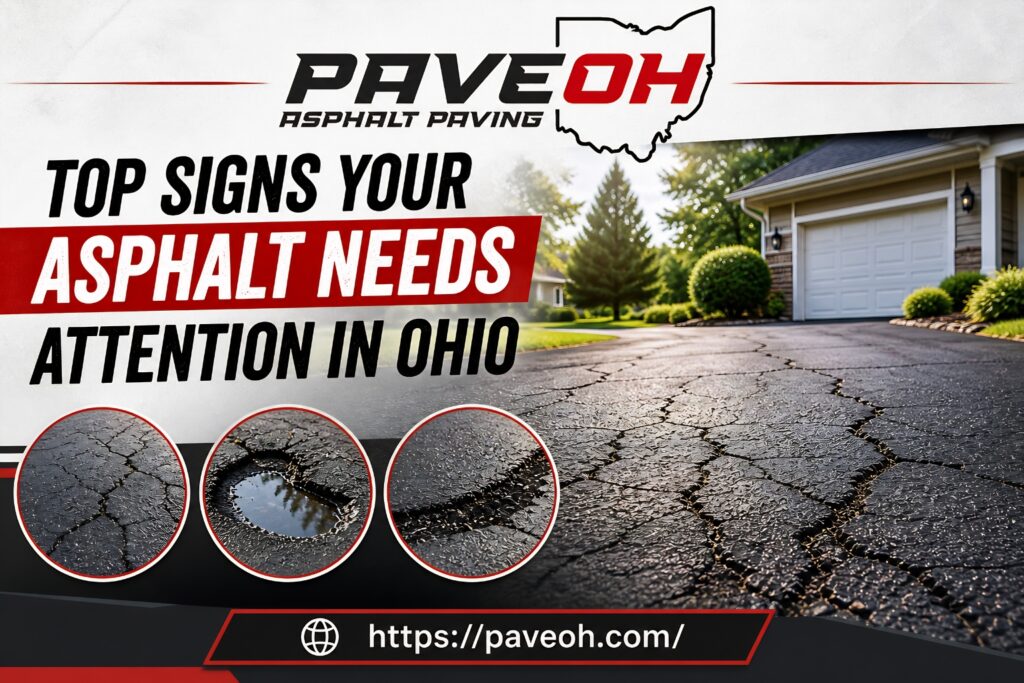
Are you ignoring small asphalt cracks that could turn into major pavement damage? Ohio’s unpredictable weather can be extremely tough on asphalt surfaces. From freezing winters and road salt exposure to hot summers and heavy rainfall, pavement in Central Ohio constantly expands, contracts, and weakens under environmental stress. Over time, these conditions create visible asphalt warning signs Ohio property owners should pay close attention to, including alligator cracking, potholes, rutting, edge deterioration, raveling, and surface fading. While these issues may appear minor at first, they often indicate deeper structural problems developing beneath the surface. In Columbus and surrounding areas, freeze–thaw cycles are especially damaging because water enters small cracks, freezes, expands, and gradually breaks apart the pavement structure. Identifying these warning signs early can help homeowners and commercial property owners avoid expensive asphalt replacement projects later.
Knowing when to repair, seal, or resurface asphalt is essential for maintaining safe and durable pavement in Ohio’s demanding climate. Some forms of surface wear can be corrected with preventive maintenance, while widespread cracking or potholes may require professional repair. Working with experienced asphalt paving contractors who understand local weather patterns and pavement challenges can significantly improve the lifespan and performance of your asphalt surfaces.
Ohio Climate Factors & Pavement Stress
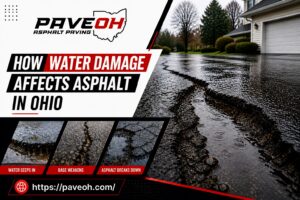
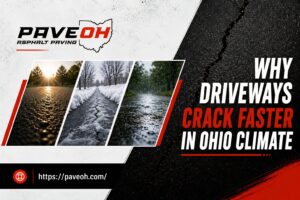
Central Ohio’s freeze–thaw cycles and precipitation are primary culprits. Each winter, temperatures typically oscillate above and below freezing dozens of times. When water seeps into tiny pavement fissures and freezes, it expands, prying cracks open. The next thaw lets that ice melt, leaving cracks slightly wider than before. Over many cycles, even hairline cracks grow into visible splits. In addition, Columbus averages over 1,000 mm of annual rainfall (plus ~28 in of snow). Standing water from rain or melting snow can erode the underlying base and subgrade, further weakening asphalt. Other regional factors include:
- Clay and Loamy Soils: Much of Ohio sits on clay-rich glacial soils that swell when wet and shrink when dry, causing frost heave that can lift and crack pavement. Unstable subgrade can lead to settlement and cracking over time.
- Temperature Extremes: Hot summers cause asphalt to soften and expand, while sub-zero winters cause contraction. These thermal changes create stress. UV radiation in summer also oxidises (ages) the asphalt binder, making the surface brittle.
- De-icing Salts: Salt and chemical de-icers draw moisture into cracks and accelerate binder breakdown. Over years, salt exposure makes asphalt grainy and prone to flaking.
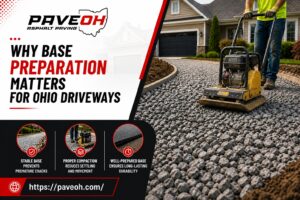
- Heavy Traffic Loads: Repeated loading flexes the pavement. Cars, trucks or snowploughs can cause fatigue. For example, asphalt paving in Columbus Ohio experts emphasize the need for a strong base layer and compaction so pavements can resist these loads.
Together, these factors quickly turn minor pavement wear into serious distress if neglected. Property owners should therefore regularly inspect asphalt surfaces after winter and at season’s end.
Asphalt Warning Signs in Ohio
Here are the most common red flags that indicate your asphalt needs immediate professional attention:
| Sign | What It Looks Like | Why It’s Serious in Ohio | Recommended Action |
|---|---|---|---|
| Alligator Cracking | Interconnected cracks resembling alligator skin | Indicates base failure or heavy fatigue | Structural repair or overlay |
| Longitudinal & Transverse Cracks | Long cracks running lengthwise or across | Allows water infiltration and freeze damage | Crack sealing |
| Potholes | Bowl-shaped holes in the surface | Rapidly worsen with traffic and weather | Patch or full-depth repair |
| Fading & Oxidation | Color changes from black to gray | Binder breaking down, surface becoming brittle | Sealcoating |
| Raveling | Loose gravel and stones on the surface | Loss of binding oils | Sealcoating or resurfacing |
| Rutting & Depressions | Grooves or sunken areas in wheel paths | Weak base or poor drainage | Leveling or reconstruction |
| Standing Water / Poor Drainage | Pools of water after rain | Accelerates all other damage types | Improve grading & drainage |
| Raised Edges or Heaving | Uneven surfaces or lifted sections | Often caused by tree roots or frost heave | Repair and root management |
These asphalt warning signs Ohio are especially common in Central Ohio due to frequent freeze-thaw cycles and variable weather.
Why Ohio’s Climate Accelerates Asphalt Damage
Ohio experiences cold winters, hot summers, and significant precipitation. Water is asphalt’s biggest enemy — once it enters cracks, repeated freezing and thawing acts like a wedge, rapidly expanding damage. Heavy traffic, oil spills, and sun exposure further degrade the binder, leading to oxidation and raveling. Early intervention through timely repairs and sealcoating is the most effective way to fight these natural forces.
When to Repair vs. Replace
- Minor cracks and fading — Can often be fixed with crack sealing and sealcoating.
- Alligator cracking and rutting — Usually requires milling and overlay or full-depth patching.
- Widespread deterioration — May call for complete asphalt replacement.
Professional paving experts in Columbus Ohio, can perform a thorough inspection and provide honest recommendations based on the condition of your pavement.
Common Asphalt Distress Signs
Asphalt failure in Ohio shows up in characteristic ways. Key warning signs include:
- Alligator (Fatigue) Cracking: A network of interconnected cracks resembling an alligator’s skin. This pattern indicates fatigue failure: repeated traffic loads and a weak base (often worsened by freeze–thaw) cause the pavement to flex until it fractures. Alligator cracking is a serious structural distress – left unchecked, it channels water to the base and almost always leads to potholes.
- Potholes: Bowl-shaped holes through the surface, often with jagged edges. Potholes form when water infiltrates cracks and the sub-base gives way under traffic, especially during thawing periods. Each additional wheel load or thaw cycle quickly enlarges a pothole. These are high-hazard defects (tripping and vehicle-damage risks) that should be patched immediately upon spotting.
- Raveling: Surface roughening or flaking where aggregate (stones) are dislodging from the asphalt. Early raveling appears as loose gravel or sand on the pavement. It indicates the binder is oxidising and losing grip on the aggregate. In Ohio, age and UV can weaken the binder, so the layer literally wears away. Raveling may seem cosmetic at first, but it allows water to penetrate and accelerates more serious damage.
- Rutting: Visible troughs or channels (usually longitudinal) in wheel paths. Rutting is caused by plastic deformation of the mix or structural failure of the layers beneath. In practice, this means heavy loads and poor drainage are deforming the subgrade. Rutting can catch water and cause steering problems. Deep or widespread rutting is a high-priority issue: it signals the pavement was under-designed and usually requires rebuilding the base.
- Edge Cracking: Cracks that run along the outer edges of the asphalt (parallel to the pavement edge). These vertical cracks occur where pavement edges lack support (shoulders were too low or uncompacted). Water can erode beneath the edge, making cracks widen. If ignored, edge cracks can cause chunks of pavement to break off. Edge cracking in a lot or driveway often means the gravel shoulder must be reinforced and crack-sealed.
- Surface Oxidation / Fading: A visual greying or whitening of the asphalt surface, often accompanied by fine, spiderweb cracks. New asphalt is deep black, but oxidation from the sun and air causes it to fade to grey over time. This embrittlement reduces flexibility. Oxidised pavement cannot withstand loads and often precedes more visible cracking or raveling. Early sign: the surface looks dry or powdery. Without sealcoating, this will lead to binder breakdown and eventual failure.
Each sign’s severity gives clues to the underlying problem. For example, alligator cracking means structural fatigue (often needing overlay or reconstruction), while superficial oxidation means surface treatment (sealcoating) is due. Table 1 at the end summarises these signs with causes and urgency.
Risks of Ignoring the Signs
Ignoring warning signs accelerates deterioration. A small crack left unsealed will let in water each winter, turning into alligator cracking and then potholes. Potholes not only damage vehicles but also grow rapidly during thaws. Raveling leads to loose aggregate that can detach under traffic, leaving holes and sharp debris. Rutting worsens vehicle handling and will degrade the asphalt sub-base further under each rainstorm. In general, the short-term risk is safety (vehicle damage, trip hazards) and liability, while the long-term risk is expensive replacement or reconstruction. Proactive maintenance (sealing, patching) is far cheaper than full repaving.
Recommended Actions & Maintenance
Prompt repairs prolong pavement life:
- Seal and Fill Cracks: Any hairline or larger crack should be sealed to block water. Crack-fill in autumn or spring interrupts freeze–thaw damage. Leaving cracks open “softens the base and accelerates damage,” local experts warn. Annual sealcoating (every 3–5 years) is also vital to replenish the binder.
- Patch Potholes Quickly: Address potholes as soon as they form. Use cold- or hot-mix asphalt to fill the cavity, compact it, and restore the surface. After patching, inspect adjacent cracks – they likely contributed to the failure.
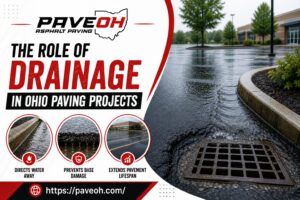
- Improve Drainage: Ensure driveways/lots slope toward drains or swales. Fix clogged drains and remove standing water. Even a gentle 1–2% cross-slope can prevent pooling. Proper grading keeps water from soaking into the pavement base.
- Support Edges: If edge cracks appear, consider adding soil/stone at the shoulder to buttress the pavement. Compact the added fill to support the edge, then seal the crack. Preventing shoulder erosion stops edge failures.
- Regular Maintenance Checks: Inspect the asphalt after winter and heavy rains. Clean debris and oil spills off the surface. Avoid harsh de-icers (sand is safer). Trim nearby tree roots before they heave the pavement.
Routine inspections catch distress early. Many property managers follow an annual maintenance plan with a paving contractor – for example, scheduling spring pothole repairs and fall sealcoating. In fact, Columbus businesses often work with professional paving experts in Columbus, Ohio for ongoing maintenance programs. These pros know what to look for and can apply the right solutions before problems worsen.
When to Call a Professional
Minor cracks and small potholes can be DIY-fixed by a handy homeowner or facilities team. However, when you see widespread alligator cracking, severe rutting, or multiple large potholes, it’s time to call in experts. A qualified contractor will assess structural issues that casual repairs can’t fix. In Ohio’s climate, especially, a professional assessment ensures the base and drainage are right for long-term durability.
To find a good contractor, use the following criteria:
- Licensing & Insurance: A reputable contractor will be fully licensed and carry liability and workers’ comp insurance. Ask to see proof. This protects you if an accident occurs on-site.
- Local Experience: Choose a paving company with years of Central Ohio experience. They understand local soils, weather patterns and municipal specifications. Columbus contractors should also be familiar with city permit rules.
- Equipment & Crew: Proper paving requires heavy machinery (paver, rollers, saws). Verify the contractor owns modern equipment (as many pros proudly note) and has a skilled crew.
- References & Portfolio: Get references or see past projects. Check online reviews (Google, BBB) and ask for before/after photos. Confirm they’ve handled jobs like yours (driveways, parking lots, etc.).
- Written Estimates: Obtain detailed written quotes from at least 2–3 contractors. Confirm each quote includes base preparation, compaction, paving, and cleanup. Do not choose a contractor offering to do the job without a permit or a written contract.
- Warranty: A good contractor offers a workmanship warranty and stands by their job. They should commit to fixing early defects at no extra charge.
“Paving in Columbus isn’t the same as warmer regions,” notes local experts. If you need reassurance, professional paving experts in Columbus Ohio recommend confirming all these points. Their knowledge of Ohio’s freeze-thaw stresses makes the difference between a short-lived patch job and a long-lasting pavement.
Conclusion
Ohio’s demanding weather conditions make asphalt maintenance far more important than many property owners realize. Freeze–thaw cycles, water penetration, traffic stress, and road salt exposure can rapidly turn minor pavement issues into major structural failures if left untreated. By learning to identify early asphalt warning signs Ohio property owners can take proactive steps to protect driveways, parking lots, and paved surfaces before repair costs escalate.
For residential properties, that means monitoring for small cracks, fading, and drainage issues before they develop into potholes or widespread damage. For commercial properties, it means maintaining smooth, safe pavement that supports traffic flow, improves appearance, and reduces long-term liability risks. Routine inspections, timely repairs, and preventative maintenance all play a major role in extending asphalt lifespan throughout Central Ohio.
If your pavement is beginning to show signs of wear or deterioration, Asphalt Paving Columbus, Ohio can help evaluate your asphalt condition, identify underlying problems, and recommend professional repair and maintenance solutions designed specifically for Ohio’s challenging climate conditions.