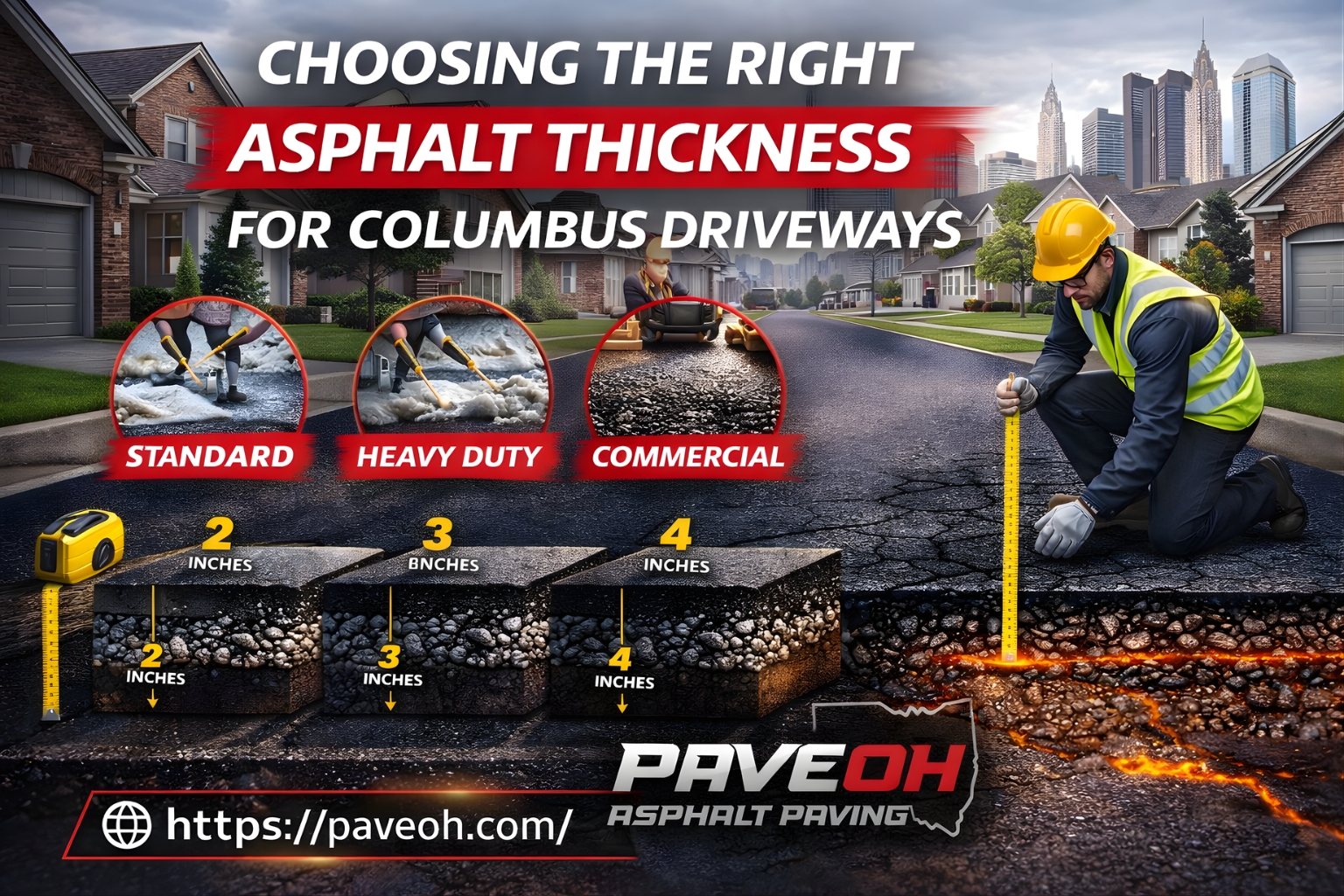
What Is the Ideal Asphalt Driveway Thickness Columbus Ohio Homeowners Should Choose? The ideal asphalt driveway thickness Columbus Ohio homeowners should choose is typically 2 to 3 inches of compacted asphalt over a properly prepared 4–8 inch aggregate base, depending on traffic load and soil conditions. For driveways that regularly support heavier vehicles such as trucks or SUVs, a thickness closer to 3–4 inches is recommended to prevent cracking and premature wear.
In Columbus, where freeze-thaw cycles, moisture, and seasonal temperature changes are common, choosing the right asphalt thickness is critical. A driveway that is too thin may crack quickly under stress, while one built with proper thickness and base preparation can last decades with minimal maintenance. Pave OH provides professional paving services in Columbus Ohio and has extensive experience designing driveway structures that match local soil conditions, traffic needs, and climate challenges. The company can evaluate each property and recommend the correct asphalt thickness to ensure long-lasting performance. With expertise in both residential and commercial paving, Pave OH delivers high-quality paving solutions that help homeowners avoid costly repairs and maintain durable asphalt driveways.
Why Asphalt Thickness Matters for Driveways
Asphalt thickness directly affects how well your driveway performs over time.
A properly designed driveway distributes weight evenly and resists damage from weather and traffic.
Key reasons thickness matters
- Prevents cracking and surface damage
- Improves load-bearing capacity
- Increases lifespan of the driveway
- Reduces long-term repair costs
- Enhances resistance to Ohio weather conditions
In Columbus, incorrect thickness is one of the most common causes of early pavement failure.
Standard Asphalt Thickness for Columbus Driveways
The required thickness depends on how the driveway will be used.
Residential Driveways (Light Traffic)
For most homes:
- 2–3 inches of asphalt
- Installed over 4–6 inches of compacted gravel base
This is sufficient for:
- Cars
- SUVs
- Light pickup trucks
Heavy-Duty Residential Driveways
If the driveway supports heavier vehicles:
- 3–4 inches of asphalt
- Over 6–8 inches of base material
Recommended for:
- Work trucks
- RVs
- Delivery vehicles
Commercial or Shared Driveways
For higher traffic loads:
- 4–6 inches of asphalt
- Stronger base layers required
Thicker pavement helps handle increased stress and prevents structural damage.
Recommended Asphalt Thickness by Usage
| Driveway Type | Asphalt Thickness | Base Thickness | Best For |
|---|---|---|---|
| Residential (Light Use) | 2–3 inches | 4–6 inches | Cars, SUVs |
| Residential (Heavy Use) | 3–4 inches | 6–8 inches | Trucks, RVs |
| Commercial Driveways | 4–6 inches | 8+ inches | Heavy vehicles |
| High-Traffic Areas | 5–7 inches | 8–12 inches | Industrial use |
Factors That Affect Asphalt Driveway Thickness
Choosing the right thickness depends on several important factors.
1. Columbus Climate and Freeze-Thaw Cycles
Ohio’s winters create significant stress on asphalt.
Freeze-thaw cycles cause:
- Expansion and contraction
- Surface cracking
- Base layer weakening
Thicker asphalt helps resist these effects and improves durability.
2. Soil and Subgrade Conditions
The strength of your driveway starts below the surface.
Weak soil conditions may require:
- Thicker aggregate base
- Additional asphalt layers
- Soil stabilization
Poor subgrade is one of the leading causes of driveway failure.
3. Traffic Load
The type and frequency of vehicles using your driveway matter.
Light traffic:
- Standard thickness is sufficient
Heavy traffic:
- Requires thicker asphalt
- Prevents rutting and cracking
Even occasional heavy vehicles can damage thin asphalt surfaces.
4. Drainage
Water is one of asphalt’s biggest enemies.
Poor drainage leads to:
- Water infiltration
- Base erosion
- Cracking and potholes
Proper grading and thickness help prevent moisture damage.
5. Base Preparation
The base layer is just as important as the asphalt itself.
A strong base:
- Supports the asphalt layer
- Distributes weight evenly
- Prevents sinking and cracking
Without proper base preparation, even thick asphalt can fail.
Why 2 Inches of Asphalt Is Often Not Enough
Some contractors may offer thinner asphalt to reduce costs.
However, thinner layers can lead to long-term problems.
Risks of thin asphalt include:
- Faster cracking
- Reduced lifespan
- Poor resistance to heavy vehicles
- Increased maintenance costs
In Columbus, where winters are harsh, choosing at least 3 inches for most driveways is a safer long-term investment.
The Role of Base Thickness in Driveway Durability
While asphalt thickness is important, the base layer plays a critical role in overall performance.
Typical base requirements
- 4–6 inches for residential driveways
- 6–8 inches for heavy-duty use
- Compacted crushed stone or gravel
A properly compacted base:
- Prevents shifting
- Improves drainage
- Enhances load distribution
Experts often say the base is just as important as the asphalt layer itself.
How Thickness Impacts Driveway Lifespan
The right asphalt thickness can significantly extend the life of your driveway.
Typical lifespan based on thickness
- Thin asphalt (2 inches): 10–15 years
- Standard thickness (3 inches): 15–20 years
- Heavy-duty thickness (4+ inches): 20+ years
Proper maintenance such as sealcoating and crack repair further extends lifespan.
Signs Your Driveway May Be Too Thin
If your driveway was installed with insufficient thickness, you may notice problems early.
Warning signs include:
- Cracks appearing within a few years
- Surface depressions or ruts
- Edges breaking apart
- Potholes forming quickly
These issues often indicate structural weakness due to insufficient thickness or poor base preparation.
Professional Installation vs DIY Thickness Decisions
Determining the right asphalt thickness is not a one-size-fits-all process.
Professional paving contractors evaluate:
- Soil conditions
- Drainage patterns
- Traffic loads
- Climate factors
This ensures the driveway is built to last under real-world conditions.
Pave OH provides paving services in Columbus Ohio and can assess driveway conditions, recommend the correct asphalt thickness Columbus Ohio homeowners need, and install durable asphalt surfaces designed for long-term performance. Their team of professional paving experts in Columbus Ohio ensures each project is built with the right materials and thickness for maximum durability.
Maintenance Tips to Protect Your Asphalt Investment
Even with the correct thickness, maintenance is essential.
Best practices include:
- Sealcoating every 2–3 years
- Repairing cracks early
- Keeping the surface clean
- Avoiding heavy loads when possible
- Ensuring proper drainage
Regular maintenance helps preserve the strength of your driveway.
Final Thoughts
Choosing the right asphalt driveway thickness Columbus Ohio homeowners need is essential for building a durable and long-lasting surface. While standard residential driveways typically require 2–3 inches of asphalt, factors such as traffic load, soil condition, and climate often make 3 inches or more the better choice. In Columbus, where freeze-thaw cycles and seasonal changes can damage pavement, investing in proper thickness and base preparation helps prevent cracking, reduce maintenance costs, and extend driveway lifespan.
Pave OH provides professional paving services in Columbus Ohio including driveway installation, asphalt repair, and maintenance solutions. With experience in Columbus’s climate and soil conditions, Pave OH delivers high-quality paving solutions designed to ensure long-lasting and durable asphalt driveways for residential and commercial properties.