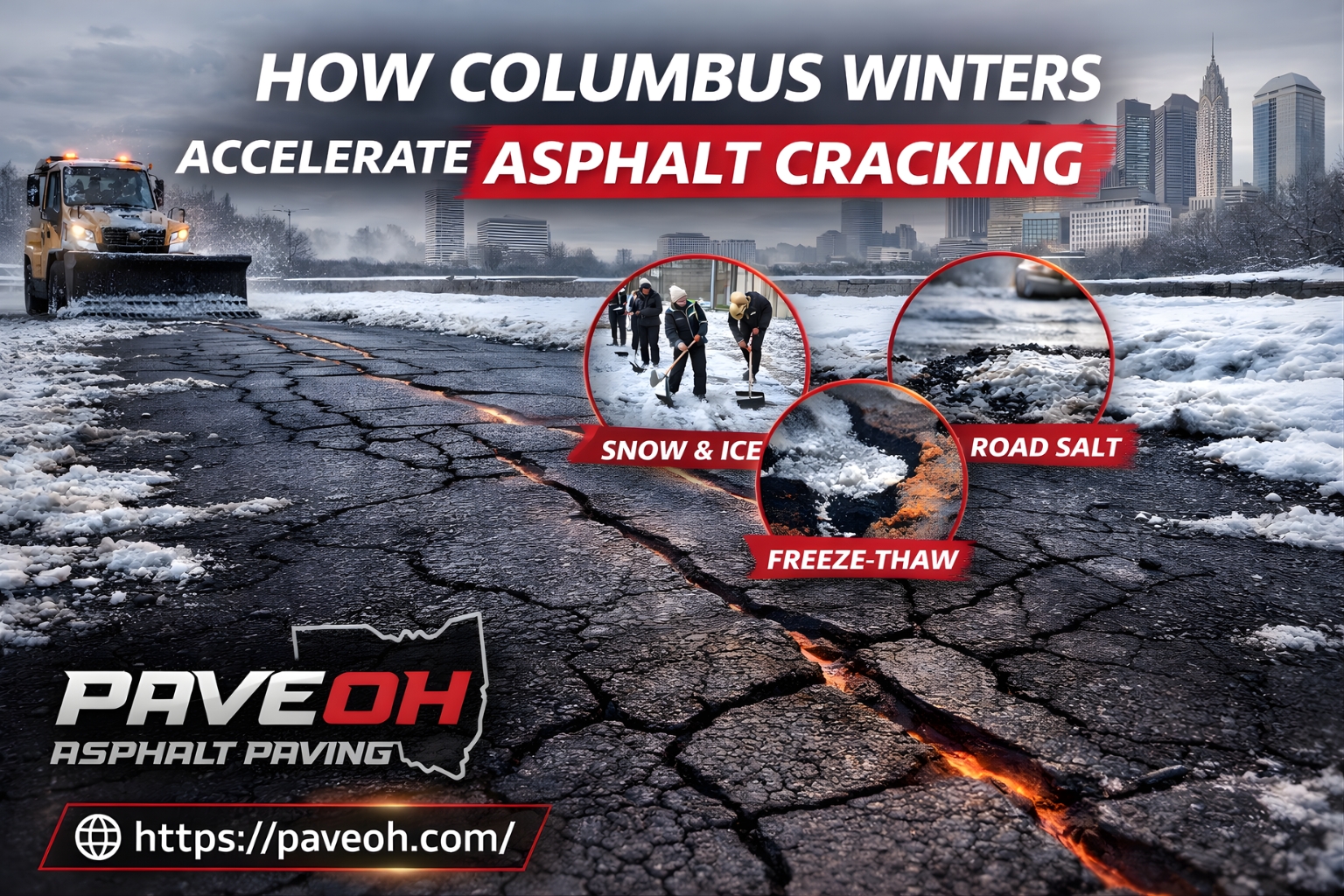
Have you ever noticed that cracks in your driveway or parking lot seem to appear suddenly after winter? Many property owners in Ohio experience this problem every year. Surfaces that looked fine in autumn often develop cracks, potholes, and surface damage by early spring. The reason is simple: Columbus winters are particularly tough on asphalt pavement.
Cold temperatures, snow accumulation, moisture infiltration, and constant freeze-thaw cycles place extreme stress on pavement surfaces. Over time, these conditions weaken asphalt and cause cracks to expand rapidly.
Understanding the science behind asphalt cracking Columbus Ohio properties face each winter can help homeowners and businesses take preventative action. With the right maintenance strategies, you can protect your pavement and extend its lifespan.
This guide explains:
- Why winter weather damages asphalt
- The role of freeze-thaw cycles in pavement cracking
- How snow, moisture, and temperature swings impact asphalt
- Warning signs of winter pavement damage
- Prevention strategies for Columbus property owners
Why Winter Is the Most Damaging Season for Asphalt
Asphalt is designed to be durable and flexible, but winter conditions can push the material beyond its limits.
Columbus experiences extreme seasonal temperature changes, ranging from hot summers to freezing winters. These shifts cause asphalt to expand and contract repeatedly, creating internal stress within the pavement.
During winter months, additional factors contribute to asphalt deterioration:
- Freezing temperatures
- Snow and ice accumulation
- Water infiltration
- Heavy vehicle traffic
- De-icing chemicals
Together, these elements create the perfect conditions for pavement cracking.
The Freeze–Thaw Cycle: The Main Cause of Asphalt Cracking
The freeze-thaw cycle is the most destructive winter process affecting asphalt.
This cycle occurs when temperatures fluctuate above and below freezing repeatedly.
How the Freeze-Thaw Process Works
- Water enters small cracks or pores in the asphalt surface.
- Temperatures drop below freezing, turning the trapped water into ice.
- The frozen water expands by about 9% in volume, putting pressure on the surrounding pavement.
- When temperatures rise again, the ice melts and leaves behind a larger crack.
- The process repeats multiple times throughout winter.
Each freeze-thaw cycle gradually weakens the asphalt structure and widens existing cracks.
Cities like Columbus often experience dozens of freeze-thaw cycles each winter, which significantly accelerates pavement deterioration.
Table: Winter Factors That Cause Asphalt Cracking in Columbus
| Winter Factor | How It Damages Asphalt | Resulting Problem |
|---|---|---|
| Freeze-thaw cycles | Water freezes and expands in cracks | Larger cracks and potholes |
| Snow accumulation | Moisture seeps into asphalt | Structural weakening |
| Temperature fluctuations | Asphalt expands and contracts | Surface stress and cracking |
| Poor drainage | Water pools on pavement | Accelerated deterioration |
| De-icing chemicals | Break down asphalt binder | Brittleness and cracking |
Moisture: Asphalt’s Biggest Enemy in Winter
Water is one of the primary causes of asphalt failure.
During winter in Columbus, moisture enters asphalt through:
- Small surface cracks
- Air voids in pavement
- Weak edges
- Damaged joints
Once water penetrates the surface, it can reach the underlying base layers.
When this water freezes, it expands and pushes the asphalt apart. Over time, this leads to structural damage and visible cracks.
Moisture infiltration can also weaken the pavement foundation. When the base loses strength, the asphalt surface begins to break apart under traffic pressure.
Proper drainage is essential to minimize water damage and maintain pavement stability.
Temperature Extremes Make Asphalt Brittle
Cold weather changes the physical properties of asphalt.
When temperatures drop significantly, asphalt becomes less flexible and more brittle.
This brittleness makes the surface more vulnerable to cracking.
Cold temperatures can also cause thermal contraction, where asphalt shrinks slightly. As the pavement contracts, internal stresses develop that can lead to cracks forming across the surface.
These cracks often appear as:
- Long linear cracks
- Block cracking patterns
- Edge cracks near pavement borders
Over time, these cracks grow larger and eventually turn into potholes if left untreated.
Snow and Ice Increase Moisture Exposure
Snow accumulation is another major winter challenge for asphalt surfaces.
When snow melts during warmer daytime temperatures, water seeps into small cracks in the pavement. When temperatures drop again at night, that water freezes and expands.
This repeated process creates additional stress on the asphalt surface.
Snowmelt can also expose existing weaknesses in pavement structures.
Without proper maintenance, snow and ice can accelerate the formation of:
- Surface cracks
- Edge deterioration
- Potholes
- Frost heave
Frost Heave and Pavement Movement
Frost heave occurs when moisture beneath the pavement freezes and expands.
This expansion causes the ground below the asphalt to push upward, lifting sections of pavement.
Once temperatures warm and the ice melts, the ground settles again.
This repeated lifting and settling creates uneven surfaces and cracks in the pavement.
Frost heave is especially common in regions with cold winters and significant moisture, making it a frequent problem in Ohio.
Traffic Load Makes Winter Damage Worse
Vehicle traffic adds additional stress to already weakened asphalt.
Heavy vehicles such as delivery trucks, buses, and service vehicles can worsen winter damage.
When vehicles drive over pavement that has been weakened by freeze-thaw cycles, cracks expand faster.
High-traffic areas are particularly vulnerable, including:
- Parking lot entrances
- Loading zones
- Intersections
- Driveway edges
Over time, these stress points develop into potholes and structural failures.
Common Types of Winter Asphalt Cracks
Columbus property owners often see several types of cracks after winter.
1. Longitudinal Cracks
These cracks run parallel to the direction of traffic.
They are often caused by temperature changes and structural stress.
2. Transverse Cracks
These cracks run perpendicular to traffic flow.
They typically form due to asphalt contraction in cold temperatures.
3. Edge Cracks
Edge cracks appear along the outer edges of pavement.
Poor drainage and weak base support often cause this damage.
4. Alligator Cracking
Alligator cracking resembles the scales of an alligator.
This type of damage indicates serious structural failure beneath the asphalt surface.
It usually occurs when moisture weakens the base layer.
How Poor Drainage Accelerates Winter Damage
Drainage plays a major role in asphalt longevity.
If water cannot drain properly from a parking lot or driveway, it will accumulate on the surface.
Standing water increases the likelihood of freeze-thaw damage because:
- Water penetrates cracks more easily
- Ice expansion becomes more severe
- The pavement base becomes saturated
Proper grading and drainage systems help prevent water from pooling on asphalt surfaces.
Preventing Asphalt Cracking During Columbus Winters
While winter damage cannot be eliminated completely, proper maintenance can significantly reduce cracking.
Sealcoating
Sealcoating protects asphalt from moisture and temperature damage.
It creates a protective barrier that prevents water infiltration.
Crack Filling
Small cracks should be repaired quickly before winter arrives.
Crack filling prevents water from entering the pavement and expanding during freezing temperatures.
Proper Drainage
Ensuring proper drainage helps prevent water accumulation.
Sloped surfaces and drainage systems direct water away from asphalt.
Routine Inspections
Regular pavement inspections help property owners identify issues early.
Early repairs are far less expensive than major reconstruction.
Why Professional Asphalt Maintenance Matters
Professional paving contractors understand how Ohio’s climate affects pavement surfaces.
Experienced contractors can:
- Identify early signs of winter damage
- Repair cracks before they expand
- Improve drainage systems
- Apply protective sealcoating
- Restore damaged asphalt surfaces
Working with experienced professionals helps property owners protect their pavement investments and reduce long-term repair costs.
Conclusion
Winter weather in Columbus creates challenging conditions for asphalt surfaces. Freeze-thaw cycles, moisture infiltration, and extreme temperature changes combine to accelerate pavement deterioration. Water entering small cracks freezes and expands, gradually forcing the asphalt apart and creating larger cracks or potholes. Repeated cycles of freezing and thawing place constant stress on pavement structures, making winter the most damaging season for asphalt surfaces.
Understanding the causes of asphalt cracking Columbus Ohio property owners face each year can help prevent costly repairs. Regular maintenance, proper drainage, and professional pavement services can significantly extend the life of asphalt driveways, parking lots, and roadways.
Investing in preventative care today ensures your pavement remains durable, safe, and functional throughout Columbus’s harsh winter seasons.