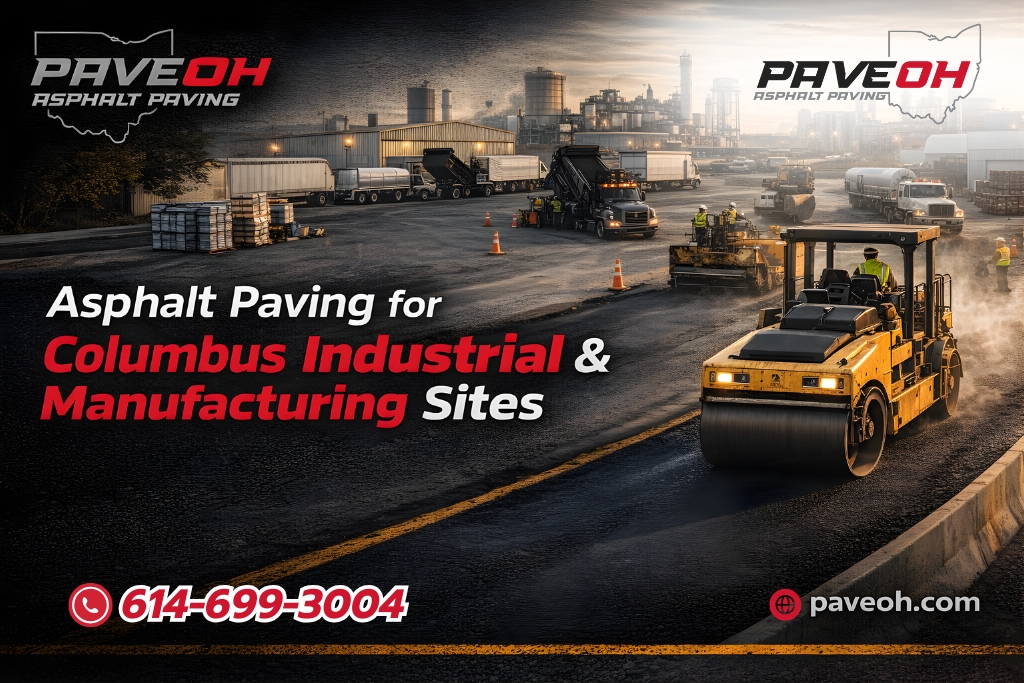
What happens when pavement is asked to perform like structural infrastructure? In industrial and manufacturing environments, asphalt is not just a driving surface, it supports daily operations, heavy machinery, and continuous freight movement. Facilities across Central Ohio rely on industrial paving Columbus Ohio solutions that can withstand extreme loads, constant traffic, and demanding work conditions. Without proper engineering, industrial pavement deteriorates quickly, disrupting operations and increasing repair costs. With guidance from Pave OH, facility managers can implement asphalt systems designed specifically for industrial performance and long-term durability.
Industrial Traffic Creates Extreme Pavement Stress
Unlike residential or light commercial areas, industrial sites experience sustained stress from heavy trucks, forklifts, trailers, and manufacturing equipment. These loads apply intense pressure to asphalt surfaces, especially in loading zones and drive lanes.
In industrial paving Columbus Ohio projects, pavement must resist:
- Heavy axle loads from freight trucks
- Repetitive turning and braking
- Static loads from parked equipment
- Concentrated stress at dock areas
Standard asphalt designs are not sufficient in these environments. Without reinforced pavement structure, cracking and deformation occur rapidly.
Asphalt Thickness and Base Strength Are Critical
Industrial asphalt performance depends heavily on proper thickness and base preparation. Pavement must distribute extreme loads evenly to prevent stress from transferring into the subgrade.
Key structural considerations include:
- Increased asphalt layer thickness
- High-strength aggregate base
- Superior compaction standards
- Load-bearing subgrade preparation
In Asphalt Paving in Columbus Ohio, industrial sites require custom pavement designs tailored to equipment weight and traffic volume. Insufficient base strength often leads to rutting, settlement, and costly reconstruction.
Loading Docks and High-Impact Zones Need Reinforcement
Not all areas of an industrial facility experience equal stress. Loading docks, staging areas, and truck entrances face the most intense wear due to slow-moving, heavily loaded vehicles.
High-risk zones include:
- Dock aprons
- Trailer staging areas
- Turning radii near warehouses
- High-frequency access points
Effective industrial paving Columbus Ohio solutions reinforce these zones to reduce cracking, edge failure, and surface distortion. Designing for these stress concentrations prevents operational disruptions.
Heavy Equipment Accelerates Surface Deterioration
Industrial operations involve frequent movement of forklifts, pallet jacks, and service vehicles. These machines often apply repeated point loads that accelerate surface wear.
Common equipment-related issues include:
- Surface scuffing and raveling
- Rutting in travel paths
- Edge breakdown along storage zones
- Loss of surface smoothness
Proper asphalt mix selection and compaction help industrial pavements resist these stresses and maintain functional surfaces under constant use.
Climate and Industrial Use Compound Pavement Damage
Columbus’s seasonal freeze-thaw cycles intensify industrial pavement stress. Cracks formed by heavy loads allow moisture to penetrate the structure, expanding during freezing conditions and weakening the base.
When heavy equipment continues operating over compromised pavement, damage accelerates rapidly. This combination makes climate-aware planning essential in industrial paving Columbus Ohio applications.
Climate-related risks include:
- Accelerated crack expansion
- Subgrade softening
- Uneven settlement
- Shortened pavement lifespan
Ongoing Maintenance Protects Industrial Pavement Investments
Industrial asphalt requires proactive maintenance to remain operational. Due to constant use, small defects can escalate quickly if ignored.
Essential maintenance practices include:
- Early crack sealing
- Targeted patching in high-stress areas
- Surface sealing to slow oxidation
- Routine inspections of loading zones
Facilities that prioritize maintenance experience fewer shutdowns and significantly lower long-term repair costs.
Professional Planning Supports Operational Efficiency
Successful industrial paving Columbus Ohio projects begin with detailed planning. Professional paving experts evaluate traffic flow, equipment types, and operational demands before construction begins.
Planning considerations include:
- Equipment weight and movement patterns
- Traffic frequency and peak loads
- Expansion joint placement
- Long-term facility growth
This strategic approach ensures pavement supports productivity rather than becoming a liability.
Final Thoughts
Industrial pavement must perform reliably under some of the most demanding conditions in the paving industry. When industrial paving Columbus Ohio surfaces are engineered for heavy loads, constant use, and regional climate challenges, they deliver long-term value and operational stability.
At Pave OH, we specialize in asphalt solutions built for industrial and manufacturing environments. From reinforced loading zones to high-capacity drive lanes, we help Central Ohio facilities achieve durable pavement systems that support efficiency, safety, and long-term performance.