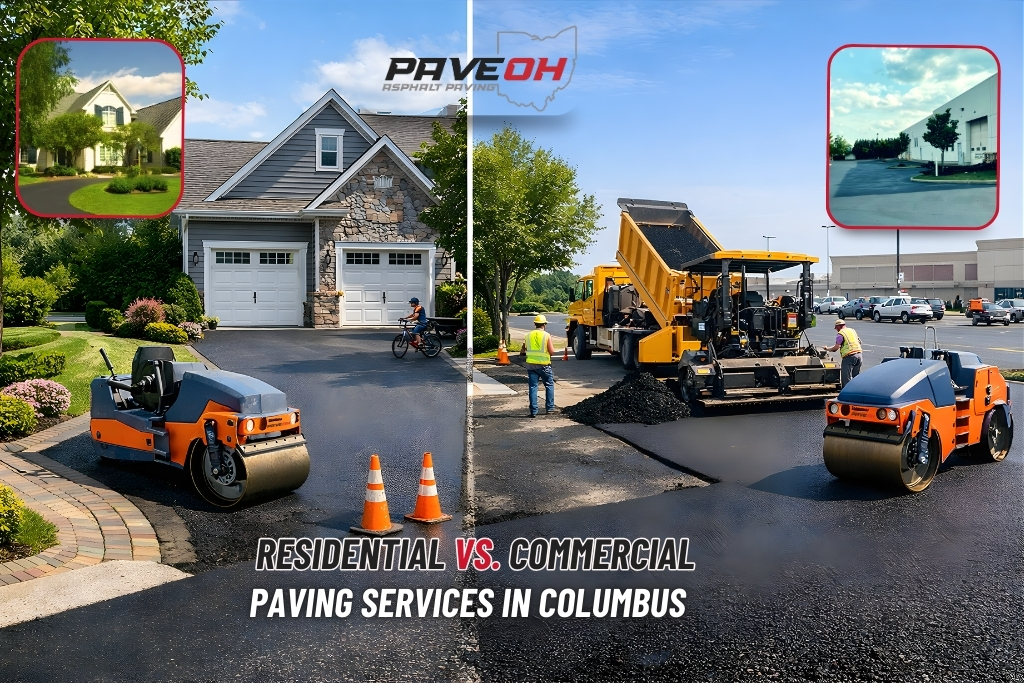
How do you know whether your paving project should be treated as residential or commercial? Whether you are a homeowner planning a new driveway or a business owner preparing a large parking lot in Central Ohio, understanding the differences between residential and commercial paving is essential. These projects vary significantly in scope, design requirements, material thickness, traffic load expectations, and cost structure.
Recognizing what makes residential and commercial paving distinct helps property owners select the right approach, plan realistic budgets, and achieve durable, long-lasting pavement performance.
In Columbus, Ohio, property owners increasingly seek professional paving services Columbus Ohio that match their specific needs. This guide breaks down the key differences between residential and commercial paving — from preparation and materials to regulations, durability, and maintenance — so you can make informed decisions for your next project.
Why It Matters: Residential and Commercial Needs Are Not the Same
The term “paving” might seem universal, but the requirements for a home driveway versus a commercial parking lot vary greatly. Residential properties generally focus on aesthetics, homeowner convenience, and occasional vehicle traffic. Commercial properties, on the other hand, face heavier loads, regulatory compliance, higher traffic volumes, and long-term durability expectations.
Understanding these differences helps you avoid common pitfalls like:
- Choosing pavement with insufficient thickness
- Underestimating base preparation needs
- Overlooking drainage or accessibility requirements
- Miscalculating long-term maintenance costs
Let’s explore what sets residential and commercial paving apart in Columbus.
1. Project Scope and Purpose
Residential Paving
For homeowners, paving projects typically include:
- Driveways
- Walkways
- Private access lanes
- Detached garages
Residential paving is designed to support everyday passenger vehicles and occasional deliveries. While aesthetics and curb appeal are important, these areas typically do not bear heavy truck traffic or endure intense wear patterns.
Commercial Paving
Commercial paving services in Columbus, Ohio are used for:
- Retail and shopping center lots
- Office and industrial parks
- Multifamily and HOA properties
- Warehouses and loading zones
Commercial surfaces must withstand constant use — including heavy trucks, fleet vehicles, and high-frequency traffic — making durability and structural planning top priorities.
2. Design and Engineering Requirements
Residential Design
Residential paving focuses on function and appearance. The design typically requires:
- A consistent width with the garage or street
- Proper slope for drainage
- Matching color and texture with existing landscape
- Minimal excavation
Driveways rarely require engineered designs unless landscaping grades are unusual or access angles are tight.
Commercial Design
Commercial designs, by contrast, often need civil engineering input. Plans consider:
- ADA-compliant access routes
- Fire lane widths
- Loading areas and turning radii
- Designated parking patterns
- Heavy vehicle load distribution
Engineering plans also address stormwater management and municipal compliance, which is especially important in Columbus where drainage and freeze-thaw cycles influence long-term performance.
3. Material Specifications and Pavement Thickness
Residential Material Choices
Homeowners generally choose standard hot-mix asphalt over a prepared base such as:
- Crushed stone or gravel
- Compacted subgrade
Typical thickness for a residential driveway is 2–3 inches of asphalt, which is sufficient for passenger car loads but not heavy commercial traffic.
Commercial Material Requirements
Commercial paving calls for:
- Thicker asphalt layers (often 3–6 inches total)
- Enhanced base layers for load-bearing strength
- Higher quality mixes with greater binder content
Heavy vehicles, forklifts, and delivery zones require a stronger pavement structure. Commercial projects also use specialized mixes to resist rutting and water damage.
4. Base Preparation and Subgrade Needs
The strength of any pavement is only as good as what’s beneath it.
Residential Base Prep
For driveways:
- Excavation is usually shallow
- A base of compacted gravel is placed
- Minimal grading work (unless drainage is an issue)
The goal is to establish a stable foundation for typical residential traffic.
Commercial Base Prep
Commercial paving requires extensive base work:
- Deep excavation (depending on soil and design)
- Multiple layers of compaction
- Specialized geotextiles in weak soils
- Subdrain systems in poor drainage areas
This ensures the pavement can support heavier loads and maintain structural integrity over time.
5. Drainage Considerations
Water is one of asphalt’s biggest enemies — especially in Columbus where seasonal weather and freeze-thaw cycles are common.
Residential Drainage
Driveway drainage is less complex but still important. It usually involves:
- Sloping pavement away from structures
- Directing runoff to lawns or soil areas
- Avoiding ponding spots
Proper drainage prevents water from undermining the base and causing cracks or frost effects.
Commercial Drainage
Commercial properties must integrate advanced drainage planning:
- Catch basins and storm drains
- Graded swales
- Retail lot runoff redirection
- Sheet flow designs
Mismanaged water can accelerate deterioration dramatically, leading to potholes and costly repairs.
6. Traffic Volume and Load Expectations
Residential Traffic
Driveways see lower traffic volumes and lighter loads — mostly passenger cars and occasional delivery trucks.
This reduces stress on pavement, allowing for thinner asphalt and simpler design.
Commercial Traffic
Parking lots and business drives face:
- Heavy delivery vehicles
- Fleet traffic
- High turnover rates
- Constant usage
The pavement must resist deformation, rutting, and accelerated wear. This influences material choice, thickness, and compaction standards.
7. ADA, Safety, and Code Compliance
Commercial paving often must comply with:
- ADA accessibility standards
- Fire lane safety regulations
- Municipal code requirements for signage
- Clearly marked handicap spaces
These regulations influence the layout, markings, and finished grade. Residential projects rarely need to adhere to the same level of regulatory detail.
8. Line Striping and Markings
Residential Markings
Home driveways typically do not require striping.
At most, decorative borders or stamped edges may be included for aesthetics.
Commercial Markings
Striping is essential in commercial lots to:
- Define parking spaces
- Create directional flow
- Comply with ADA spacing and requirements
- Enhance pedestrian safety
Professional paving services Columbus Ohio often include high-visibility thermoplastic striping or epoxy paints that last longer and tolerate heavy traffic.
9. Project Timeline and Disruption
Residential Timelines
Residential paving is usually quicker:
- Smaller areas
- Fewer logistical challenges
- Minimal traffic rerouting
Many driveways can be installed in a single day, weather permitting.
Commercial Timelines
Commercial projects often require:
- Phased work to maintain business operations
- Night or weekend paving schedules
- Coordination with contractors and inspectors
Larger scale and compliance requirements extend project timelines.
10. Cost Differences: Residential vs. Commercial
Cost is affected by materials, labor, site challenges, and project complexity.
Residential Cost Factors
- Size of driveway
- Site access
- Base prep condition
Typical residential driveway projects often average a couple thousand dollars for standard installs.
Commercial Cost Factors
- Pavement thickness
- Drainage work
- ADA compliance
- Striping and signage
- Engineering
Commercial projects are larger in scale and require more planning, materials, and manpower, which results in higher overall investment.
11. Maintenance Needs Differ
Residential Maintenance
Homeowners benefit from periodic:
- Sealcoating every few years
- Crack filling as needed
- Minor patching
Routine care extends driveway life and preserves appearance.
Commercial Maintenance
Commercial lots require far more structured schedules:
- Annual inspections
- Sealcoating, crack sealing
- Line repainting
- Drainage evaluation
Proactive maintenance keeps liability low and pavement life high.
12. Warranty and Long-Term Protection
Many commercial paving providers offer warranties covering:
- Material and workmanship
- Surface failure
- Premature cracking
Residential warranties might be simpler or shorter, but both project types benefit from documented service guarantees.
13. Aesthetic Considerations
Residential paving often focuses on:
- Curb appeal
- Seamless integration with landscaping
- Decorative finishes (e.g., borders, stamped patterns)
Commercial paving emphasizes:
- Safety
- Efficiency
- Business branding
- Clear visual navigation
Both prioritize appearance, but design goals differ.
14. Utility and Future Planning
Commercial properties plan for:
- Utility access
- Loading docks
- Expansion areas
- Heavy service vehicles
Residential projects rarely need future utility planning, but alignment with landscaping and home access remains important.
15. Choosing the Right Contractor for Your Project
Whether residential or commercial, you’ll want:
- Proper licensing
- Local experience
- Insurance coverage
- Strong portfolio
Selecting a contractor familiar with Columbus weather, soil conditions, and municipal standards is key to a lasting pavement.
16. The Value of Local Expertise
Columbus has specific challenges:
- Freeze-thaw cycles
- Seasonal rainfall
- Urban traffic patterns
Local specialists understand regional needs and tailor solutions that work for Ohio properties long-term.
Conclusion: Which Service Is Right for You?
We help property owners understand that residential and commercial paving serve very different purposes, even though both rely on asphalt installation. Residential projects are typically designed around daily convenience, visual appeal, and light vehicle use, while commercial paving requires heavier engineering, thicker pavement structures, regulatory compliance, and traffic flow considerations. These differences directly affect material selection, construction methods, timelines, and overall investment.
By recognizing these distinctions early, homeowners and business owners can make informed decisions, set realistic budgets, and select paving solutions built for their specific needs. Working with Pave OH to experienced paving services Columbus Ohio professionals ensures each project is planned and executed correctly, resulting in pavement that delivers lasting performance, safety, and value.